


Bruno Coutinho stood on a dusty road, quietly weeping.
As a biologist and a geographer at Conservation International, Coutinho has spent a career designing and mapping landscapes on screens. He had not expected one of those maps to bring him to tears.
The road beneath his feet, once pixels on a monitor, was now a steep bend, following the river’s swale below. Around him, the Cerrado — a mix of savanna and woodlands in southwestern Brazil — was returning. The canopy slowly closed, as tenacious, blooming layers of trees and shrubs pushed up through old pasture grass.
Standing nearby, Mark Wishnie of BTG Pactual — the Brazilian investment firm that had built all of this — watched him. “We’ve all worked on projects where you have a beautiful idea,” Wishnie said later. “But it doesn’t necessarily ever come to fruition exactly as you think.”
This one had.
This month, BTG Pactual’s Timberland Investment Group (BTG Pactual TIG) closed its fund to new investors, having secured US$ 1.24 billion — capital that will flow directly into restoring and protecting degraded land across Brazil and Uruguay, alongside sustainable tree farms. The announcement marks a milestone for a project that, not long ago, existed only as lines on a map in a small office in São Paulo.
“They took what we planned in our little office,” Coutinho said, “and put it in the field.”
Three years ago, Conservation International made a bet on an audacious idea: that working with BTG Pactual TIG to plant commercial tree farms could save one of Brazil’s most threatened ecosystems. Critics were ready.
“There was some risk in this relationship for both sides at the start,” Wishnie said.
For Conservation International, the challenge was reputational, the organization’s credibility staked on the proposition that a for-profit timberland investor could be a genuine partner for nature. For BTG Pactual TIG, it was something else entirely: opening its investment decisions to meaningful contribution from a conservation organization.
What emerged instead was trust.
Fifty-fifty
The Cerrado, the vast mosaic of grasslands and woodlands that sprawls across a quarter of Brazil, harbors five percent of the world’s species. More than half of it is already gone.
Today, an estimated 60 million hectares (600,000 square kilometers) of Brazilian pasture are degraded — an area nearly half the size of neighboring Peru. Native forests and savannas have been systematically cleared for cattle and soy, overrun with invasive grasses and exhausted by decades of severe overgrazing.
But restoring the Cerrado is expensive. Restoration requires operating across an entire landscape and over decades: planting the right trees in the right place, working with local communities, monitoring conditions to ensure saplings survive. The actual costs can amount to thousands of dollars per hectare.
The high cost of restoration reflects a broader challenge: There is an estimated annual funding gap for nature. Philanthropy, governments, and multilaterals cannot move fast enough to fill it. For Conservation International, closing that gap means going where the money is.
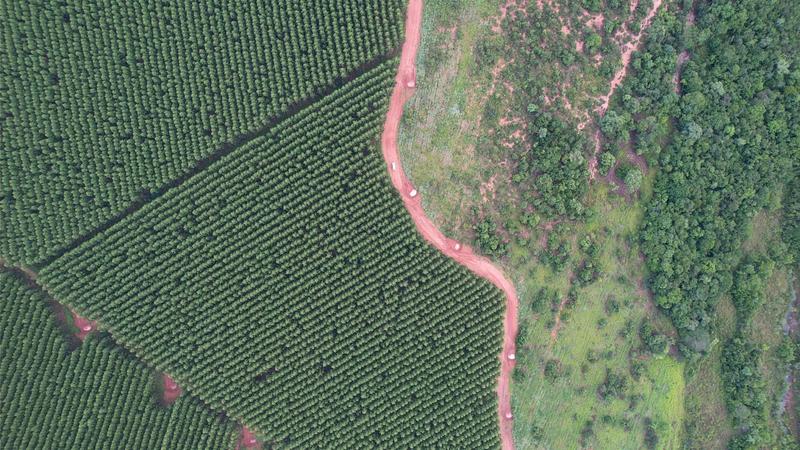
In the vast stretches of eroded, worn-out soil, Conservation International saw an opportunity — one that could inject over US$ 1 billion toward this goal. It meant working with a timberland investor. BTG Pactual TIG’s plan was simple: replace degraded cattle pasture with 50 percent sustainably certified eucalyptus for timber production, 50 percent native Cerrado.
“It’s easy to form a snap judgment about planting non-native plantations anywhere outside their range,” said Will Turner, a scientist at Conservation International. “But snap judgment isn’t how we’re going to solve climate change and save biodiversity. We need to test what really works. This is a serious commitment to improve the way we manage nature within private properties.”
The project runs on a sophisticated financial engine.
Both the timber and the restored ecosystem will generate carbon credits — tradeable certificates that companies purchase to offset a portion of their carbon emissions. Credits from restored native woodlands command a higher price than those from a timber plantation, because the carbon stored in an ancient, biodiverse forest is considered more permanent and more ecologically valuable than carbon stored in a single-species crop.
“The tree farms grow more quickly and provide the long-term economic activity that maintains and protects the restored forest into the future,” said Wishnie.
By combining the two, BTG Pactual TIG has built a system where restoring nature makes the whole portfolio more valuable, attracting the kind of large institutional investors who can fund real scale — at breakneck speed.
Planting the eucalyptus has proceeded with assembly-line precision, with workers spread across the landscape, depositing identical saplings at exact intervals. Thanks to decades of purposeful cultivation, involving the careful selection of trees to ensure uniformity, rapid growth and outstanding wood quality, the trees will be ready to be cut in seven years and then replanted — though TIG operates on a long-rotation growing cycle, waiting up to 15 years to harvest them. Those extra years add up to a larger tree, which is not only a more versatile product, but one that stores more carbon — both while it’s alive and after it has been cut.
“The extended growth period leads to larger logs suitable for solid wood products like furniture, which continue to store carbon for much longer than if we cut the trees earlier and used them for paper products,” Wishnie said.
Meanwhile, the restoration effort has moved forward with equal vigor, guided at each step by Conservation International. According to the Brazil Restoration Observatory — a program tracking restoration efforts across the country — just 14,000 hectares (35,000 acres) had ever been reported as under restoration in the state of Mato Grosso do Sul. BTG Pactual TIG and Conservation International have already nearly doubled that amount in just two years.
“We are helping them restore 33 farms in Brazil totaling 80,000 hectares,” Coutinho said. “And half of that is conservation and restoration. That is an enormous amount of habitat to be bringing back.”
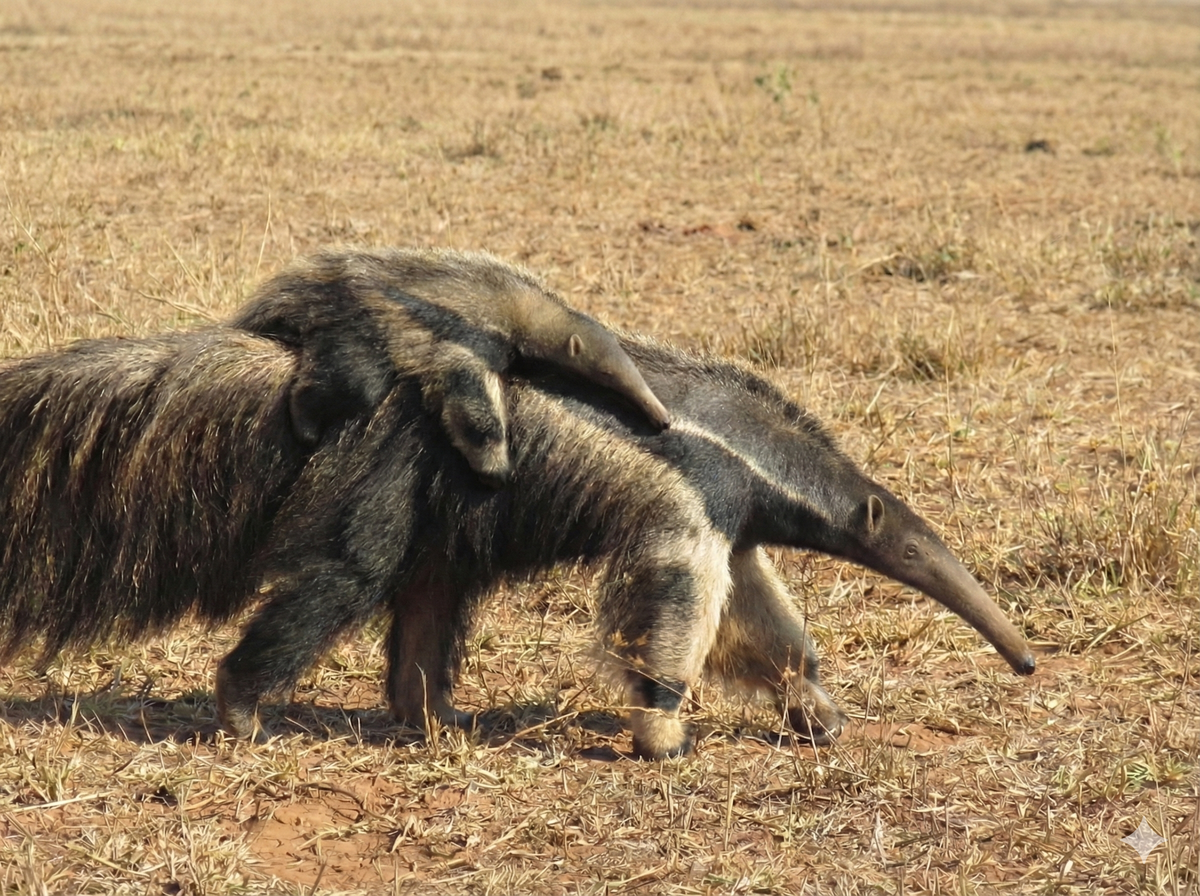
As the woodland has returned, so has the wildlife.
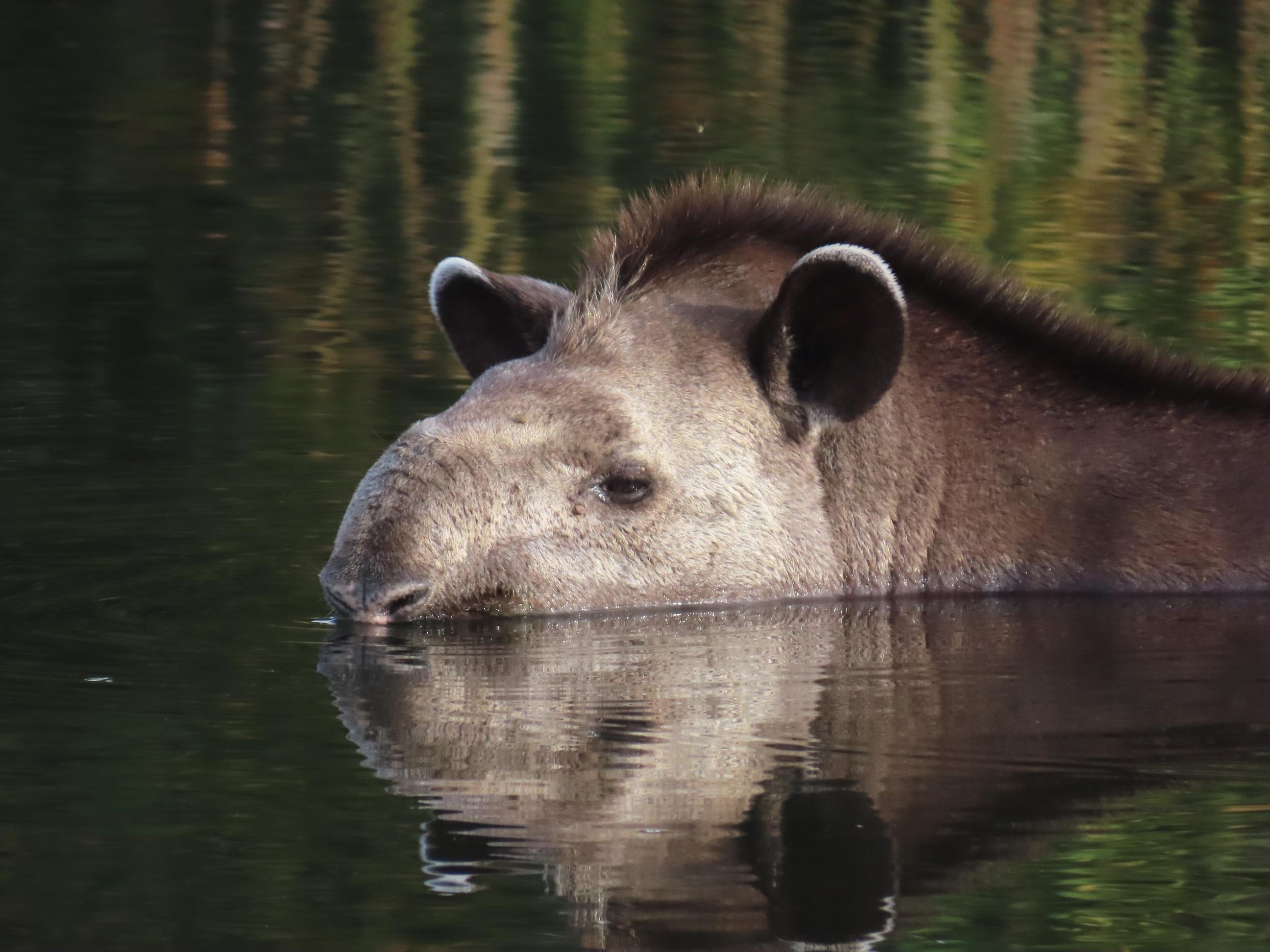
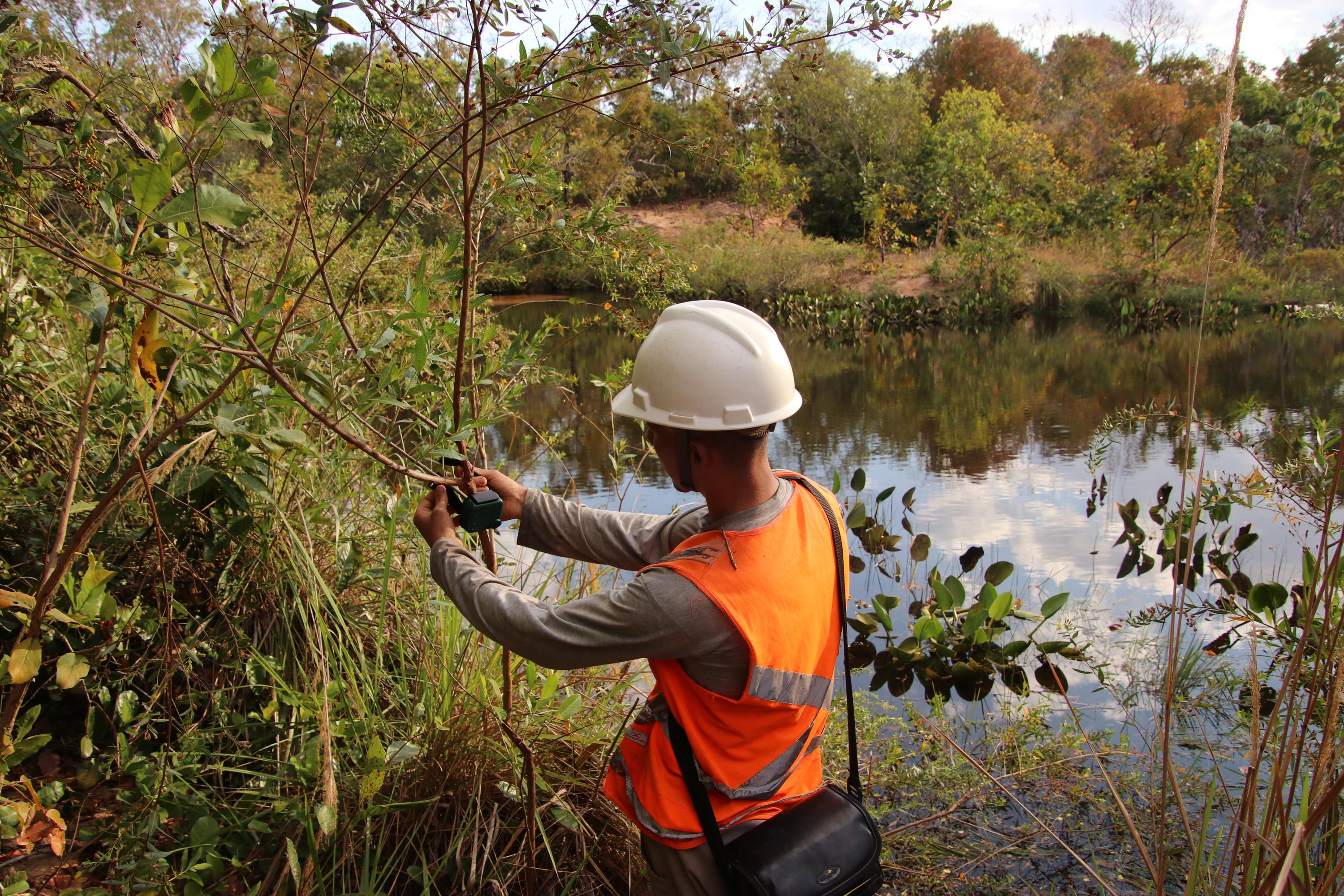
Camera traps set across the project sites have recorded jaguars moving through the savanna — the third-largest cat in the world, padding silently through a riverside corridor that was cattle pasture just three years ago. Maned wolves have appeared, too, foraging through grassland edges at dusk. Researchers have identified more than 1,000 species across the properties so far — including three that are globally threatened: a freshwater catfish, a Chaco eagle and an endangered cottontail rabbit, an elusive species that requires intact forest cover.
That last sighting stopped Wishnie mid-sentence when he described it. “What was inhospitable habitat for this species,” he said, “is now home.”
The hard work
Restoring nature sounds simple: Leave it alone, and in time, it will return. That assumption is often wrong, especially for places like the Cerrado.
Understanding why starts underground.
“The soil here is the oldest in Brazil,” Coutinho said, “sitting undisturbed on one of the most ancient and stable pieces of continental crust on the planet.”
Over eons, as Earth’s other landscapes underwent upheaval — repeatedly reshaped by volcanic activity, glaciation and shifting tectonics — the soils of the Cerrado weathered time in one place, slowly leaching nutrients. The plants above adapted accordingly — sending roots over 10 meters (30 feet) deep to access water and nutrients far below the surface.
But with the onset of modern farming techniques, those deep-rooted native plants were replaced, bit by bit, with Brachiaria — an African grass introduced decades ago to feed cattle. Shallow-rooted and fast-growing, it is the opposite of everything that evolved here. And once established, it releases chemicals into the soil that prevent native seeds from germinating at all.
“Seeds from native plants are likely dormant in the ground,” Coutinho said, “unable to bloom until the grass is eliminated.”
To understand exactly what they were working with, BTG Pactual TIG and Conservation International flew drones equipped with LiDAR sensors across every hectare of the project area, building a map at sub-centimeter resolution. Every pixel was classified by vegetation height and density. Every patch of surviving native growth identified. Every stretch of Brachiaria-choked pasture mapped and measured.
From those maps, every hectare got a prescription.
Where native trees had already taken hold — particularly along the river corridors — the directive was to remove the cattle, prevent wildfires and step back. In some places, it has dramatically worked. “There is one spot I always stop when I visit the property, right on the edge of a riparian corridor. It is now about head high. That was cattle pasture in 2023,” Wishnie said.
But not every hectare is so cooperative.
Where Brachiaria still dominates, BTG Pactual TIG employs precision weed control, targeting the invasive grass to give native plants a fighting chance. “The idea is that this is a one-time intervention,” he said. “After that, the native vegetation takes over.”
And where young seedlings are emerging but struggling, BTG Pactual TIG wages war against a diminutive, well-organized enemy: leaf-cutter ants, a voracious insect that can strip entire patches of vegetation bare overnight. In these areas, the team manages the ant populations for just long enough to give the new growth a fighting chance. Once the vegetation matures and the leaves toughen, the ants resume the role they would play in an undisturbed ecosystem.
And where the land is most degraded — where neither natural regeneration nor targeted intervention is enough — workers plant native seedlings by hand, grown from seeds gathered by local community members and regional native seed collection cooperatives supported by BTG Pactual TIG and supplied from a local nursery.
“The lessons learned don’t stop at the property line,” Wishnie said. “What we’re proving in the Cerrado — that this can work, that it can scale, that it can pay for itself — that’s applicable anywhere people are willing to try.”
For Conservation International, the lessons point toward something even larger: a growing practice of working alongside private investors to ensure that capital flowing into native ecosystems actually delivers for people and nature — not just on paper, but on the ground.
In at least a few old pastures, drawn on a map in a small office, the woodlands are blooming once again and rustling with birdsongs — a corner of the Cerrado on the mend.

