


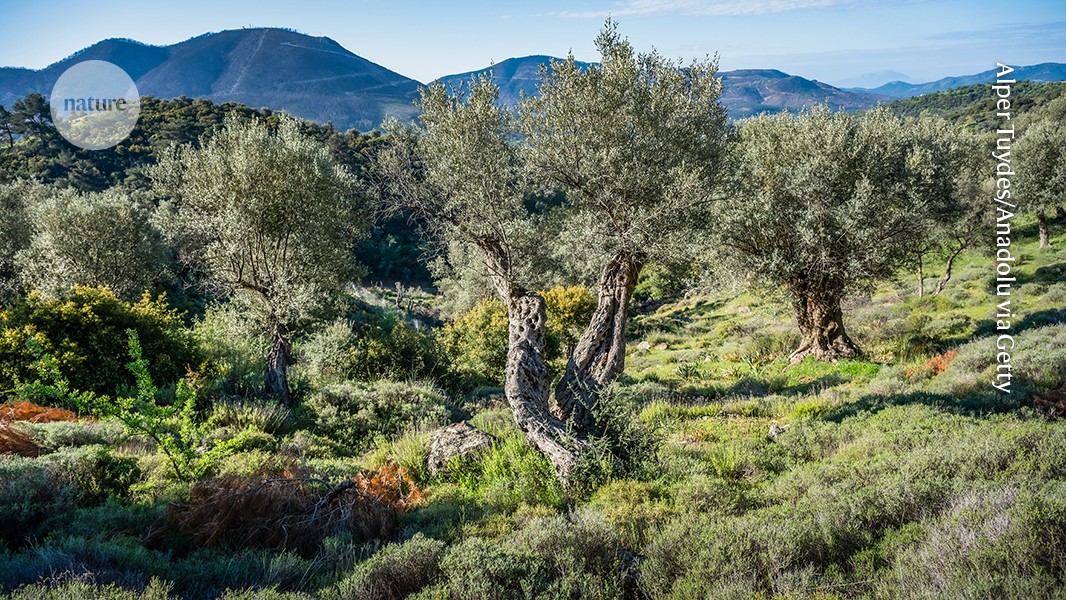
A woodland’s ability to regulate water, soils and carbon can’t be priced.Credit: Alper Tuydes/Anadolu via Getty
Humanity’s inability to manage natural resources is putting the world under strain. To end this free-for-all, some economists want to put a price on nature, to motivate people to conserve more and use less. But a purely economic approach will not address the worst problems that the planet faces.
On 7 May, an expert group convened by the United Nations delivered its recommendations for metrics of national development to complement gross domestic product (GDP). It proposed 31 indicators, covering foundational principles, well-being, equity and sustainability. The report, Counting What Counts, deserves recognition. Its dashboard of measures acknowledges that sustainable development is multidimensional. Its refusal to cram all the facets of human well-being into one index is a theoretically sound and intellectually courageous choice.
Science can take the lead in making better measures of economic growth
However, the report is not an unsinkable vessel. The approach it endorses is comprehensive wealth accounting, which considers produced, human, social and natural capitals as stocks on a national balance sheet. This is fine for evaluating the financial value of timber in a forest or domestic work, say — neither of which is included in GDP. But it is not enough to protect the planet from existential risks. The worst risks involve the deterioration of global commons — shared natural resources such as the atmosphere, oceans, biosphere and Earth system — that are not owned or controlled by any government or subject to any market.
Addressing planet-wide risks such as climate change or biodiversity loss requires consideration of who is affecting them and how. Two questions must be answered. The first concerns scale: what is the maximum level of pressure that the environment can sustain? The second, distribution: who has the right to use how much of that capacity, and across which countries and generations? Only once these inherently political decisions have been made can scarcity be defined and markets produce meaningful prices.
Imagine trying to price a forest. The standing timber’s volume, market price and growth rate can be measured. But the forest’s role in ting the local water supply, preventing soil erosion and sequestering carbon from the atmosphere is harder to account for. The numbers become steadily less reliable: the scale is larger, the interactions more complex and the political decisions more contested. Who owns the rainfall that the forest creates? Who would bear the cost of the carbon released if it were to burn?
Putting nature on the balance sheet: how to account for the ecological costs of our actions
At some point, financial figures reflect modelling assumptions more than the real world. This monetization possibility frontier, beyond which valuation creates the false impression of precision in decisions that are structurally political rather than economic, is not a data gap but a sequencing problem.
Indeed, as scholars including economist Herman Daly and climate-policy specialist Felix Ekardt have shown, when it comes to global natural commons, the standard economic argument for putting a price on nature is flawed. Allocating prices will not redistribute use of natural resources enough to overcome problems on a global scale. Scale and distribution should come before allocation.

