


The Future of the Past: When Cultural Heritage Meets Climate Change Thijs Weststeijn Polity (2026)
In 2019, unprecedented flooding in Venice submerged more than 80% of the historic city, prompting Italy to declare a state of emergency. That same year — and in 2025 — wildfires in California burned thousands of hectares of land. The flames came dangerously close to the Getty Villa, a museum in Los Angeles that houses one of the world’s most important collections of ancient Greek and Roman art.
These incidents illustrate a troubling reality: cultural heritage sites, once seen as enduring fixtures of human achievement, are increasingly vulnerable to climate-driven disasters. The idea that humanity’s greatest accomplishments are now threatened by our own failures is a theme that runs through art historian Thijs Weststeijn’s latest book. The Future of the Past offers a timely and accessible introduction to the growing tension between heritage preservation and a rapidly changing climate.
Sustainability or dystopia? What past patterns tell us about where society is heading
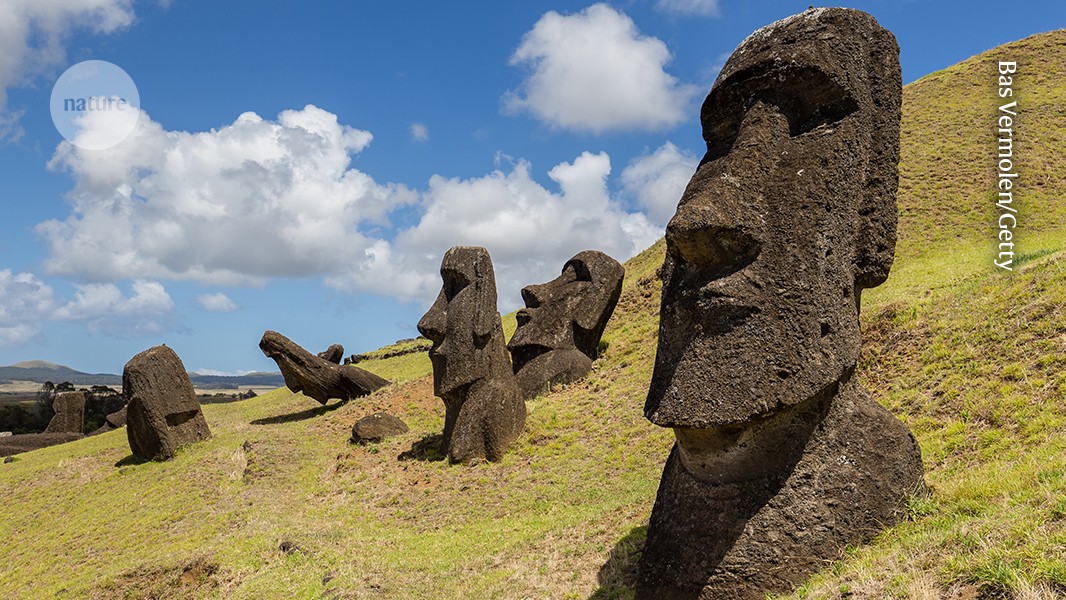
Weststeijn lays out the scale of the challenge by examining cultural and historical sites around the world that are increasingly exposed to climate pressures, ranging from thawing permafrost to rising sea levels. One striking example is the Moai, the monumental stone figures of Rapa Nui (also known as Easter Island), many of which stand along the coast and are threatened by erosion and encroaching waters. More broadly, Weststeijn highlights a recurring paradox. Societies that once depended on the sea for mobility, trade and cultural exchange — such as those on the Swahili coast in East Africa — now find their heritage sites undermined by rising oceans and coastal instability. The very environments that enabled these cultures to flourish are becoming sources of risk.
Origins of UNESCO
Alongside these case studies, Weststeijn situates the discussion in a broader intellectual history of heritage itself. He traces the origins of key concepts such as ‘world heritage’ — a term used by the United Nations cultural organization UNESCO to designate places on Earth that are of outstanding universal value to humanity — and shows how they emerged mainly from Western, Eurocentric frameworks. This is evident in his account of UNESCO’s founding in 1945 after the destruction of cultural monuments and artwork during the Second World War prompted an international effort to identify, value and protect such sites. He argues that although this framework has been influential, it can also limit how we understand and respond to cultural loss in a rapidly changing climate.
Another concept Weststeijn highlights is ‘solastalgia’, a word related to nostalgia, which describes the emotional strain of witnessing one’s environment change or deteriorate. Used by the The Lancet in 2015, it offers a way to grasp the psychological toll of climate change, broadening heritage beyond physical sites to include lived experience and a sense of place (N. Watts et al. Lancet 386, 1861–1914; 2015).

The Getty Villa, a museum in Los Angeles, California, has been threatened by wildfires.Credit: Christina House/Los Angeles Times/Getty
The discussion of alternative conceptions of cultural significance lays the groundwork for a more nuanced exploration of emotive topics, such as adaptive reuse of historic sites, in which places might be altered or repurposed to maintain their relevance and to ensure their survival. At the core of these discussions is the difficult question of which heritage sites should be prioritized for protection as others face imminent loss. “The very concept of heritage is therefore in need of an overhaul, now that the ability to hand it on to subsequent generations can no longer be taken for granted,” Weststeijn writes.
Inspiring climate action
A recurring theme in Weststeijn’s book is that culture and heritage offer a powerful lens through which to understand — and respond to — the climate crisis. As he suggests, there is a profound need for “physical locations to which we can attach the stories we want to tell ourselves”, underscoring the communicative power of heritage sites in shaping public awareness and inspiring climate action.
As emotive places, cultural heritage sites provide a sense of continuity and stability in an increasingly volatile world, which makes their loss all the more acute. Although readers outside Europe might find the book’s focus on primarily European sites to be narrow, Weststeijn’s argument that these places function as proverbial canaries in the coal mine is persuasive. Their vulnerability acts as an early warning sign of the wider risks faced by heritage locations globally.

