


New USGS findings highlight potential for domestic lithium supply, but key gaps remain in the battery chain
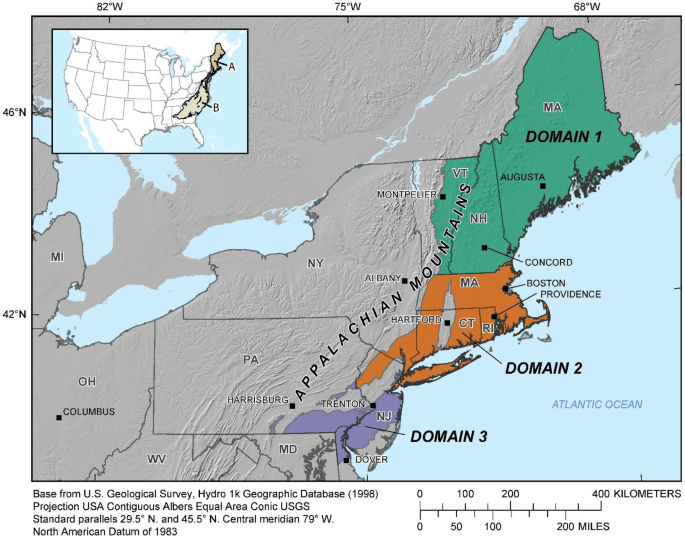
A new study from the U.S. Geological Survey suggests that lithium deposits in the eastern United States could meet domestic demand for generations. While the announcement focuses on energy and electric vehicles, it also raises an important question for the drone industry: could a reliable U.S. lithium supply help enable fully domestic drone production?
The answer is complex. The discovery marks a meaningful step toward supply chain independence, but it does not solve the entire problem.
A Critical Piece of the Drone Stack
Lithium is a core component in the batteries that power nearly all commercial drones. Battery performance directly affects flight time, payload capacity, and operational efficiency.
Today, most drone battery supply chains are global. Lithium is often mined in countries like Australia or Chile, refined in China, and manufactured into cells in Asia before reaching U.S. drone companies. That structure creates both cost pressures and strategic risk, especially as policymakers push for secure and compliant supply chains.
The USGS findings suggest that at least part of that chain, raw material supply, could shift closer to home.
From Resource to Reality
However, lithium in the ground is only the starting point. Turning raw lithium into a drone battery requires several additional steps:
- Chemical refining into battery-grade material
- Manufacturing of cathodes and anodes
- Cell production and assembly
- Integration into drone-specific battery packs
The United States is still building capacity across these stages. While there are growing investments in domestic battery manufacturing, much of the world’s lithium processing and cell production remains overseas.
As a result, the USGS discovery should be viewed as a long-term enabler rather than an immediate solution.
Existing U.S. Battery Efforts
The U.S. does have a developing battery ecosystem. Major automotive and energy companies have invested in domestic manufacturing facilities, and new projects continue to come online. Some defense-focused firms are also working on secure battery supply chains tailored to government requirements.
Even so, many drone batteries, particularly lithium-polymer (LiPo) packs used in small unmanned aircraft, still rely on imported cells. U.S.-based drone manufacturers often assemble or integrate battery systems domestically, but upstream components frequently originate abroad.
Closing that gap will require sustained investment beyond mining.
Cost and Production Implications
A domestic lithium supply is unlikely to reduce drone costs in the near term. Mining and processing lithium in the United States can be more expensive than sourcing it internationally, particularly during early development phases.
Over time, however, the impact could be more significant. A stable domestic supply could help:
- Reduce exposure to global price fluctuations
- Shorten supply chains and lead times
- Support consistent production for U.S. manufacturers
For government buyers, including defense and public safety agencies, the value may be less about price and more about reliability and compliance.
A Step Toward Supply Chain Resilience
The broader significance of the USGS findings lies in supply chain resilience. U.S. drone policy has increasingly emphasized the importance of trusted components, particularly as restrictions on foreign-made systems expand.
A domestic lithium source supports that direction. It strengthens the foundation for a more secure manufacturing base and aligns with ongoing efforts to build a U.S.-controlled ecosystem for critical technologies.
The USGS lithium discovery does not mean that fully domestic drones are imminent. Key parts of the battery supply chain remain global, and scaling domestic production will take time.
But it does move the conversation forward. By addressing one of the most fundamental inputs in battery production, the finding reduces a major dependency and opens the door to further investment.
For an industry focused on building secure, scalable systems, that shift could prove significant.
Read more:

Miriam McNabb is the Editor-in-Chief of DRONELIFE and CEO of JobForDrones, a professional drone services marketplace, and a fascinated observer of the emerging drone industry and the regulatory environment for drones. Miriam has penned over 3,000 articles focused on the commercial drone space and is an international speaker and recognized figure in the industry. Miriam has a degree from the University of Chicago and over 20 years of experience in high tech sales and marketing for new technologies.
For drone industry consulting or writing, Email Miriam.
TWITTER:@spaldingbarker
Subscribe to DroneLife here.

