


There will be little to celebrate on World Malaria Day on 25 April. Global malaria cases, which stood at 238 million in 2018, had climbed to 282 million by 2024, the latest year for which figures are available. Deaths from the disease rose from 575,000 to 610,000 over the same period. Malaria remains endemic in 80 countries. Ending malaria epidemics by 2030 is a target of the United Nations Sustainable Development Goals, but progress has clearly stalled.
Climate shocks, not just warming, threaten malaria control efforts in Africa
Deplorably, this is happening despite the advent of vaccines. In October, it will be five years since the World Health Organization (WHO) recommended the world’s first malaria vaccine, RTS,S. This was hailed at the time as a tool that would “change the course of public health history” by WHO director-general Tedros Adhanom Ghebreyesus. A second vaccine, R21, was recommended two years later.
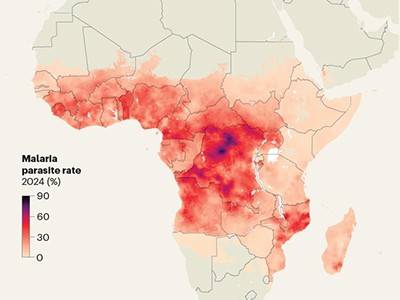
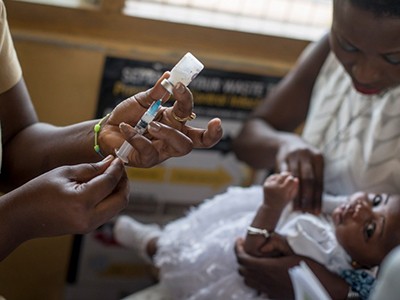
Since the WHO endorsed these vaccines, 25 countries have begun rolling out immunization programmes. But the vaccines are not reaching some of the populations that are most at risk, particularly in Africa, where more than 90% of malaria cases occur. Tanzania, for example, accounted for 4.3% of global malaria deaths in 2024, but has not yet introduced vaccines.
Malaria can be stopped, as high-income countries and some middle-income countries have shown. Vaccines will form a key part of the armoury, along with longer-established strategies for mosquito control, such as insecticide- treated bed nets and antimalarial drugs. “We have more tools today than we’ve ever had before,” says Michael Charles, chief executive of the global RBM Partnership to End Malaria in Geneva, Switzerland. Success will hinge on governments, international donors and public-health agencies doing a better job of coordinating their efforts. Above all, it will take money — and, at present, funding for global public health is under severe strain.
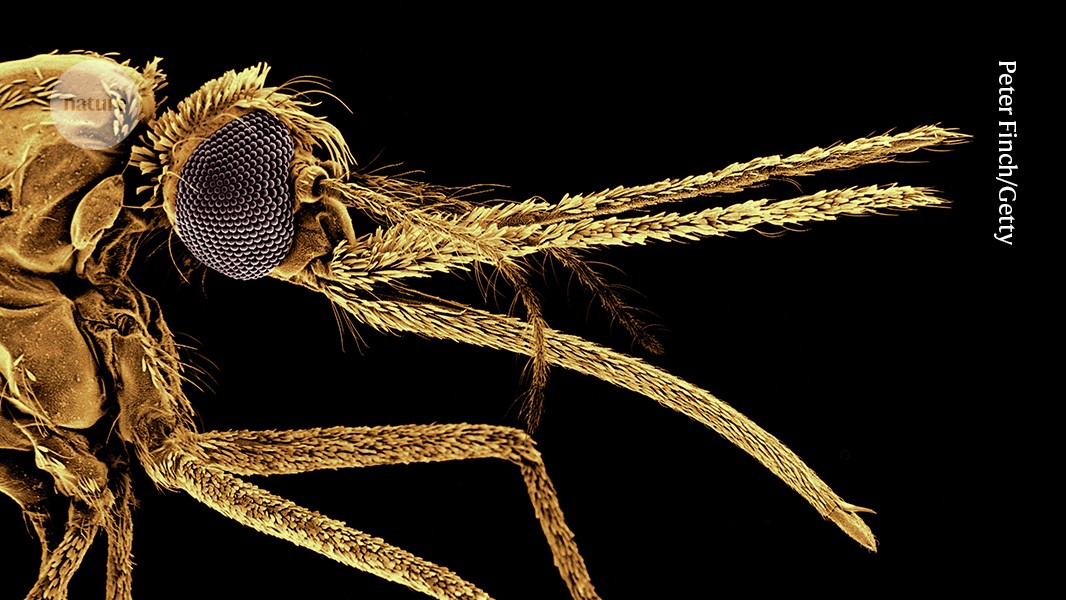
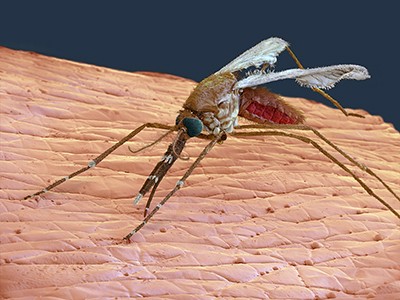
Malaria is caused by parasites in the genus Plasmodium that are transmitted to people who are bitten by infected female Anopheles mosquitoes. Efforts to develop vaccines began several decades ago, but the process was hard going, because the parasite has a complex life cycle and a canny ability to evade immune detection.
RTS,S, which was developed by the multinational drug company GSK with support from the then Bill & Melinda Gates Foundation, has been shown in a large clinical trial to reduce malaria cases by almost 56% in children aged 5–17 months over the 12-month period after immunization with three doses (The RTS,S Clinical Trials Partnership. N. Engl. J. Med. 365, 1863–1875; 2011). R21, developed by the Jenner Institute at the University of Oxford, UK, achieved an efficacy of 75% in the same age group in areas that have perennial malaria transmission (M. S. Datoo et al. Lancet 403, 533–544; 2024).
Second malaria vaccine to win global approval is cheaper and easier to make
RTS,S targets the sporozoite, the parasite’s infectious stage in humans, by training the immune system to recognize a protein on its surface. Researchers at the Jenner Institute built on this approach, and designed R21 to include a higher proportion of this protein and a different adjuvant — a substance that further boosts the immune response.
If these vaccines are widely implemented in areas where malaria transmission is moderate or high, they could prevent half a million deaths by 2035, the WHO says. But there are several challenges to achieving this goal, not least the fact that four doses of the vaccines are needed for maximum efficacy. This is costly, and not always practical — for example, for low-income or rural households living far from primary-care facilities. And malaria vaccination timetables don’t always align with other routine immunization schedules, says William Moss, an epidemiologist at the Johns Hopkins Bloomberg School of Public Health in Baltimore, Maryland. In areas with seasonal transmission, doses should be given just before the malaria season begins.
The biggest problem, however, is obtaining funding for malaria control. Gavi, the Vaccine Alliance, is the main funder of malaria vaccines for children in the poorest countries. Last year, governments and philanthropic funders raised some US$9 billion of Gavi’s target of around $12 billion for the 2026–30 period. Funding might be lower in future years, because US health secretary Robert F. Kennedy Jr has said that the United States will no longer contribute to Gavi. And it is not only investments for vaccines that are down, but also funding for malaria control in general. In 2023, total global funding for tackling the disease reached $4 billion, less than half of the WHO’s target of $8.3 billion.
Scientists hail historic malaria vaccine approval — but point to challenges ahead
Scarce funding means countries having to make hard choices between rolling out vaccines and accelerating the provision of longer-established control measures. The makers of R21 can produce up to 100 million doses a year, and will sell these to Gavi at $2.99 per dose, according to a recent deal. Production capacity of RTS,S is smaller, at around 8 million doses a year, and this vaccine is available at the higher price of $9.81 per dose. However, an increase in production is planned, and the price is expected to drop to under $5 per dose by 2028, according to GSK.
Some diseases are genuinely difficult, if not impossible, to eliminate. Malaria is not one of them. Egypt and Cabo Verde are among the countries that have wiped out the disease. They succeeded by treating malaria as a national priority, and supporting elimination efforts with robust data systems and surveillance, as well as extensive community engagement.
This year’s World Malaria Day slogan is “Now we can. Now we must.” “‘Now we can’, because we have the tools,” says Charles. “And ‘Now we must’ because it’s unacceptable that in the twenty-first century, 600,000 children are losing their lives from a disease that is preventable and curable.”

