


The Return of the Oystercatcher: Saving Birds to Save the Planet Scott Weidensaul W. W. Norton (2026)
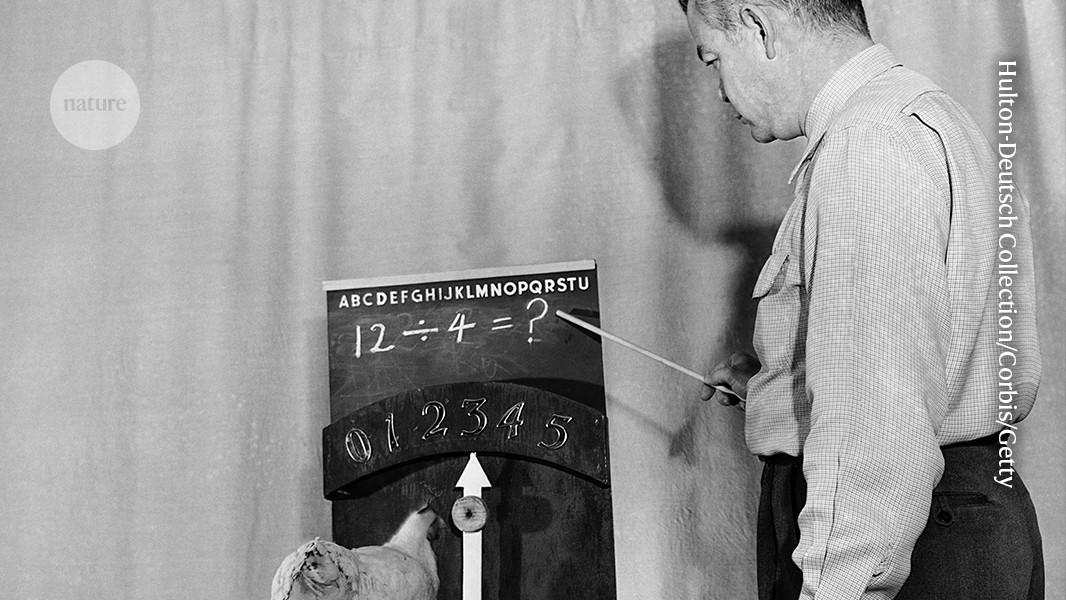
A Bird’s IQ: Innovation, Intelligence, and Problem Solving in the Avian World Louis Lefebvre, transl. Pablo Strauss Greystone (2026)
How did birds evolve? The answer is wilder than anyone thought
Birds are in trouble. In the United States alone, one-third of bird species are rated as of high or moderate conservation concern. North American forests have lost more than one billion birds in the past half-century. A 2019 study found that grassland bird populations have declined by 53%, and 90% of those losses come from just 12 of the most common avian families, including sparrows, blackbirds and finches (K. V. Rosenberg et al. Science 366, 120–124; 2019).
Naturalist Scott Weidensaul, the author of more than 30 books about birds and nature, calls this trend “a gut punch”. Weidensaul wrote about the wonders of bird migration and the challenges facing migrating birds at a time of rapidly changing climate and massive habitat loss in his 2021 book A World on the Wing. After a colleague suggested that he might write another book about what is going right for birds, Weidensaul responded with his latest work, The Return of the Oystercatcher.
Weidensaul begins the book with the bad news, by taking the reader through a history of escalating threats to birds. Sports hunting of raptors such as eagles and falcons and the shooting of many species for their plumage, used to adorn hats in the late nineteenth and early twentieth centuries, decimated bird populations and drove many species close to extinction. Through legislation, some destructive practices were banned and bird populations began to rebound slowly.

Bald eagles (Haliaeetus leucocephalus) were hunted nearly to extinction in the twentieth century, but conservation efforts have caused the population to make a remarkable recovery.Credit: Smithlandia Media/Getty
But a larger threat loomed: habitat destruction. Coastal development has robbed shorebirds of their nesting grounds, and the destruction of marshes, mudflats and other wetlands has deprived waterfowl of the places where they foraged. Millions of acres of grassland have been converted to agriculture, all but eliminating the native short-grass prairies that birds such as the sage grouse (Centrocercus urophasianus) depend on. Deforestation has also eliminated bird habitats in many parts of North America.
Conservation successes
The good news is that these losses have spurred a wide array of US conservation projects, which Weidensaul reports on. Thanks to government and private-sector efforts, bald eagles (Haliaeetus leucocephalus) have made a spectacular recovery since the 1970s, going from a low of 417 breeding pairs in 1963 to an estimated 324,000 birds today. He also writes of an effort to reintroduce Atlantic puffins (Fratercula arctica), a cold-loving species, to Eastern Egg Rock in the Gulf of Maine — a project that helped to inspire hundreds of seabird restoration efforts worldwide. There are now around 175 puffin breeding pairs on the rock, despite rising ocean temperatures pushing the fish that the puffins depend on into deeper waters that are difficult for the birds to reach.

Puffins (Fratercula arctica) were completely eradicated from Eastern Egg Rock in the Gulf of Maine, but conservation efforts have successfully reintroduced the species to the area.Credit: Scott Suriano/Getty
Weidensaul also relates the remarkable recoveries of two previously threatened species: piping plovers (Charadrius melodus) and oystercatchers (Haematopus palliatus). The birds had been under pressure from the growing number of people flocking to New England shores with their dune buggies and off-lead dogs, which were destroying nesting sites. Massachusetts, in the face of fierce opposition from residents, responded in the early 1990s with restrictions that helped to protect the beleaguered birds during their early-summer breeding season. Other states followed suit.
Tracing pollution in the lives of Arctic seabirds
Mountain plovers (Anarhynchus montanus)and sage grouse found unlikely allies on the Great Plains, where some conservation-minded ranchers in coalition with government agencies have helped these once-common birds to recover. And the habitats of critically endangered Hawaiian birds such as ‘a’o (the Newell’s shearwater) and ‘ua’u (the Hawaiian petrel) are being fenced off to keep predators out, helping them to hang on to a precarious existence in upland forests.
Weidensaul ends his book on a hopeful note. He’s especially encouraged, he says, by efforts in the Northwest Territories and Hudson Bay in Canada. There, Indigenous people, in partnership with the Canadian government, are setting aside vast tracts of the their homelands, the boreal forests, for conservation. If birds are to be saved, the author argues, people need to take a page from these efforts and forge personal relationships with the land that they inhabit and the creatures that live there.
Avian smarts
Another ornithologist has good news of a different sort — namely that birds are smarter than we think and remarkably resilient when responding to the challenges that they face. Birds have had a bad rap, according to Louis Lefebvre, the author of A Bird’s IQ. When we say that someone is ‘bird-brained’, Lefebvre writes, we are implying that they are not too bright. But that’s unfair, he says, not just to the humans who’ve been disparaged, but to our feathered friends, who are frequently much more clever than people give them credit for.
Lefebvre, who has spent decades conducting research on bird intelligence, argues that some brainy avians are remarkably similar in their cognitive capacity to primates such as ourselves. This is especially true of corvids, a resourceful group of perching birds that includes ravens and crows. “By evolutionary descent we may be naked apes,” the author writes. “But by virtue of our resilient, invasive, and opportunistic intelligence, we are in many ways featherless crows.”

Crows and other corvids are some of the most innovative bird species.Credit: NPL/Alamy
Lefebvre cites naturalist Charles Darwin, who held the view that human intelligence differs in degree but not in kind from that of other animals. Many highly intelligent creatures exist on distinct branches of the tree of life from Homo sapiens and evolved their brain power independently.

