


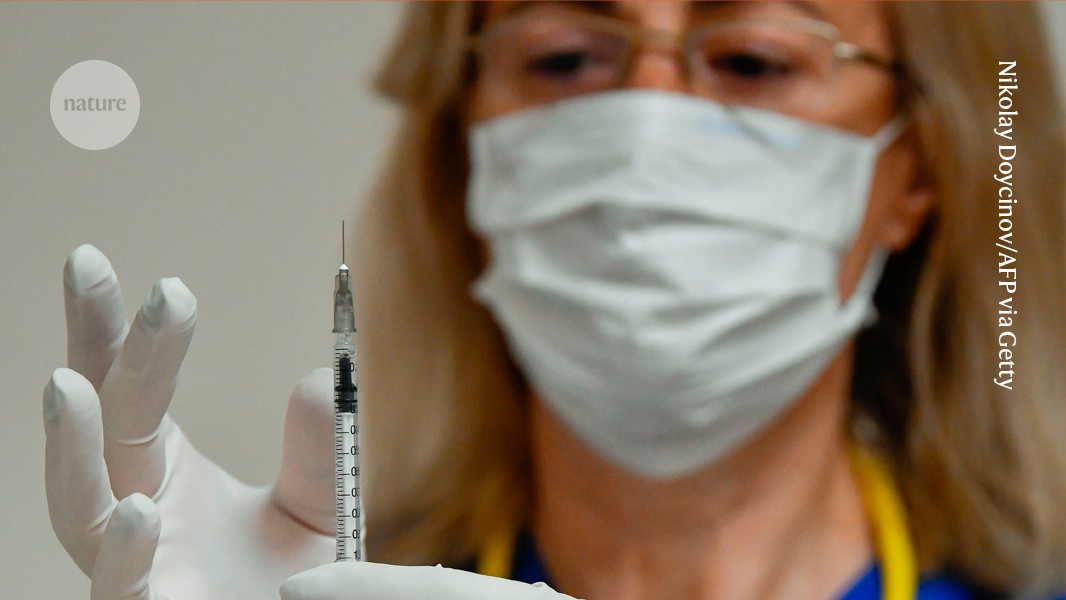

The Bacillus Calmette–Guérin vaccine, often given to infants in countries with high rates of tuberculosis, is also being tested as a treatment for diabetes, Alzheimer’s disease and other conditions.Credit: Nikolay Doycinov/AFP via Getty
A century-old vaccine against tuberculosis helps to regulate blood sugar in people with certain types of diabetes, such that they can reduce their insulin use, according to the results of a phase II clinical trial. The finding adds support for the once-controversial hypothesis that vaccines made with living but weakened pathogens can protect against both their target disease and off-target ones.
Hope for diabetes: CRISPR-edited cells pump out insulin in a person – and evade immune detection
The trial vaccine — called the Bacillus Calmette–Guérin (BCG) vaccine, after the two researchers who developed it — is derived from a weakened form of the bacterium that causes tuberculosis in cows. In the 1920s, studies found that the shot reduced mortality in children by protecting them from not just tuberculosis, but other deadly infections, too. Fast-forward to today, and it has been approved by the US Food and Drug Administration (FDA) to treat bladder cancer and is even being investigated against conditions such as Alzheimer’s disease. Its broader benefits are “no longer a fluke”, says Denise Faustman, a medical researcher at the Massachusetts General Hospital in Boston who ran the diabetes trial.
The results, presented by Faustman at the American Diabetes Association meeting on 7 June in New Orleans, Louisiana, demonstrate yet another ability of the BCG vaccine: it helps to regulate blood sugar in people with autoimmune diabetes conditions. The immune systems of people with these diseases, which include type 1 diabetes, attack β-cells in the pancreas that produce insulin.
Faustman and her colleagues studied two groups: people with ‘juvenile onset’ type 1 diabetes, which begins when a person is 21 or younger, and those with latent autoimmune diabetes in adults (LADA), which usually occurs at age 30 and above. In both groups, the BCG vaccine meaningfully reduced insulin use.
“This opens your eyes to a whole new way to think about people with diabetes, and getting good blood-sugar control without a new device or new machine,” Faustman says.
In pursuit of answers
Some of the first strong hints that the BCG vaccine could help with diabetes come from studies in mice. One, reported in 19901, showed that the BCG shot could prevent or suppress type 1 diabetes in young mice that had been bred to develop the condition.
‘Universal vaccine’ protects mice against multiple pathogens
Faustman and her colleagues enrolled 95 people with LADA in their trial; 68 of them received six BCG shots over a five-year period, and the others received placebo jabs. The BCG vaccine did not lower blood sugar levels measurably, but it did decrease insulin use by an average of almost 3% over the trial timeframe. Importantly, insulin use in the placebo group increased by an average of 22% over that period. This suggests that the vaccine’s stimulation of the immune system is somehow protecting β-cells in people with LADA, preventing them from deteriorating as quickly as those in people in the placebo group.
“The importance of this study is that they demonstrate that, by activating the immune system with the vaccine, they are able to downregulate the autoimmunity,” says Åke Lernmark a diabetes researcher at Lund University in Sweden.
“The data in LADA are very nicely in line with those old [mouse] studies,” says immunologist Mihai Netea at Radboud University in Nijmegen, the Netherlands. “I find this very exciting and interesting.”

