


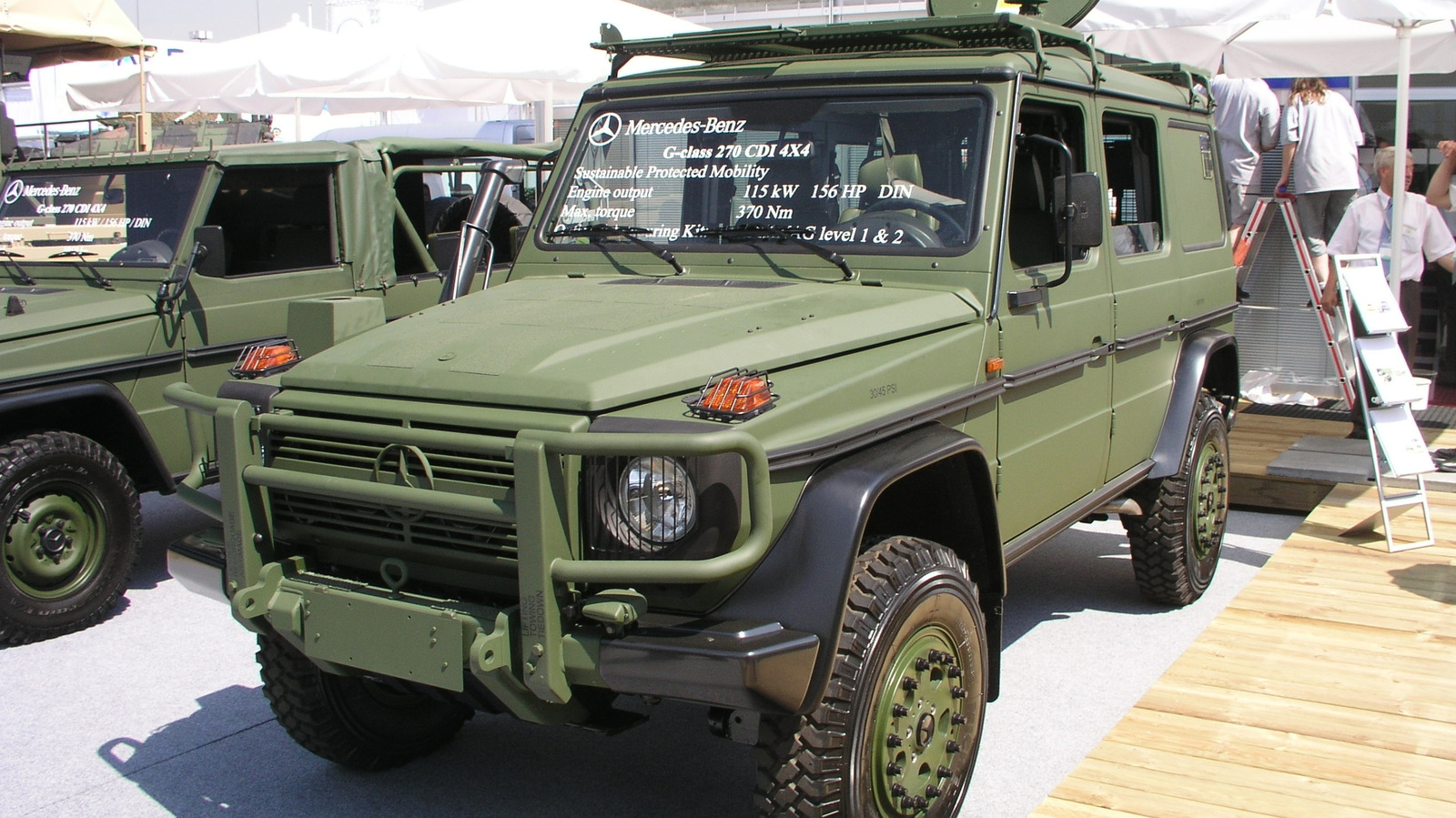
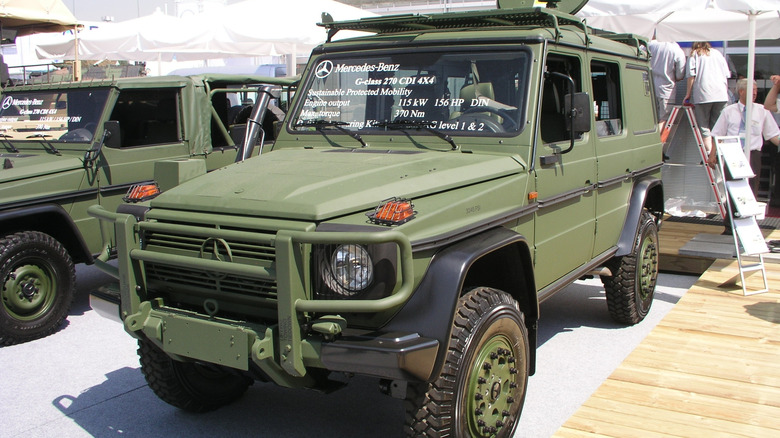
Mercedes-Benz has announced that it intends to expand its military offerings, entering an agreement with German defense startup Tytan Technologies to start making mobile anti-drone platforms. The idea is for Mercedes to provide G-Class SUVs and Sprinter vans, while Tytan provides the radars, launch systems, and ramming drones. Mercedes does have a history of supplying military vehicles (yes, even after 1945), including the G-Class itself. But Europe is in the midst of a broader shift towards defense spending, and that is pushing struggling car brands to pivot from autobahns to the battlefield. As Chinese competition and an uneven EV rollout threaten legacy carmakers, they are looking for more stable markets. Like, you know, war.
Before you get too uneasy, this new platform, called Drone Defender, is not designed for lethality. Rather, it will be armed with Tytan’s new interceptor drones, per the Financial Times. Interceptor drones are designed to ram into incoming attack drones; they are strictly defensive and cannot attack ground targets. Ukraine, as you might imagine, has been spearheading the development of the technology to defend against Russian strikes. Placing this system onto a Mercedes makes for a kind of mini-mobile SAM system, though significantly cheaper.
The American equivalent here is the LOCUST, which fires lasers rather than interceptors. That may sound much more advanced and sci-fi, but it’s already led to massive problems. In just a matter of weeks, the FAA had to twice shut down Texas airspace when the system fired at targets (which turned out to be a party balloon and then an American border patrol drone). Lasers, you see, don’t stop: they pierce through and could potentially hit an airplane. The interceptor model may be the better solution.
The kinder, gentler German war machine
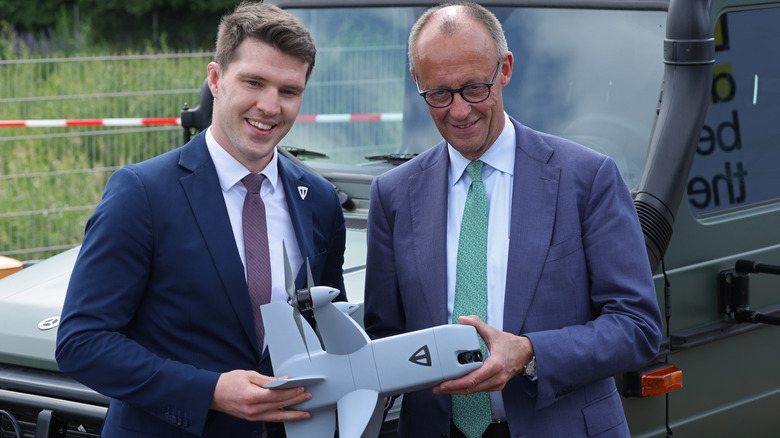
The idea of German car brands heeding the call of duty, at a time when Russian tanks are rolling across Ukraine, may bring up memories of a very bad era. At least in this case, Mercedes doesn’t seem to be aiming for the front lines at all, but rather for defensive positions around critical infrastructure. Recall that an unknown actor (it’s Russia) has been sending drone swarms into protected airspaces (such as airports) across Europe. That led countries across the continent to enact new, more permissive laws to allow security forces to shoot down drones. Mercedes’ Drone Defenders could be stationed at airports, power plants, and dams to protect against this unknown actor (it’s Russia).
Mercedes isn’t alone here, either in the defense pivot or the focus on protection. Renault will start producing both ground and aerial drones, and Volkswagen is going to start building parts for missile defense systems, per CNBC. Porsche last year made an investment into reconnaissance drones. None of these otherwise consumer-facing companies want to appear to be killing anyone, but defending is just fine. Keep an eye on how that evolves.
If all goes well, Drone Defenders should start rolling off production lines by 2027.

