


The advice
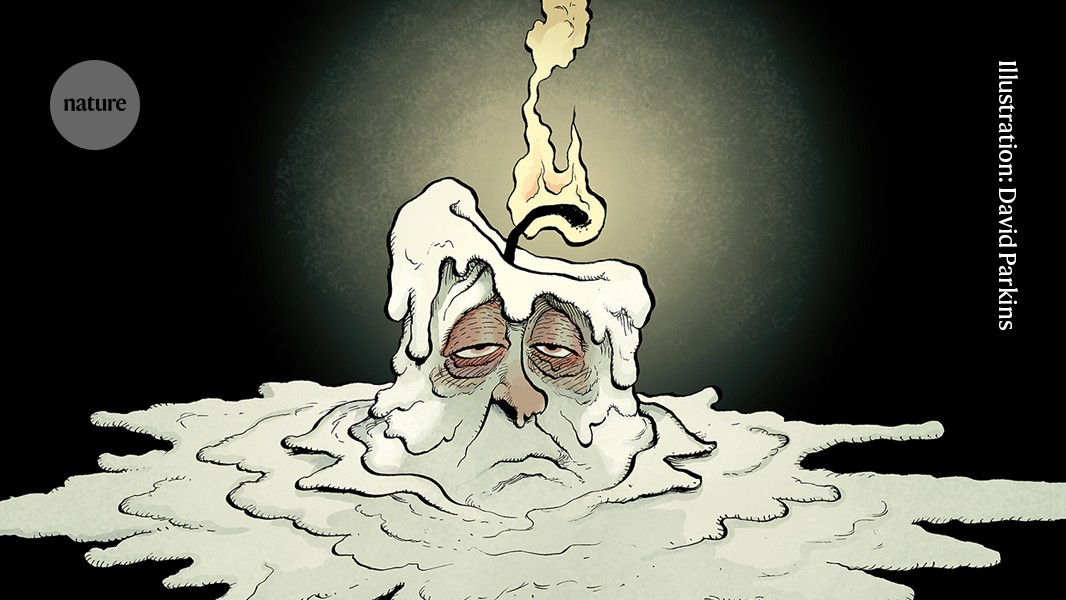
Burnout is everywhere. Nearly half (48%) of workers from eight countries reported feeling burnt out in a 2023 survey by the Boston Consulting Group in Massachusetts. According to the 2026 State of the Workplace Report by the analytics and advisory company Gallup in Washington DC, 64% of employees are not engaged in their work and 40% reported feeling stressed daily. Burnout can be particularly pervasive in academic settings, in which researchers often feel intense pressure to perform. Nature’s careers team sought advice from two psychology researchers and a workplace strategist about how to cope with burnout while pursuing a PhD.
Acknowledge the signs
The World Health Organization defines burnout as an occupational phenomenon that results from chronic workplace stress and is characterized by three dimensions: feeling exhausted, increased mental distance from one’s job and reduced professional efficacy.
Simply acknowledging the problem is key, says Amir Kabunga, a psychologist at Lira University in Uganda. “Thank you for acknowledging that you are burnt out,” Kabunga says. “That is the first step.”
How I managed my intense burnout
“The enthusiasm and intense commitment that often characterize the early stages of an academic or professional path are natural expressions of youthful idealism — a sense of boundless possibility,” says Beata Mańkowska, an occupational burnout researcher at the University of Gdańsk in Poland. “Importantly, you have engaged in deep and honest self-reflection. You have begun to see your situation clearly, moving from idealism towards realism and sound judgement.”
Along with recognizing your own symptoms of burnout and the impacts that they are having on your professional and personal life, you critically analysed the limitations of pursuing an academic career. This is something to be proud of, Mańkowska says.
Take time to recover
The next step is to take some time away from the academic environment. “The only way to treat burnout is to interrupt the stress cycle,” says Jennifer Moss, author of the 2021 book The Burnout Epidemic, who is based in Kitchener, Canada. “You have to take a meaningful break in which you’re just focusing on rest and recovery.”
Because you’ve been exposed to high levels of stress for quite some time, there’s no way to power through or work harder to overcome burnout, Moss says. The best thing to do is to pause, rest, then reassess how you feel about your PhD and career path from a place of clarity. But Moss acknowledges that taking long periods of time away from your laboratory is a privilege that not everyone can afford. Financial constraints can make it difficult to prioritize personal well-being over income. Talk to your academic advisor and friends to discuss what opportunities are available for supporting a prolonged break. “Make it clear that if you got this space, you could come back in a way that’s much more engaged, clear-minded and productive; it’s better for the research and it’s better for the team,” she says.

