



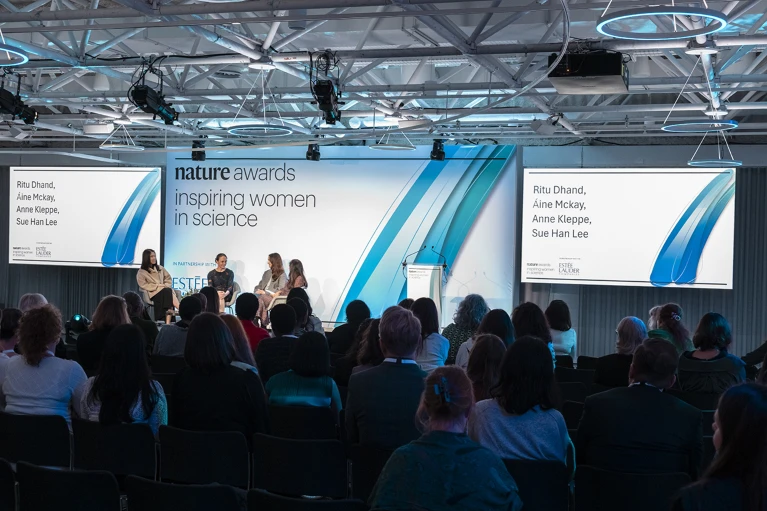
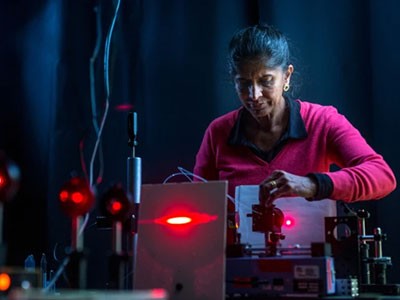
The Inspiring Women in Science award recognizes projects promoting gender equality in science, technology, engineering and mathematics.Credit: Ian Alderman
Outstanding science has the potential to transform the world for the better. The Nature Awards champion projects that are leading the way.
Competition is fierce, with researchers from around the world vying to be recognized by Nature for their scientific excellence. Here, three of the judges share their tips for potential applicants of three award categories in 2026: the Spinoff Prize, which celebrates the success of products or services created by university spin-off companies; Inspiring Women in Science, which recognizes projects promoting gender equality in science, technology, engineering and mathematics (STEM), with categories for scientific achievement and science outreach; and the Global Grants for Gut Health, which funds projects focused on boosting knowledge about the gut microbiota.
The Nature Awards are sponsored awards that are run independently from sponsors and the publisher.
SUE SUNDSTROM: panel chair, the Spinoff Prize
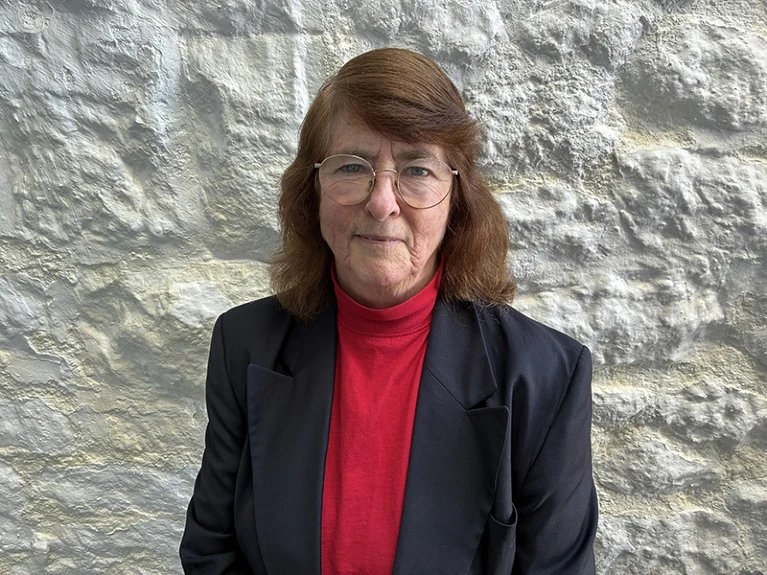
Sue Sundstrom looks for applicants who know how to understand customers’ needs.
Having worked in private companies and the university sector, Sue Sundstrom uses her commercial background to show academics how to succeed in the business world. As a former head of commercialization and impact development at the University of Bristol, UK, she was pivotal in the creation of the Enterprise Fund, which backs businesses originating from the university. Through her company, Sundstrom Innovation, established in 2019 in Clevedon, UK, she supports scientists with early-stage projects — especially university spin-offs and start-up companies — in securing deals, finding collaborators and scaling up.
Nature Spotlight: Philanthropy and awards
Sundstrom is one of the 12 judges for the Spinoff Prize: a global award open to early-stage university spin-offs, which are companies run by individuals or teams who have effectively turned original research from their university or research institute into products or services. For example, the winner in 2024 was Kevin Braeckmans at Trince, a spin-off from Ghent University, Belgium. Trince developed a technology called LumiPore, which uses laser-heated nanoparticles to enable molecules to enter living cells, for research or therapy, without harming the cells.
As a judge, Sundstrom looks for applicants with a clear plan on how to reach customers. This means getting direct feedback from consumers to understand what they want, rather than just finding statistics online, she says. This strategy is much more likely to result in the creation of a good product.
Although commercial viability is crucial, applicants shouldn’t overlook the importance of providing robust evidence, such as scientific papers, to back up claims about the strength of their work, she says: “The first triage for the Nature Award is good science.” A robust and scientifically sound project is something judges will look for, she explains.
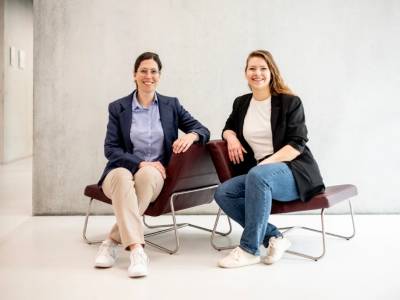
My career path from chemist to spin-off co-founder to chief technology officer
When it comes to advice, Sundstrom says that applicants don’t need to be deeply involved in every tiny detail of the company: a good founder recognizes what they don’t know and reaches out for support. Sundstrom says that many academics find it challenging to admit that they don’t have the time to upskill in every area needed for business, such as accounting and sales. “There’s a temptation among very strong academic scientists to try to understand it all in detail, do it all themselves, and it doesn’t work because it’s a different set-up,” she says. Setting up a profitable business is just too different from the scientific-research process. The key is to build a strong, entrepreneurial team with deep technical expertise, she adds.
Spin-off companies aren’t the right option for everyone — being a founder is difficult and stressful and not every firm succeeds, Sundstrom says. But when an applicant is on the right route, they can be incredibly effective in translating high-quality science into a product or service that has a positive impact.
VANI MAHADEVAN: panel member, Inspiring Women in Science: Science Outreach

Vani Mahadevan advises applicants to use clear and honest communication in their applications.Credit: Harish Dhakshinamoorthy
With more than 25 years of consulting experience — supporting start-up founders in their entrepreneurial journeys — Vani Mahadevan, based in Kuala Lumpur, is part of the Inspiring Women in Science panel. The award aims to celebrate initiatives around the world dedicated to improving gender equality in STEM.
Applicants for the Science Outreach category — which Mahadevan is judging alongside eight other panellists — can be individuals, teams or organizations that have projects to promote STEM education or careers for young women and girls.
‘No one quite like her’: meet the female colleagues who inspire these award-winning women in science
A co-founder of StartupMalaysia, an initiative in Kuala Lumpur helping Malaysian companies to scale up, and of act2, a venture that supports mid-career and seasoned professionals in their career progression, Mahadevan has supported many grassroots entrepreneurs, particularly women from rural communities, by helping them to upskill through access to technological tools and training. Having designed many community-outreach programmes, she was excited by the opportunity to judge this award and has put herself forward to support participants as a mentor.
When judging, Mahadevan looks for innovation and an entrepreneurial mindset, regardless of whether the applicant comes from a non-profit organization or a private company. She likes to see organizations that start small with their projects and test and pivot as they go. “Start with what you have,” she says. “If you’re going to fail, fail fast.” She thinks that a founder’s approach should be in line with the concept of affordable loss: they should invest only the time and money that they are willing to lose if things go wrong, rather than putting everything into a goal that eventually might not work out.
Knowing the challenges that entrepreneurs face, she wants to see that applicants have the ingenuity to deal with obstacles and “turn their lemons into lemonade”. She advises that, when coming across a challenge, applicants should research how other people around the world are dealing with similar issues, so that they can learn from solutions that have already proved successful. “People tend to work in silos,” she says, but “the challenges that a lot of these projects face are quite universal.” Common issues include Internet connectivity, access to facilities and the mindset of the societies they are trying to engage with. When encountering such problems, teams can move forwards more quickly by mirroring how projects elsewhere in the world have already overcome them.

