



More organizations than ever before are operating, financing and regulating activities in space. The question is whether all this activity is designed intentionally — with each sector contributing what it does best — or left to fragment through uncoordinated choices.

Historic Artemis II Moon fly-by: Nature’s live coverage as it happened
Problems of incoherence are already evident and will mount. Orbital congestion is growing, with thousands of satellites crowding low Earth orbit and defunct satellites generating debris. More than 40,000 shards of metal circling Earth threaten to collide with spacecraft1, yet there is no internationally agreed protocol requiring space junk to be tracked or remediated.
Scientific, commercial and security activities in space are often planned in isolation, even when they operate in similar orbits2 and use the same communications frequencies3. A patchwork of approaches for space-traffic management and data sharing heightens risks of confusion and collisions.
Plans for future Moon bases and infrastructures are also being prepared in parallel, without shared norms4. And the race to control lunar resources raises questions about rights to extraction, liability and benefit-sharing that the 1967 Outer Space Treaty left unresolved.
Key research facilities on Earth and in orbit also need protection from reflected light and radio interference from satellites. Flagship astrophysics projects — such as the James Webb Space Telescope, the Vera C. Rubin Observatory in Chile, the Extremely Large Telescope, also in Chile, and the Square Kilometre Array in South Africa and Australia — will provide crucial data for next-generation navigation and forecasting systems.
The core tension is this: governments prioritize security and sovereignty, whereas companies optimize speed and commercial advantage, and scientists require stability and open data. These priorities are rarely reconciled before systems are built and deployed.
What is needed is space diplomacy. Here, we highlight three mechanisms that can enable many groups to operate in space without undermining one another. First, building coordination into the licensing and design phase of space systems; second, creating venues where governments, industry and scientists develop operational norms together; and third, establishing shared technical interfaces for interoperability and safety that all actors can adopt — not as a treaty obligation, but as the shared plumbing that makes the system work.
Such an approach can extend beyond space. Any science- or technology-driven domain in which many groups share fragile infrastructure — such as biosecurity, the high seas and artificial intelligence — faces the same coordination challenge.

China’s Chang’e-6 mission returned the first samples from the far side of the Moon.Credit: CNSA/CLEP
Space makes the failure modes and stakes clear; choices made now will shape what is possible for generations. Getting the architecture right here offers a blueprint for how to govern shared technological frontiers in an era of distributed innovation.
Embed space diplomacy into operations
More than 90 nations operate satellites, thousands of private companies provide space-based services, and agencies worldwide are developing their own space programmes. The nature of missions is broadening, from one-off government-led projects to multi-mission programmes coordinated through international alliances.
Philanthropic funding is on the rise: for example, in the United States in 2023, philanthropic organizations and university sources supplied 39% of basic-research funding at universities and non-profit research institutions, up from 14% in 1965, whereas the federal share declined from 76% to 51% in the same time period5.
Yet there is little coordination between all these projects1,2. For example, the characteristics of a satellite, such as its design, brightness, radio emissions and plans for its working life, are typically set before launch. And it’s hard to change anything once it’s in orbit.

Private companies are flocking to the Moon — what does that mean for science?
Some changes can be negotiated after launch — usually when there is a clash of interests, such as a potential physical collision or signal interference. But retrofitting satellites is expensive and technically difficult. After pressure from astronomers, aerospace company SpaceX added visors to subsequent Starlink v1 satellites to reduce light reflections that could interfere with astronomical observations, but the fix was partial6. Proposed orbiting data centres would compound this problem for optical observations. The US Federal Communications Commission, which licenses commercial satellites, has historically addressed radio interference rather than optical. Case-by-case licence conditions have begun to include optical brightness targets, but no systematic framework yet governs optical pollution.
Similarly, altering the altitude of a satellite to avert crashes is often impossible. For example, in 2009, the Iridium 33 and Cosmos 2251 satellites collided in low Earth orbit — the first accidental high-speed collision between satellites — generating more than 2,300 fragments of debris1.
New regulation is not the answer — the leverage already exists. Governments license every satellite launch and award procurement contracts. Building coordination requirements into the criteria for granting future licences is simpler and cheaper than imposing new rules for satellites already in orbit.
Basic requirements should establish limits for satellite brightness and radio-frequency interference (RFI), with regular audits. Open application programming interfaces (APIs), which are publicly available machine-readable data services, can be deployed to issue alerts when two objects are predicted to pass each other too closely (within 1 kilometre, say). To minimize debris, a satellite should meet end-of-life reliability targets, such as a 90% probability of completing a manoeuvre to remove it from orbit.
Operators should share standardized, regularly updated orbital-position and velocity data in formats that can be ingested automatically by observatories, collision-avoidance systems and other operators. They should set proprietary periods (for example, 6–12 months) for keeping mission or sensor data private before mandatory community release.

The Light-1 CubeSat satellite is a joint initiative between space agencies and universities in the United Arab Emirates and Bahrain.Credit: NASA
Contracts should be awarded by government agencies to operators that are meeting performance targets, following models such as NASA’s Commercial Crew programme, which pays aerospace companies against certified capability milestones for transporting crew to the International Space Station, and the US Defense Advanced Research Projects Agency’s ‘Grand Challenges’, which are prize competitions that reward demonstrated performance in national-defence technologies. Governments should score procurement bids more highly if they include interoperable systems and debris-management plans, for example.
Compliance can be verified by reviewing designs at the licensing stage, and through post-launch remote checks and independent audits of brightness and RFI using ground-based facilities, benchmarked against standards such as the Long-Term Sustainability Guidelines from the United Nations Office for Outer Space Affairs7 (UNOOSA) and debris-mitigation standards from the International Organization for Standardization. Academic institutions are well placed to provide independent certification.
Operators stand to benefit. Those who build to interoperable, transparent standards will be better positioned to win contracts, international partnerships and institutional financing.

China is planning to land people on the Moon — and might beat the United States to it
Companies might see compliance as costly. But fragmented standards impose higher costs than do shared ones — operators in the Artemis ecosystem already expend substantial resources managing incompatible data formats.
A potential objection is that embedding operational norms into national licensing would constrain sovereign authority. But the case of aviation shows that there is no need to force the coordination. Under the rules of the International Civil Aviation Organization, states can retain full licensing authority while voluntarily aligning around standards that, in practice, become requirements for international operations.
No international body can force universal compliance on countries, but once a state aligns, national licensing makes standards binding on operators in its jurisdiction. Governments already condition launch approvals on debris-mitigation plans, and the framework we propose extends that practice.
Create cross-sector governance forums
Space governance today relies on ad hoc negotiations, bilateral arrangements and treaty processes that move slowly. These frameworks operate mainly in isolation, with no joint venue for developing operational norms, limited participation from industry and the scientific community, and no binding enforcement mechanism.
The Committee on the Peaceful Uses of Outer Space (COPUOS) is the UN’s primary forum for discussions around space policy, but it operates by consensus and its outputs are voluntary, with no compliance or enforcement mechanisms. The International Telecommunication Union (ITU) allocates radio frequencies for communications and coordinates to prevent interference between satellites, but its mandate does not extend to orbital-debris management or safety.
The Artemis Accords are a non-binding set of principles signed by more than 60 countries and led by the United States, but lack participation from China and Russia. There are no binding technical standards, no verification processes and no forum for resolving operational conflicts.

NASA’s Orion spacecraft took a ‘selfie’ during the second day of the Artemis II mission.Credit: NASA
To build a framework for operation in space similar to that for aviation requires space diplomacy. In essence, that means building an operational layer for space activities in which norms can evolve with technology while remaining grounded in technical feasibility. The first step is to establish a venue for jointly developing and testing shared operational norms for space-traffic management, debris mitigation and operations between Earth and the Moon, among others.
Convened by neutral bodies and involving representatives from multiple sectors and nations, including the low- and middle-income countries often referred to as the global south, this forum should include a series of technical working sessions. Case studies and tabletop exercises can be used to stress-test coordination protocols before they are embedded in licensing and procurement. The focus should be on practicality, not abstract rules.
The Lunar Policy Platform (LPP) exemplifies this principles-to-protocols approach. The non-governmental initiative in Amsterdam, operating internationally in coordination with COPUOS workstreams, brings together space agencies, commercial operators and research institutions to develop governance guidelines for lunar activities.
Guidelines have been prepared on information sharing and ethics, for example, and the LPP is currently developing rules on lunar debris, disposal and nuclear reactors. But, as a non-governmental initiative, the LPP produces voluntary guidance; it has no formal role in the national licensing or procurement processes that authorize and fund lunar missions. The LPP lacks formal commitment from governments and industry and consistent participation from the spacefaring nations China, India and Russia.
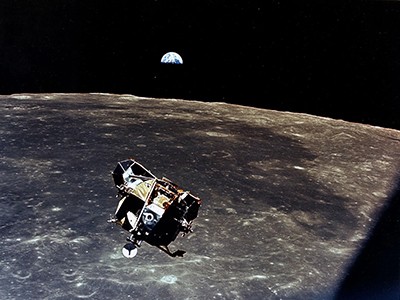
How to chart a moral future for space exploration
To cover all space activity, a broader body would be needed to build on LPP’s methodology and add these elements. Ideally, this would be co-convened by COPUOS and a university or research consortium, and include representatives of governments, industry, philanthropy and scientific communities.
To translate its guidelines into practice, governments should assign technical and diplomatic delegations to this body. They should establish dedicated space-diplomacy units and special-envoy roles, and invest in training diplomats in technical domains and scientists in policymaking. Comparable models exist in aviation (International Civil Aviation Organization), nuclear safety (International Atomic Energy Agency) and maritime governance (International Maritime Organization).
Academic institutions should host policy dialogues and review exercises, philanthropic organizations should fund early-stage proofs of concept for space-traffic management and lunar interoperability, and industry should contribute technical expertise and operational data to test standards in real-world conditions.
Use philanthropy to de-risk governance and build capacity
Many ingredients of space diplomacy fall into a funding gap: too operational for research, too pre-competitive for private investment, yet essential for shared safety and access. No single operator has an incentive to build an independent monitoring network for satellite brightness or a shared space-traffic management database. Yet without this ‘digital public goods’ layer, space actors cannot work together.
This is where philanthropic investment adds unique value. Philanthropy is not a substitute for public funding but a catalyst for it. Philanthropy can absorb the first-loss technical risk that governments and firms cannot; it is unconstrained by rigid procurement cycles, electoral timelines and the requirement for near-term commercial returns on investment. It can fund high-risk prototypes, shared data infrastructures and benchmarking systems, and de-risk them until they are mature enough for formal adoption by states and industry.

The deployer mechanism, pictured through a window in the International Space Station, is used to launch miniature satellites into orbit.Credit: NASA
The stability of the space environment underpins the work of foundations across many areas, such as climate monitoring, space science, AI and global connectivity. The Gordon and Betty Moore Foundation in Palo Alto, California, already funds open-source astronomy software.

