


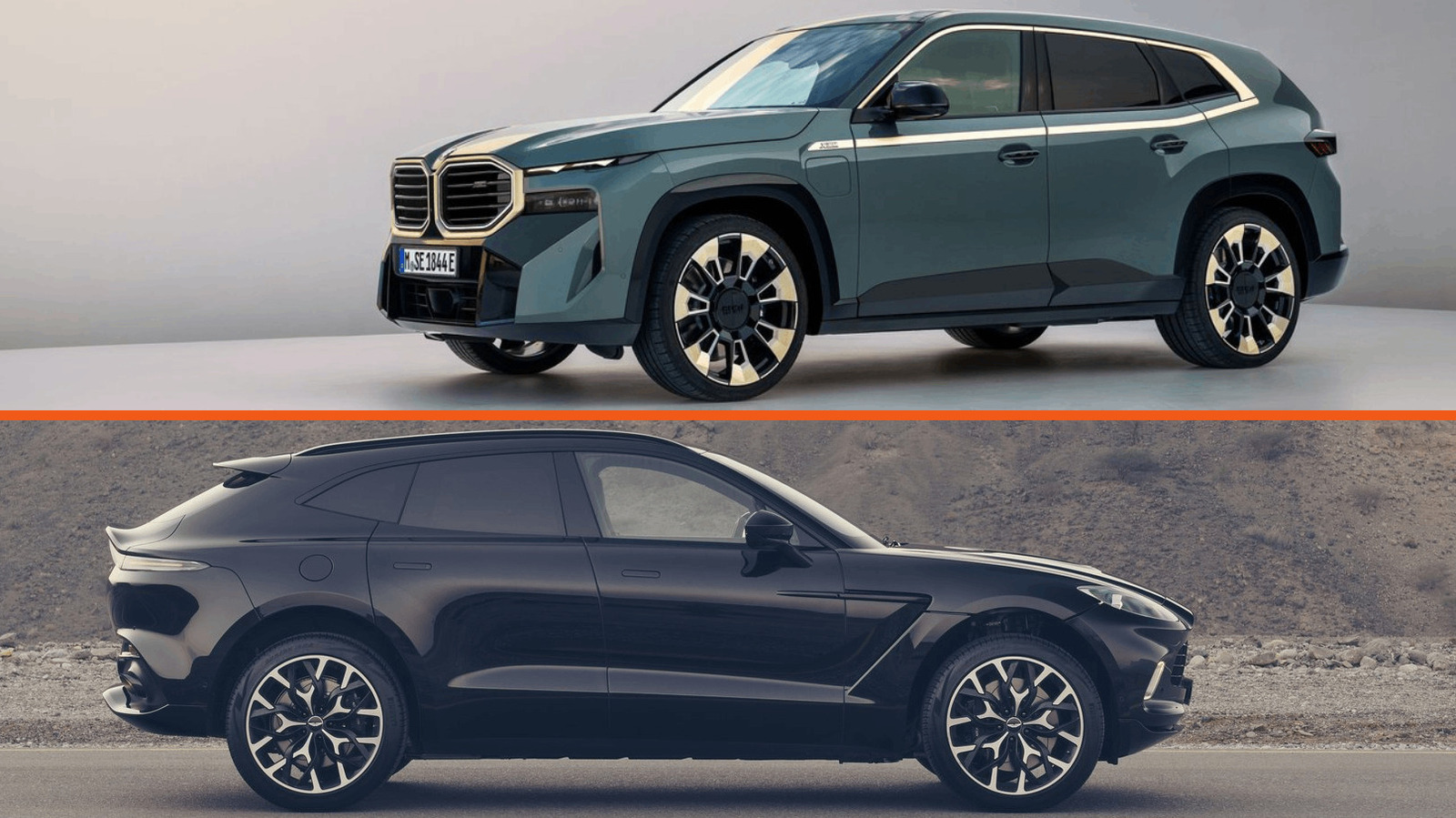
When the DBX was new, it carried a starting price of about $180,000, which means the one we’re talking about today is more than $100,000 less expensive than it was when new. Meanwhile, the base price on a new 2023 XM was about $160,000, or roughly one base Corolla cheaper than the Aston Martin. It may not have lost quite as much value as the DBX, but then again, it’s also two model years newer.
As far as performance goes, the Aston’s twin-turbocharged 4.0-liter V8 makes 542 horsepower and 516 pound-feet of torque, while returning an EPA-estimated 14 mpg city and 18 mpg highway. When MotorTrend tested a DBX from the same model year, it hit 60 mph in 4.0 seconds and ran the quarter-mile in 12.5 seconds, stopped in 106 feet, and averaged 0.95 g on the skidpad.
The BMW, on the other hand, is a plug-in hybrid with a twin-turbocharged 4.4-liter V8. Combined, the engine and the electric motor make a system total of 644 horsepower and 590 lb-ft of torque, and all that extra power makes the XM quicker than the DBX, hitting 60 mph in 3.6 seconds and running the quarter-mile in 11.8. The hybrid powertrain, meanwhile, provides 31 miles of electric range, and as long as you keep it charged, the EPA says it gets 46 MPGe.
Overall, the BMW XM should be cheaper to run and probably cheaper to insure, while also beating the DBX in any race it wants to run. But even though it’s a crossover, an Aston Martin’s still and Aston Martin, and while the DBX very existence may offend you to your core, most people are going to prefer it’s styling over the convention-rejecting XM. What about you, though? If you had to pick one, which $74,000 used crossover are you choosing, the 2021 Aston Martin DBX or the 2023 BMW XM?

