


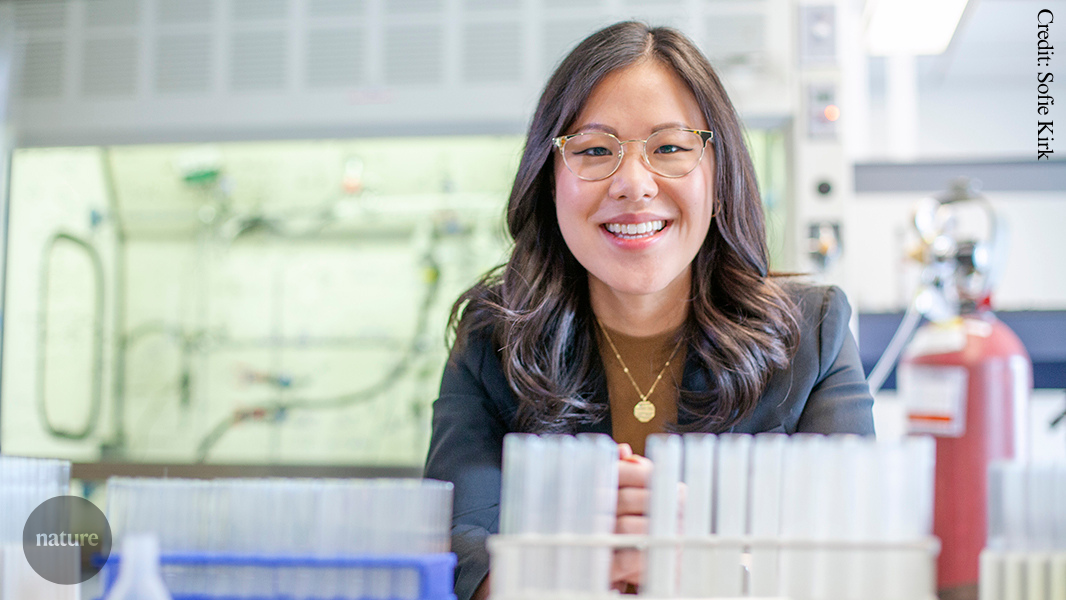
Earlier this year, J. Mijin Cha received tenure for the second time. Cha had been tenured — given confirmed, permanent employment — at Occidental College, a mainly undergraduate university in Los Angeles, California, before joining the University of California, Santa Cruz (UCSC), a large research institution. Although the two tenure processes were different, she says that both felt opaque and, at times, frustrating.
At UCSC, she says, “some of the early research I’d done was about integrating equity and justice considerations into climate policy, which is still an emerging field”. This made it difficult to put this part of her work into the proper context and highlight its significance for her tenure application. “I do remember wishing I’d had more guidance,” she says.
She’s not alone. To convince their peers that they deserve a tenured position — often viewed as the pinnacle of the academic career path — academics must gather enough evidence of their productivity in research, teaching and service to their institution and colleagues. The process can be fraught and stressful and is often unclear.
Is it time for tenure to evolve?
As an academic status, tenure is most common in North America, although some European countries have something similar. Typically, tenure review takes place after five to seven years in a full-time professorship and usually happens only once in a person’s career unless they move to an institution that requires them to reapply. Tenure was originally meant to protect academic freedom, and once granted, it cannot easily be terminated. But in recent years, such protections have eroded. Tenured academics have been fired, allegedly for voicing support for the Palestinian cause or because of their views on diversity, equity and inclusion (DEI).
Even so, achieving tenure remains an aspiration for many academics. Understanding the process can help to minimize the anxiety and upheaval, but because the requirements differ across disciplines and universities and even between departments, it can be difficult to find guidance. To help, Nature’s careers team spoke to eight tenured faculty members about how they pulled together their application, also known as a tenure package.
Start your preparations early
The tenure process generally entails an iterative assessment of your research, teaching and service contributions by colleagues, university leaders and external scholars who can attest to your abilities. You might have some influence over the make-up of these groups, or none at all, and some universities provide more guidelines than others.
Therefore, an early priority should be to establish the criteria against which you will be evaluated. Deepa Das Acevedo, a legal anthropologist at Emory University in Atlanta, Georgia, says these include not just the written rules, but also socially held ideas about what constitutes success in your field. Research-focused institutions will prioritize grants and publications, for example, whereas a smaller, mainly undergraduate university will emphasize teaching and mentoring. There are geographical norms to consider, too: in Canada, scientists often begin with less funding than do their US counterparts, so their early research productivity is judged more leniently than it would be at a US institution.

Tenure-track researchers must understand their institution’s unwritten expectations for earning tenure, says anthropologist Deepa Das Acevedo.Dawit Kidane
“From the day you start a tenure-track job, your second job should be researching and understanding the expectations of your institution so that you can gauge the difference between these statutory expectations” and the unwritten rules of tenure at your institution, says Das Acevedo.
Institutions might not provide explicit guidance, but you’re well within your rights to ask for it. Some universities will have specific expectations — such as a minimum number of papers or grants — but others might mention terms such as international recognition. Consult colleagues to make sense of what those requirements entail and look for workshops at your university on tenure. Most institutions also keep track of your progress in the years leading up to tenure review, so take that feedback to heart. “Ideally, you should have a good sense of where you stand by the time you get to your actual evaluation,” says Cristóbal Rodríguez, an associate provost at Western Michigan University in Kalamazoo, who oversees a support programme at the American Association of Hispanics in Higher Education that aims to increase the number of tenured Latinx faculty members.
And although tenure doesn’t necessarily have to be at the top of mind, it has to be revisited periodically. Christine Le, a synthetic chemist at York University in Toronto, Canada, put her tenure package together while on parental leave, and was surprised by how much time it took even though she was well organized. Several researchers told Nature that they set aside time each month to update their CVs or keep a running record of laboratory and personal accomplishments. “It’s easy to forget about every poster presentation, invited talk, student milestone and publication, but these individual successes are what build a successful tenure portfolio,” Le says.
Fortunately, you might not need to start your portfolio from scratch: ask colleagues in your field or department who’ve recently earned tenure to share their materials. In addition, many documents — which could include course syllabuses and statements touching on your teaching philosophy, research contributions and commitment to DEI — will be similar to resources you created while applying for jobs or for interim assessments. Sarah Hörst, a planetary scientist at Johns Hopkins University in Baltimore, Maryland, says she used these same documents as a scaffold when preparing her tenure package. “I was able to build on what I had done before and refine them to align with how I’ve grown as a researcher and teacher,” she says, updating her graduate courses to include sections on handling peer reviews, for example.
Be intentional in your choices
Some parts of a tenure package are not under your control. Soliciting external review letters is one example — universities might request the names of people who could write these letters but might not contact them. However, such letters form a crucial component of the application, so it’s worth giving careful thought as to who you suggest.

Plant microbiologist David Baltrus advises researchers to choose wisely when suggesting external scholars who can vouch for their abilities. Molly Condit
David Baltrus, a plant microbiologist at the University of Arizona in Tucson, has sat on several tenure evaluation committees, giving him an insight into the process. Some universities allow scientists to suggest potential letter writers to add to a list put together by their department chair. A chair is more likely to reach out to well-known names, and so Baltrus recommends populating your own list with people who might not be as well known but can speak positively about your career. And choose wisely, because some institutions count refusals to provide letters as a mark against you, he says.
It’s also worth considering a ‘tenure tour’, on which faculty members take time off from teaching and research to meet potential letter writers. Before going up for tenure in 2024, Ramon Alain Miranda-Quintana, a theoretical chemist at the University of Florida in Gainesville, spent the spring semester presenting his work at nine institutions. But rather than focusing only on big names, Miranda-Quintana says he approached students, people who worked in fields tangential to his own and anyone with an interesting project. “A lot of the more fun conversations I had were with people doing experiments really far from what I usually do,” he says, adding that those chats have since sparked new collaborations.
Both embarking on a tenure tour and giving a tenure talk in your department will mean sharing your research with a wide variety of people, including high-ranking, and perhaps non-scientist, administrators who will ultimately decide the fate of your tenure application. With that in mind, Das Acevedo returned to exercises she’d done as a graduate student, breaking down her research for different people: a lab colleague, a scientist in an unrelated field, and her next-door neighbour.

