


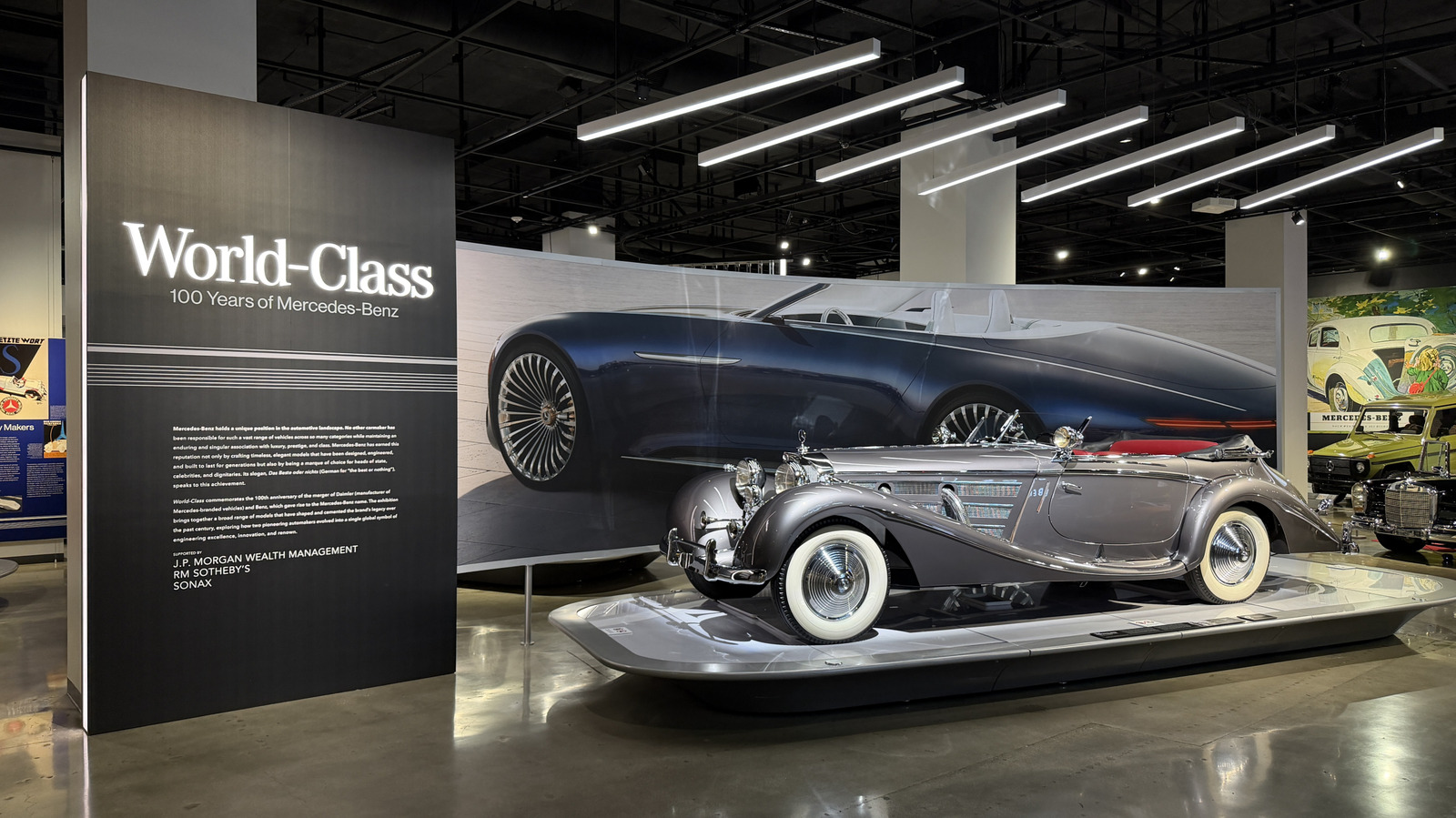
This year marks the 140th anniversary of Carl Benz creating the Patent-Motorwagen, so current-day Mercedes-Benz has been doing a ton for its milestone birthday. It wasn’t until forty years after the Patent-Motorwagen’s launch that Daimler and Benz actually merged, which makes 2026 the nice, clean 100th anniversary of Mercedes-Benz as a brand. The German automaker is one of the most important presences in the industry, with one of the strongest back catalogs of road cars, race cars, prototypes, and beyond, so the task of trying to condense that into a space-constrained museum display is tough to imagine.
But with the new exhibit “World-Class: 100 Years of Mercedes-Benz,” the folks over at the Petersen Museum have managed to do a great job. Opening to the public this Saturday, May 23, the exhibit features 42 different vehicles from across all 140 years of Mercedes-Benz’s history, plus some truly fantastic advertising art, and information boards full of good trivia. Museum curator Shervin Nakhjavani says work started on the exhibit when he joined the museum in August 2024, aiming to give a broad view of the history of the company, as most people in the U.S. only see Mercedes as a relatively younger luxury brand.
 Daniel Golson/Jalopnik
Only four of the cars are on loan from Mercedes itself, with the rest coming from private owners and some well-known collectors, and the variety of stuff on display is fantastic. I’ve been lucky enough to go to the Mercedes Museum in Stuttgart a handful of times, have seen scores of rare and important Benzes at concours and car launches, and I’ve even gone into Mercedes’ secret Holy Halls warehouses. But there were still a few cars in this exhibit that I’ve never seen in person before, and I’m certain that will be the same for basically anyone who walks into the room — during an opening night panel, a representative from Mercedes-Benz’s Classic Center said there are some cars on display that the company would kill to own.
It starts from the beginning
Before you even make it to the main display inside the museum, there’s an absurd Unimog flatbed transport truck, and a 1966 250SE coupe, and a 1981 240D sedan that have both driven more than 1.3 million miles each, so you’re already off to a good start before walking in. There’s also a few other cool cars in the lobby, including a Brabus Smart Roadster Coupe (sadly not the V6 prototype, though).
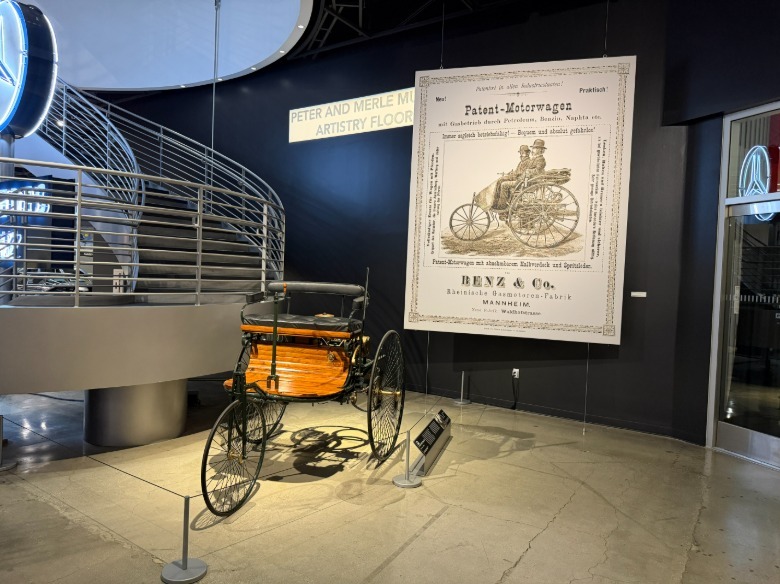
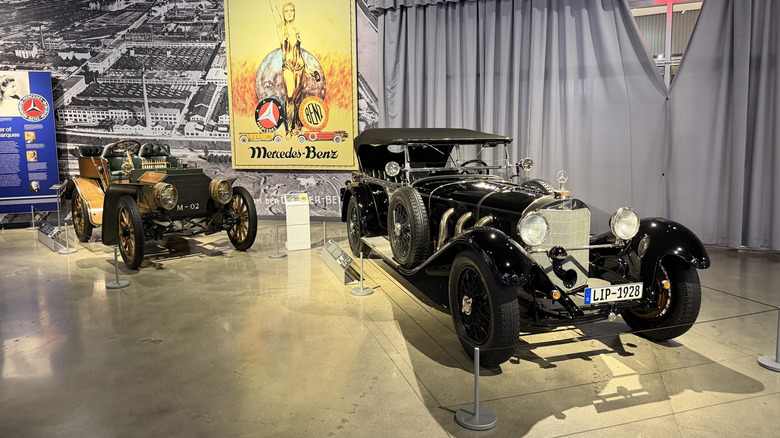
“World-Class” is located in the museum’s largest exhibit hall on the ground floor. Right when you walk in, there are two cars from the pre-merger era: a replica Patent-Motorwagen owned by the Petersen, and a 1902 Mercedes Simplex 28 HP Tourer on loan from the Keller Collection, who own a quarter of the cars on display. Seen above next to the Simplex is a 1928 Mercedes-Benz S, the first performance model created after the merger.
 Daniel Golson/Jalopnik
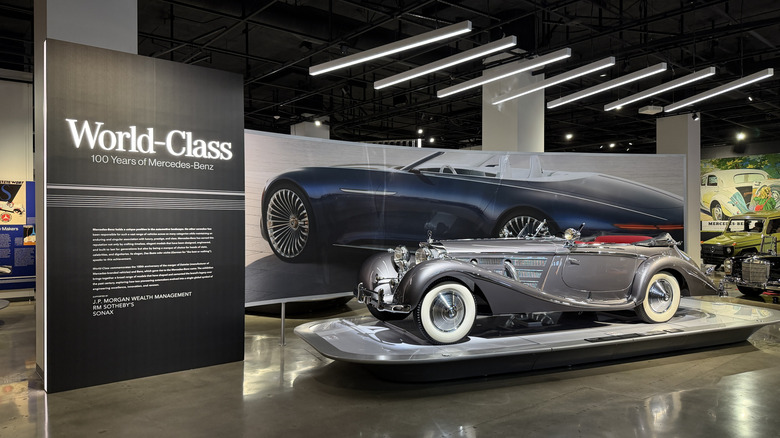
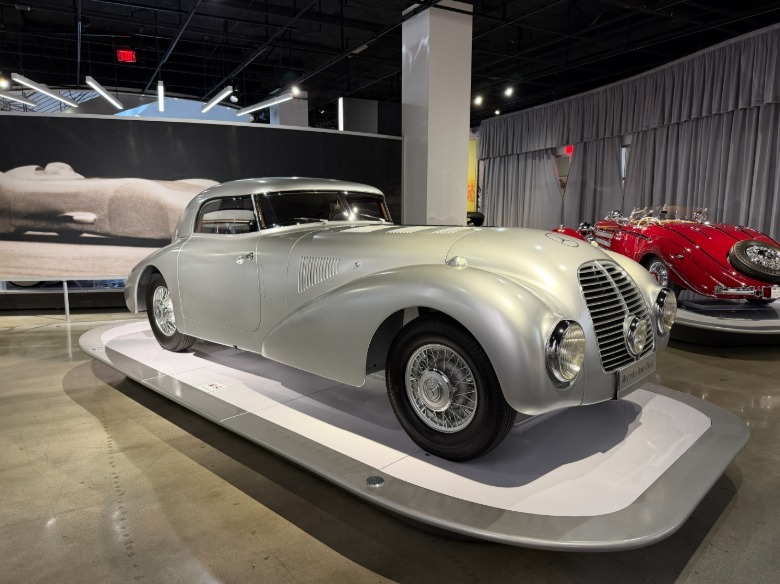
A spectacular 1936 540K Cabriolet by Erdmann & Rossi (the photo at the top of this story) takes center stage, originally owned by Barbara Hutton and built to her specifications — she wanted fake exhaust added to the left side of the hood for symmetry, and a four-seat layout because she preferred to be chauffeured. That car is now owned by the Kellers, as is a gorgeous red 1936 500K Cabriolet and the black 1938 540K Autobahnkurier, the only surviving car out of four that won Best of Show at Pebble Beach in 2021.
 Daniel Golson/Jalopnik
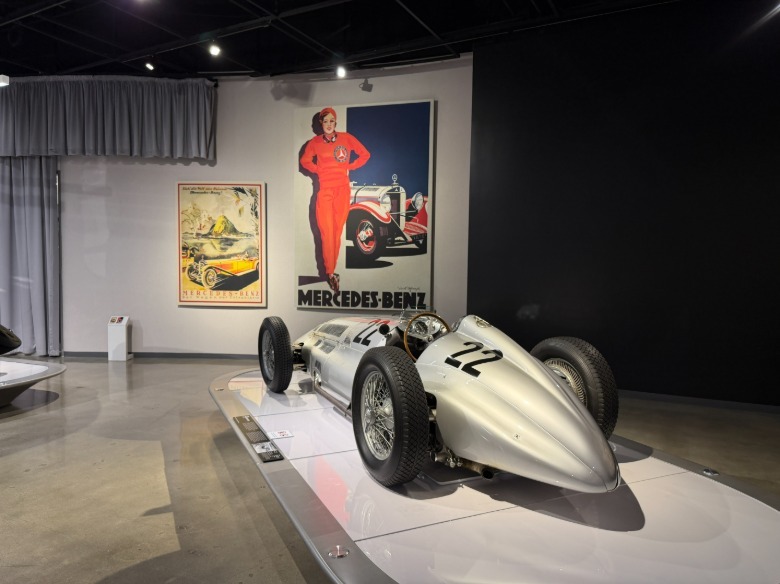
Next to the Autobahnkurier is one of the Mercedes Museum’s cars, the experimental 1938 540K Stromlinienwagen that could cruise at over 100 mph. It was developed for the 1938 Berlin-Rome race that was ultimately canceled, and it became a test car for Dunlop instead. This streamliner is one of my top cars from the exhibit, but it’s probably upstaged by the 1938 W154 Formula 1 car in the corner. This particular W154 debuted with a win at the Nürburgring in 1938, driven by Dick Seaman, who definitely has the best race car driver name of all time, but who did also salute Hitler when he won said race.
Not your average Gullwing
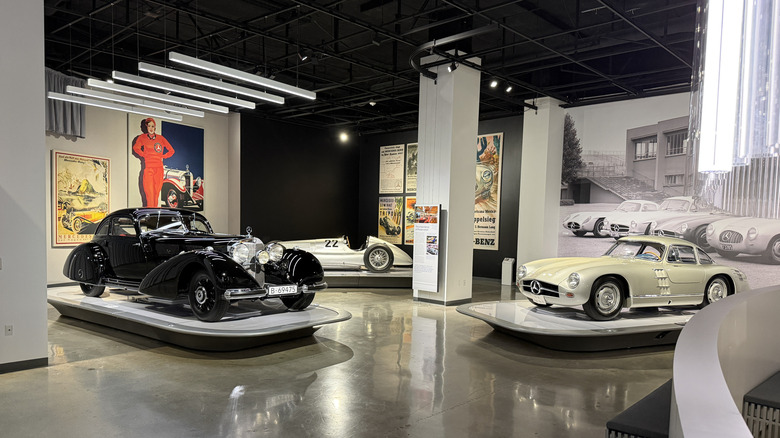
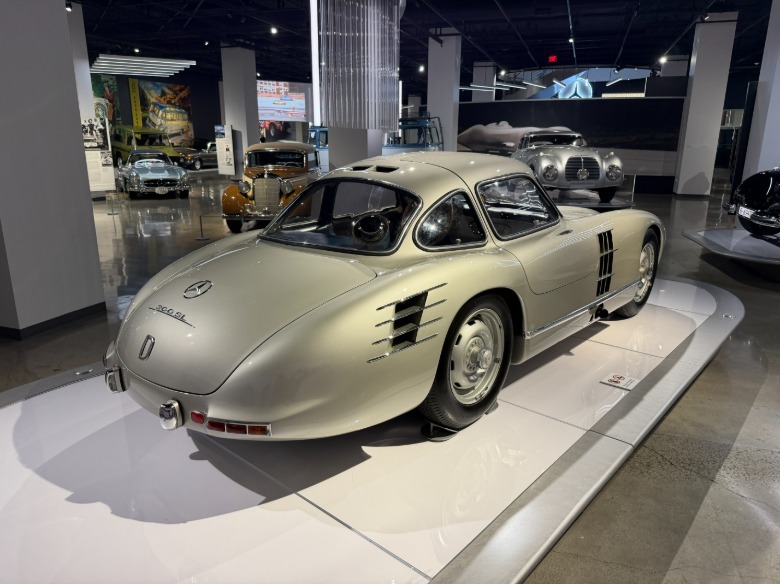
If the above image is causing your brain to short-circuit a bit, don’t fret, you’re not having a stroke. That’s the 1953 300SL “Hobel” prototype on the right, named after the German word for “slicer” because of the hood crease that looks like a carpenter’s plane. It was developed as a successor to the W194 race car, but while ten were planned, only this prototype was built, as Mercedes decided to focus on F1 instead. The Hobel car became a direct influence on the production car, the 300SL Gullwing that was released a year later, which was the Mercedes that really put the brand on the map in the United States.
 Daniel Golson/Jalopnik
The Hobel’s design is so much weirder than the 300SL production car that followed; it looks both a little more French and a little more British, with funky details like the extra gill vents. As a nice point of comparison, this exhibit placed a 1954 300SL coupe next to it, one that itself has some unique design elements because it was a development prototype that was then converted for racing. There’s also a full-production 300SL roadster on display.
 Daniel Golson/Jalopnik
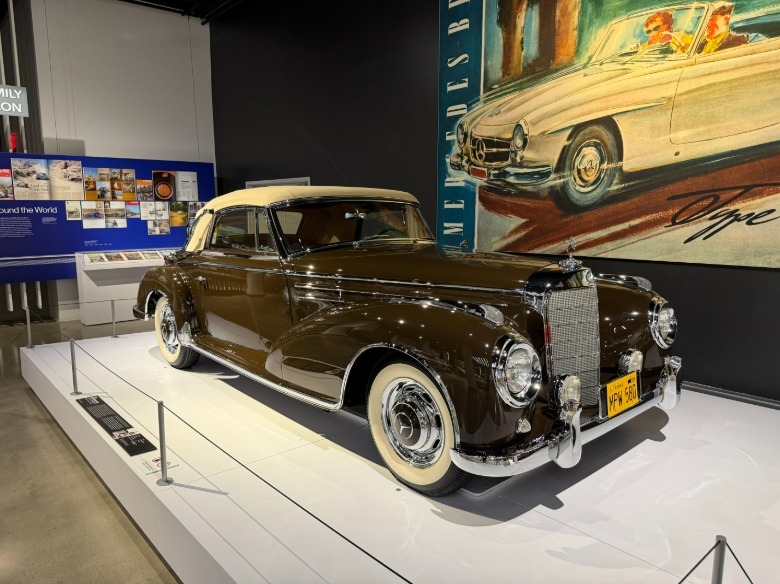
When the 300SL was new, it was a favorite of celebrities, race car drivers, and really anyone with taste, but the two main celeb-owned cars on display at the Petersen are a bit more tame. There’s a red 1964 Pagoda SL that was originally owned by Walt Disney (and is still owned by his family), and a fantastic brown 1956 300Sc Cabriolet that was custom-ordered by Cary Grant. Possibly the largest car on display is a six-door 1971 600 Pullman Landaulet, one of 59 ever made. It was owned by El Hadji Babacar Kébé, one of Senegal’s richest men.
The really good stuff
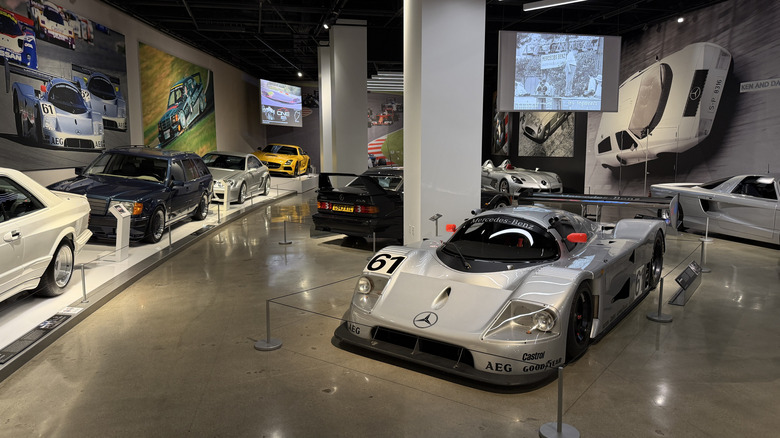
Along the outer wall of the display are a perfect white 1984 500SEC 5.4 widebody that was originally AMG’s press car but was ordered by a tobacco industry tycoon, the only W124 Hammer wagon, a CLK DTM coupe, and a yellow SLS Black Series. The best wing and fender flares of the exhibit belong to a 190E Evolution II, though the CLK GTR Roadster gives that wing a run for its money. The 2005 McLaren-Mercedes MP4-20 F1 show car also has a good wing, as does the 1989 Sauber C9 — those Saubers remain some of my favorite race cars ever.
 Daniel Golson/Jalopnik
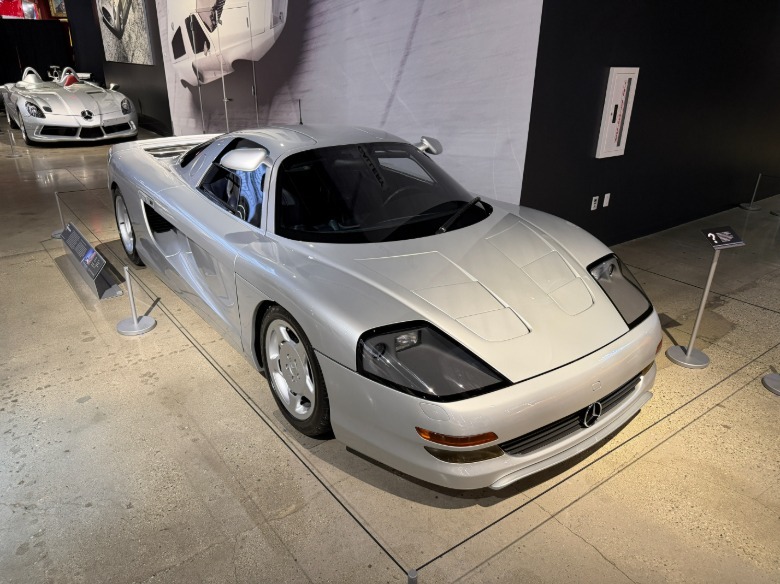
The SLR Stirling Moss doesn’t have a wing, but it also doesn’t have a windshield or a roof. Those were never officially sold in the U.S., so it’s always cool to see one. But my personal favorite car in the exhibit, one that I’ve never seen in real life despite it being owned by Mercedes, is the 1991 C112 supercar concept. Like the C111 it’s named after, the C112 was built as a technical showcase, featuring an active suspension system, an automatic rear spoiler, and advanced aerodynamics. I just love the design, which has held up really well, and the interior was much nicer than other supercars of the time. Mercedes took almost 700 orders for the car, but the project was canceled before any were sold. After three decades of only seeing the press photos and other people’s spottings, it was a thrill to finally see the C112 in person.
 Daniel Golson/Jalopnik
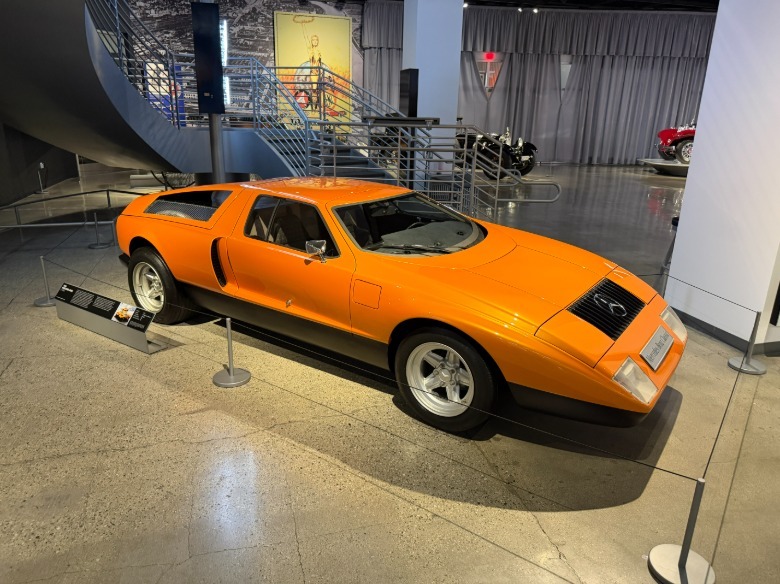
There is also an orange C111 on display, of course, one of the early rotary-powered cars. I haven’t mentioned a bunch of other great cars in the exhibit, like a rear-engine 170H that predated the Beetle, an ultra-cute bus from 1959, and a perfect vintage G-wagen. “World-Class: 100 Years of Mercedes-Benz” will run until April 25, 2027, so you’ve got plenty of time to come see it all — but as with many of the museum’s previous exhibits, I’m sure some new cars will be rotated in and out over the course of the next year.

