


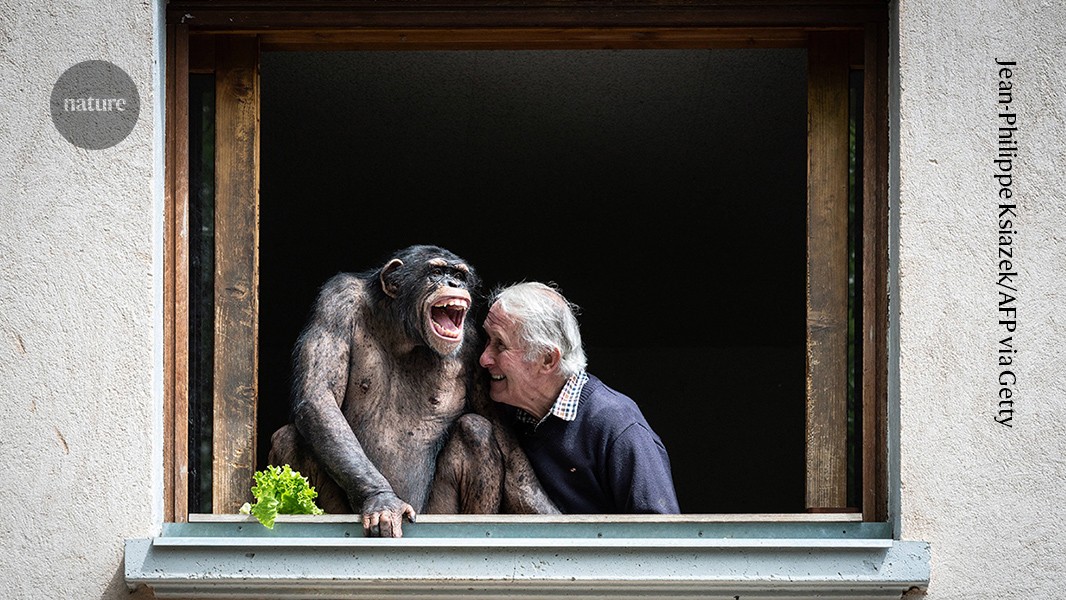
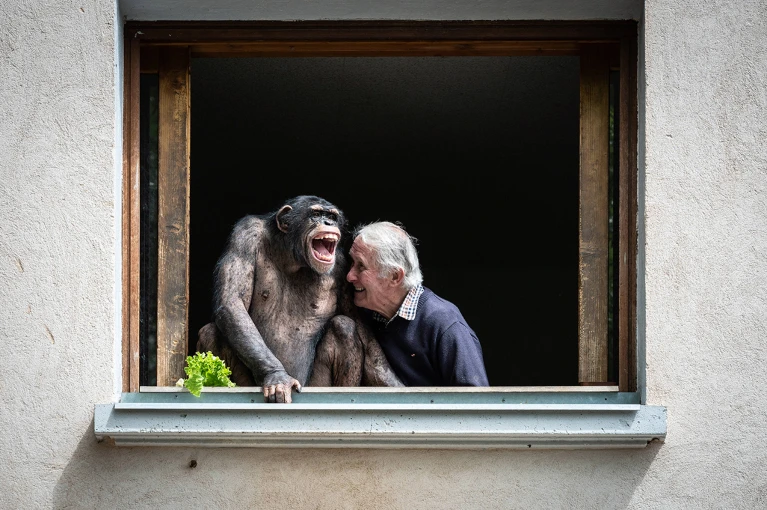
Great apes and human children produce similar patterns of vocalization when laughing.Credit: Jean-Philippe Ksiazek/AFP via Getty
Tickling a chimpanzee, a gorilla and a human child causes similar rhythms of laughter, according to an analysis of primate behaviour.
Laughter is a conserved vocalization in humans and their closest primate relatives. A study published in Communications Biology on 25 June1 found that their laughter followed consistent rhythmic patterns. When great apes and humans between six months and seven years old were tickled, they left evenly spaced intervals between successive laughing sounds.
The authors suggest that these regular rhythms reflect how nuanced primate vocal motor control can be and that it might have been inherited from a common ancestor that lived 15 million years ago.
The analysis “falls in line with an emerging body of data now that suggest that our closest living relatives, the primates, and particularly the great apes, have more control over their vocal system than previously thought”, says Simon Townsend, who studies primate communication at the University of Zurich in Switzerland.
The findings also provide insights for the “evolutionary progression of vocal flexibility within the primate lineage”, he adds.
Apes and japes
Study co-author Chiara De Gregorio, a primatologist at the University of Warwick in Coventry, UK, and her colleagues compared recordings of juvenile and infant great apes — including four orangutans (Pongo pygmaeus), two gorillas (Gorilla gorilla), three bonobos (Pan paniscus) and four chimpanzees (Pan troglodytes) — with recordings of four human children playing with their mothers at home.
The analysis focused on 140 sequences of laughter, of which 42 were from bonobos, 35 from chimpanzees, 34 from gorillas, 16 from orangutans and 13 from the human children.
De Gregorio and her colleagues examined how much time passed between successive bursts of laughter and found that both humans and apes stuck to a consistent rhythm when tickled.
However, laughter during social play had more variability. “While in play, laughter was a bit messy because if we think of two animals playing or two kids playing, so many things happen,” explains De Gregorio. “They may roll or they may play fight.” Physical movements could affect breathing patterns in ways that make it difficult to keep the rhythm of laughter consistent.

