


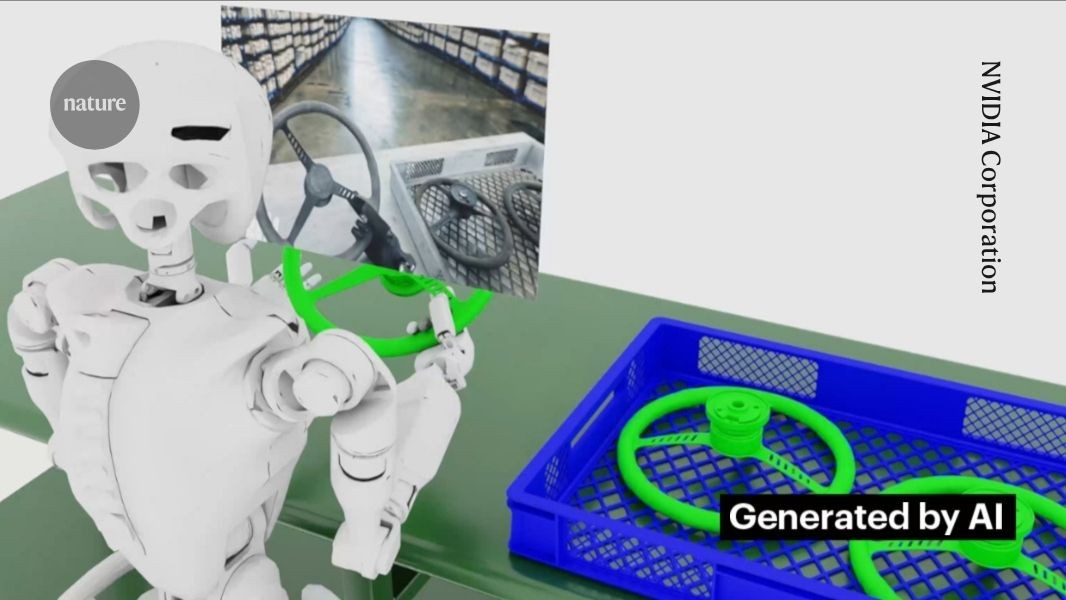
Nvidia’s Cosmos is one world model being trained on physics data about real world environments.Credit: NVIDIA Corporation
An ongoing trend in artificial intelligence (AI) could have huge implications for how the technology is used in research.
Machine-learning systems such as large language models (LLMs), which turn prompts into text, images and video, are becoming increasingly sophisticated and continue to make astonishing progress, including in science. But such ‘generative AI’ tools also have limitations. The approach does not always make accurate predictions about the physical world, and could fail at modelling correctly what would happen if a car were to go off the edge of a cliff, for example. This would have implications for developing effective and safe AI-powered robots and self-driving vehicles.
Some researchers, including the computer scientist and AI pioneer Yann LeCun, who founded the firm Advanced Machine Intelligence (AMI) Labs in Paris, have turned their attention to a different type of AI tool, developing systems known as ‘world models’ that are trained on real-world data and can embody virtual, interactive and 3D environments.
The approach is attracting huge investment and business interest. AMI Labs — which is taking a radical approach to world models — has raised more than US$1 billion, a record initial infusion of money for a European company. Technology giants such as Google and Nvidia are also developing world models, as are several other start-up companies.
What is a world model?
There are several different definitions of what a world model is. In the broadest sense, any neural network trained on data about the real world (or even about some alternative universe) has some sort of model of a world embedded in it. But over the past two years or so, many researchers have begun to use the term to describe AI that can produce a consistent, explorable and often interactive world that is reminiscent of a first-person video game. A world model has to ‘know’ enough about physics that if the user pushes an object off a table then the object will fall down.
World models also provide a more-interactive experience for a user than does generating images of video material from text prompts. For example, Google Deepmind’s world model Genie 3, which the company released in August 2025, uses simple text descriptions to generate photorealistic environments that can be explored in real time.
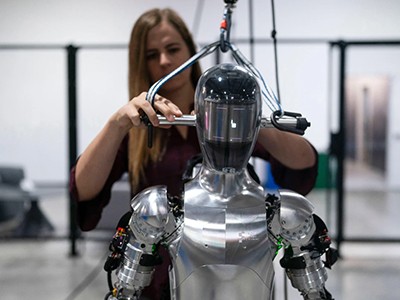
The AI revolution is coming to robots: how will it change them?
What sort of data are world models trained on?
The companies that build generative AI systems tend to guard their ‘secret sauce’ fiercely. What is known is that interactive world models are trained, in part, using thousands of hours of videos from the real world, as well as with accurate simulations of physical environments that are programmed to observe the laws of physics.
What AI capabilities could world models unlock?
“The more exciting version of a world model is one in which you can take actions,” says Jeff Clune, a computer scientist at the University of British Columbia in Vancouver, Canada. Such an environment could be a safe setting to train AI systems that control robots, and could be much faster than letting robots learn by interacting with physical objects, says computer scientist Anastasis Germanidis, co-founder of Runway, a start-up company in New York City that released a world model called GWM-1 in December 2025.

Does AI already have human-level intelligence? The evidence is clear
How will world models benefit researchers?
A world model like Genie 3 can provide vast numbers of ways to train the software that can power a robot or a self-driving car, says Clune, who contributed to the development of Genie during a contract with Google DeepMind.

