


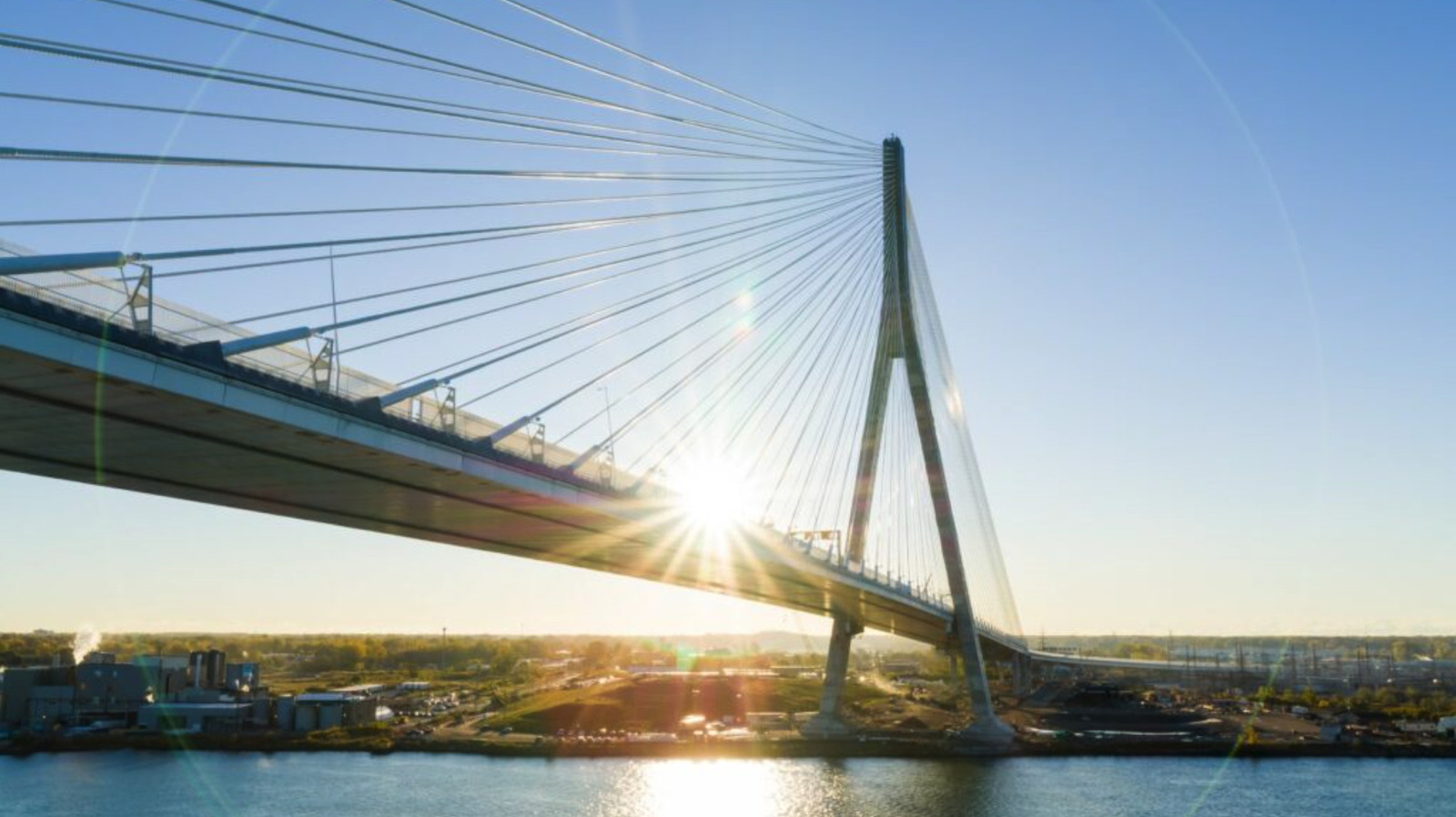
It’s been nearly a month since President Trump decided to put a stop to opening another crucial crossing for trade between the U.S. and its second largest trading partner, Canada. In this latest chapter of the ongoing Gordie Howe Bridge saga, it appears the man whose job it is to iron out the details plaguing the bridge’s opening believes that it’s a big ol’ myth that the Canadians paid for the bridge, as reported by Detroit Free Press.
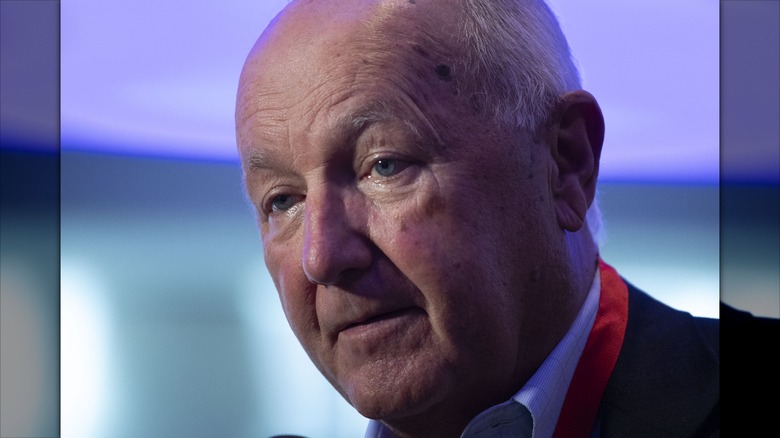
Pete Hoekstra, former Michigan Representative, now U.S. Ambassador to Canada, quite recently made an appearance on the Canadian-based Food Professor Podcast. The conversation was meant to focus mostly on food and its trade between Canada and the U.S., which they pointed out accounts for 25 percent of trade traffic between the two countries. Host Michael LeBlanc posited some follow-up questions, around 22:30 if you wanted to watch and follow along. The first concerned what’s going on with the Gordie Howe Bridge, which led to quite the quiz and explanation from Hoekstra surrounding its delay.
Hoekstra asked both hosts if they know who paid for the Gordie Howe Bridge. Dr. Sylvain Charlebois, the podcast’s other host, told the ambassador he understands the bill was paid for by Canada. Hoekstra looked almost in disbelief as he asked Dr. Charlebois if he wanted to “make the news today.” He explained that the “Canadians paying for it” was as he worded it “the big myth that is out there.” He then went into a spiel comparing the Canadian loan to a mortgage on a house. But if it’s like a mortgage, are homeowners not really paying for their house just because they took out a loan?
Caught saying the quiet part out loud
What’s arguably more funny is when Hoekstra explained the loan and how it would be paid for, he actually gets most all of the pieces right. Canada backed the approximate $4.7 billion (U.S) loan to build the bridge, and the revenue from traffic crossing the bridge on the Canadian side is supposed to pay back that loan (there is no toll if you’re coming from the U.S. to Canada.) Hoekstra’s “myth” is that Canada isn’t the one who “has” the loan. He insists that Canada acted as the bank instead, and the Windsor-Detroit Bridge Authority (which is 100% owned by, get this, the Canadian government) is the lendee. That doesn’t change the fact that the U.S. never contributed any funds to its construction. Canada paid for it. In fact, America was downright insistent that it not pay for the bridge for years. There’s no myth.
When asked about the Gordie Howe Bridge, Hoekstra pointed out that there is already a bridge to cross that has cars running on it, referring to the Ambassador Bridge. “So the Gordie Howe Bridge is not generating new traffic, it’s just moving revenue. So you’re actually going to pay for the bridge by moving revenue from the tunnel or the Ambassador Bridge to the Gordie Howe Bridge,” he said. “It gets a little complicated, but the bottom line is you’re diverting it from a tunnel which is owned between, I believe Windsor and the city of Detroit, and you’re diverting revenue from an American company that owns the Ambassador Bridge.”
Like taking money from a billionaire’s bank account
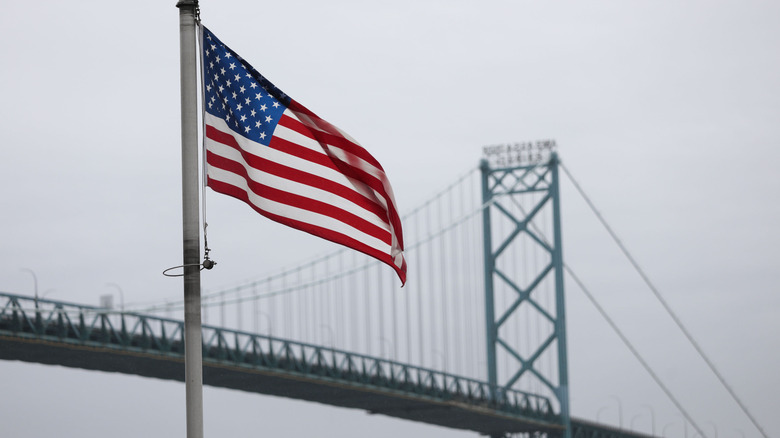
We pointed out in our June article talking about the delay of the bridge that one of the “issues” delaying the bridge opening might have to deal with a billionaire family who had given Republicans like Trump, as well as Hoekstra, a whole lot of money. In another Hoekstra interview released this week on YouTube with Global News, the host there asked Hoekstra point blank if the delay had anything to do with the Moroun family, which has owned the Ambassador Bridge since the 1970s. The Morouns have made roughly $60 million in tolls each year as 27% of international trade between the U.S. and Canada goes over this bridge. Hoekstra got fairly defensive about the accusation while denying it. He then went into a diatribe explaining to the host how American campaign financing works. Sure it sounded like how it should work, but not how it actually works in the current Trump Administration.
Without a doubt if the Gordie Howe Bridge did open traffic would naturally divert to it and of course that means also taking money away from the pockets of the Moroun family. As a Detroit native myself, if I had to choose between crossing to Canada via the leaky tunnel, the dilapidated and poorly maintained Ambassador Bridge, and the very new Gordie Howe Bridge, I’d be putting my money on the bridge named after the hockey great, not just for the novelty but peace of mind.
The cost of not opening the bridge is stacking up by the millions
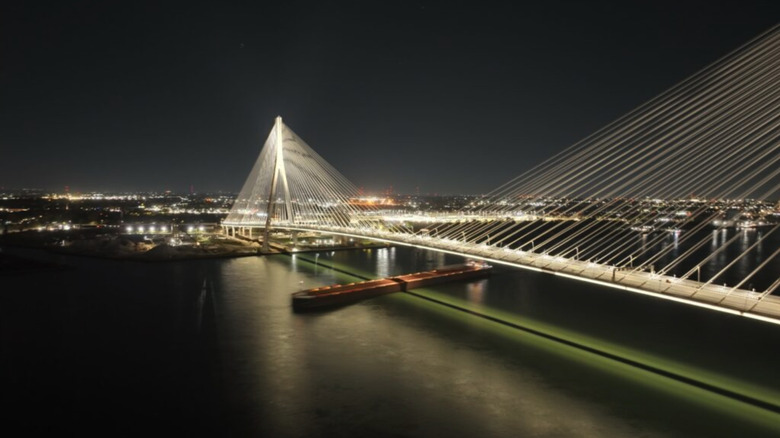
It’s worth adding that companies already divert their truck traffic from the Ambassador Bridge because of its cost, sending cargo to cross at Port Huron, Michigan’s Blue Water Bridge. Something a Michigan native like Hoesktra should know. So would the bridge opening actually divert Ambassador Bridge traffic? Likely, but it would also bring more traffic back to Detroit, a boon for both sides, or at least, it should be at some point. The crossing is vital for one industry we all love: cars. Big Three brands that have production plants in Ontario can send a car back and forth across the boarder seven times before it’s completed.
At first, tolls will only be gathered on the Canada side and, once the country’s initial investment is paid off, both countries will start splitting the tolls evenly. But no, it’s better if all of that money goes straight into the Moroun family’s already bulging pockets. They’re not even looking at an end to traffic on the Ambassador Bridge, which is often backed up all the way down the I-96 freeway in Detroit with huge trucks trying to make it across. The Morouns will just make slightly less money than they do now. Canada also begged the Morouns to do essential maintenance and updates to the bridge, which the family largely ignored for decades.
Hoekstra ended the “bridge” segment on The Food Professor Podcast with what he may have thought is reassurance that both sides do want to open the bridge and it will happen soon. Yet, if anyone should know what that time frame would be, it should be one of the people negotiating these issues between the two countries, like, say, Hoekstra.
It should be fine. What would be the harm in a few more days or months delay? We didn’t write about the fact that a recent economic survey said that if the bridge didn’t open up on time — if there were any delays — that it would cost Americans about a million dollars a day. And if we calculated that cost by business days since the original June 12 opening, that would come out to about $20 million at the end of this week. That’s nothing compared to the supposed $29 billion we spent on the Iran war as reported in May. So, what’s losing a few million more dollars at this point?

