


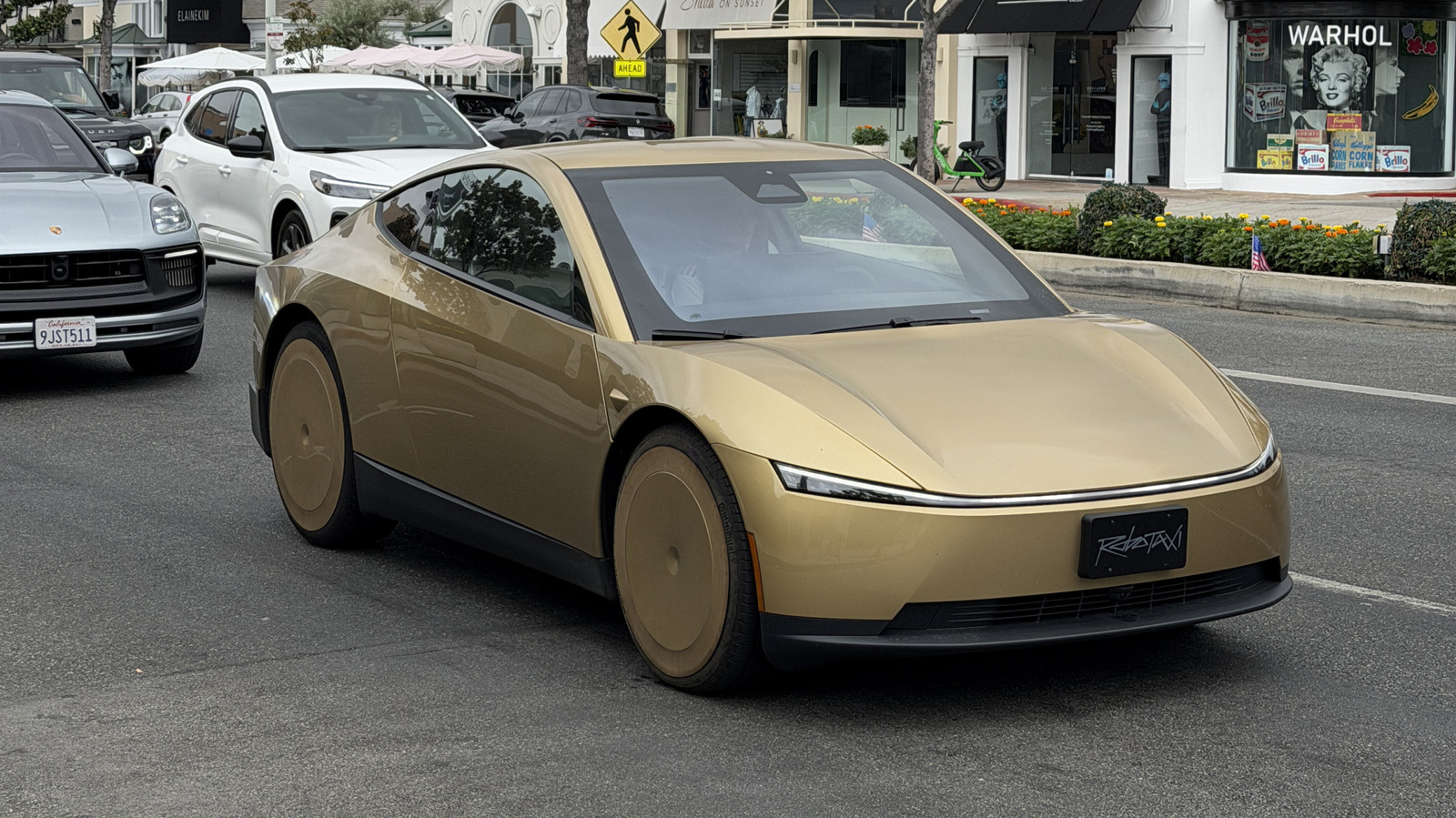
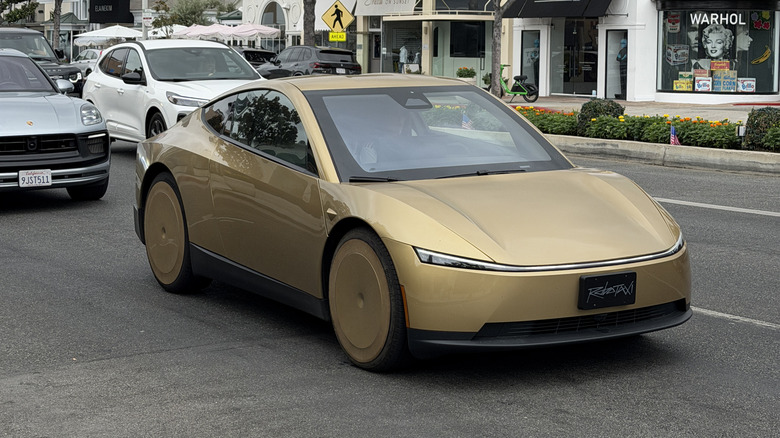
I consider myself pretty lucky compared to my friends who live in Southern California, because while basically all of them have seen Tesla Cybercab robotaxi prototypes on the roads in the year and a half since it was first revealed, I have somehow managed to completely avoid spotting one. (I have seen plenty Model Y Standards, which are nasty enough.) But given how much of a hotspot LA is for EVs and new vehicle testing — especially autonomous vehicles — I knew it was only a matter of time until I saw a Cybercab being driven on the road.
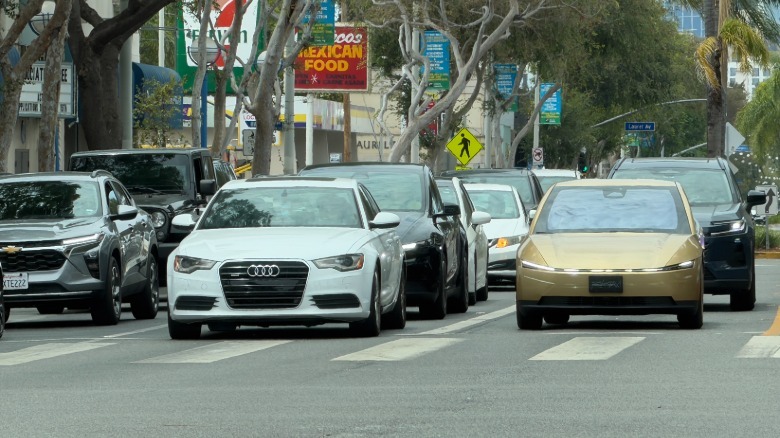
That day finally came last week. I was crossing Sunset in West Hollywood, minding my own business with a latte and a croissant, when suddenly my vision was assaulted by a Cybercab pulling up to the stoplight. This one had an actual human driving it, so thankfully it wasn’t one of Tesla’s new prototypes that has no steering wheel or pedals. Man does it look like sh*t, especially in the context of actual traffic that reveals its comical proportions. Making things even worse, I spotted another (or probably the same) Cybercab a couple days later. Yuck!
Blech
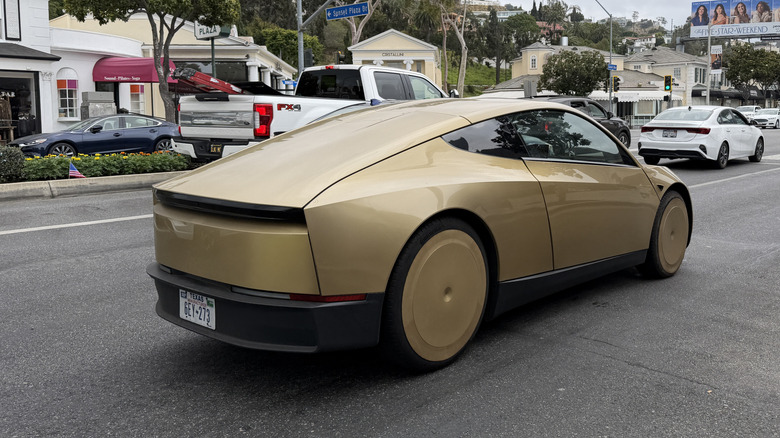
I don’t mind the Cybercab’s shape and profile in theory, and I think robotaxis that have only two doors and two seats are fine. But the Tesla looks really bad, y’all. Not even nice gold paint can save this thing. It’s weirdly narrow with a tall greenhouse despite being short overall, and the crisp shoulder line doesn’t do enough to make the surfacing interesting or hide the car’s mass. I don’t understand why Tesla gave it such a rakish roofline and tapering rear end, either, and the large “glass” area behind the side windows in the doors aren’t actually windows, but a glossy black panel with a camera at the leading edge.
 Daniel Golson/Jalopnik
Not helping matters are the goofy wheels, which have a basic flat cover and then gold paint on the tires to make the wheels look bigger than they are. But they’re already a hugely staggered setup that would look strange even with a regular wheel design — the rear tires are 225/60R21s, while the fronts are 215/60R18s. This emphasizes the car’s skinniness and awkward stance even more, and in motion the Cybercab looks like it could tip over. Cars like the Volkswagen XL1 and BMW i3 have pulled this sort of look off much more successfully.
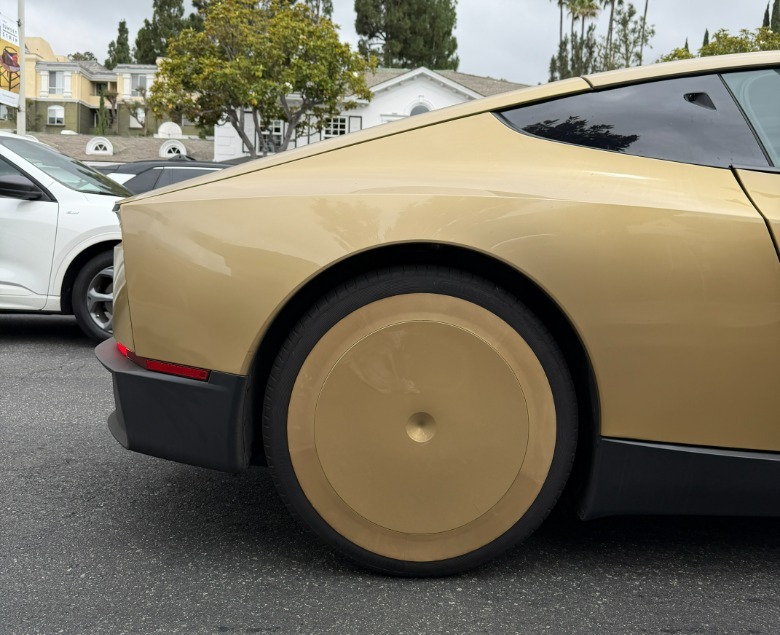 Daniel Golson/Jalopnik
As you can tell from the photos, Tesla hasn’t improved its panel gaps or build quality. Yeah, yeah, I know this is a prototype, but still. In February, Tesla said it had already built a Cybercab on the production line, and Musk is adamant that it will begin sales to consumers by the end of this year. If we’re that close to “production,” I’d hope the prototypes being driven around with no camouflage would be put together more precisely.
Musk has also made some pretty wild claims about how many Cybercabs Tesla will be able to produce — an extremely dubious one every ten seconds at “full scale,” with hundreds per week — but at first it’ll be “agonizingly slow.” I sure hope it doesn’t become that prevalent, but I’m not too worried. We don’t even know what name Tesla will be able to use yet (thus the “robotaxi” plate instead of it saying Cybercab), and Tesla’s existing robotaxi fleet has been fraught, to say the least.

