


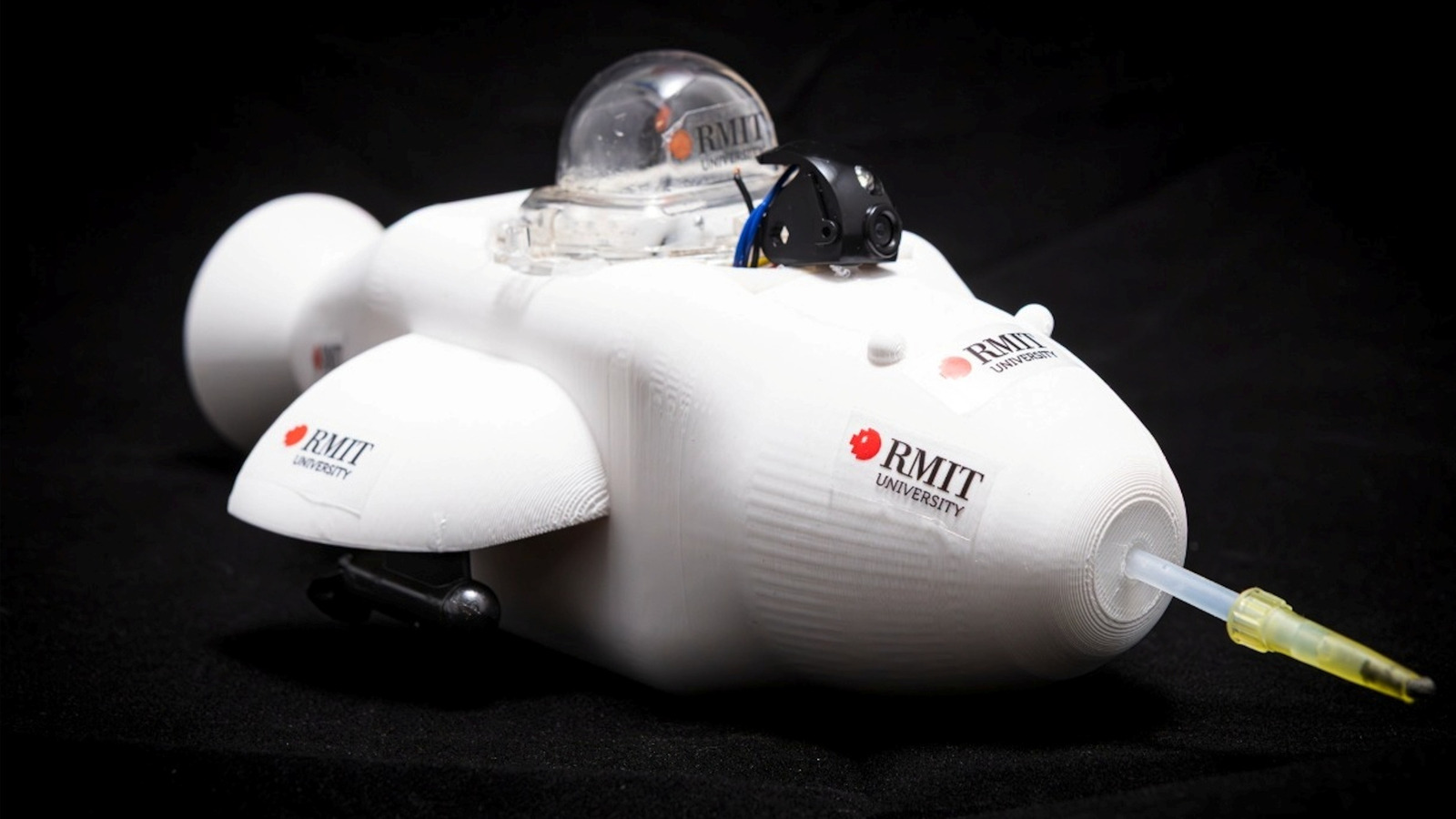
It should be fairly common knowledge that oil spilling into the ocean is bad news. It’s terrible for the wildlife and environment as a whole, but some of the clean up methods aren’t necessarily great for it either. A group of engineers and researchers in Australia have devised an admittedly adorable robot that could at least make cleaning it up fairly eco-friendly, while surprisingly saving the oil for repurposing and use.
It’s called an “Electronic Dolphin” — a minibot created by engineers at RMIT University specifically to help clean up oil spills in a more effective and eco-conscious way. In the occurrence of an oil spill, the minibot would be deployed into contaminated waters with many other electronic dolphin friends in which a remote operator would direct them to hoover up the oil in the affected water. At the nose-end of the dolphin minibot is a filter material that wears a special coating that creates microscopic sea urchin-like spikes that repel water but absorb oil. A pump inside the housing brings that oil into the cavity to then be stored in the device until it’s emptied. The water remains in the ocean or whatever watery environment is being cleaned at the time.
The original mini oil hoovering bot
In one of the videos provided with RMIT University’s paper on the robot, it demonstrates how the filter works with a simple setup” the filter is on the end of a long hose that is fitted to a container in a way to create a vacuum. Another bottle is filled with water and and oil substance. When the vacuum is engaged, the filter is placed into the oil-water solution and began collecting the oil from the water, effectively just vacuums the oil off of the water’s surface. According to the paper the minibot is currently 97 percent effective at cleaning an oily contaminant. Even with that three-percent difference from perfection, that’s mighty impressive when compared to other solutions.
Most oil clean-up solutions have gravitated towards adding chemicals to the water and oil that helps break down the oil into little droplets, but according to RMIT University that can also put PFA contaminants into the water. There’s also the option of just straight up burning oil off the surface of the water, which I think is self-explanatory on how terrible that is for the environment. Cleaner alternatives do exist, like the use of booms to keep spilled oil in a specific area so as not to spread, or skimming, where large boats try to skim the oil off the ocean’s surface. There’s even been efforts where they use mats made of human hair, which is naturally great at collecting oil but these are not quite as effective as their more harmful alternatives.
Yet the minibot does something none of the current alternatives really allow for, aside from a better clean up. It collects the spilled oil that can then actually be repurposed or used rather than wasted.
A sea of robots to clean a sea filled with oil
RMIT University’s Electronic Dolphin currently has a charge of about 15 minutes, and at its current size, it would take a literal swarm of them constantly running in shifts to clean up a large oil spill. I’ve tried to imagine how you operate a thousand of these little robots in an oil spill for 15 minutes, bring them back, empty them, and then deploy another thousand robots. I may have unlocked a new nightmare. Luckily researchers are working on ways to utilize a larger filter as well as improving bot’s charge and capacity to make it more streamlined for use in actual emergencies.
The minibot may not feel like the most practical solution at the moment, but it’s certainly a cleaner one, and something that could be utilized in any size spill in the future especially if they can improve its capacity and charge. Which, if they have these versions set to go right now, the engineers and researchers in Australia could use it on a real-world case like the influx of oil spills on the Strait of Hormuz thanks to leaky tanks and the carnage of the Iran war. Most recently a Iranian oil refinery bombed during the war spilled oil along the coast as well as the uninhabited Shidvar Island, according to the AP, which is a protected breeding ground for the wildlife there under the Ramsar Convention on Wetlands. The images and video are heartbreaking, and were shared for two months before actual clean up began, but the spill spread enough that it was visible from space.

