


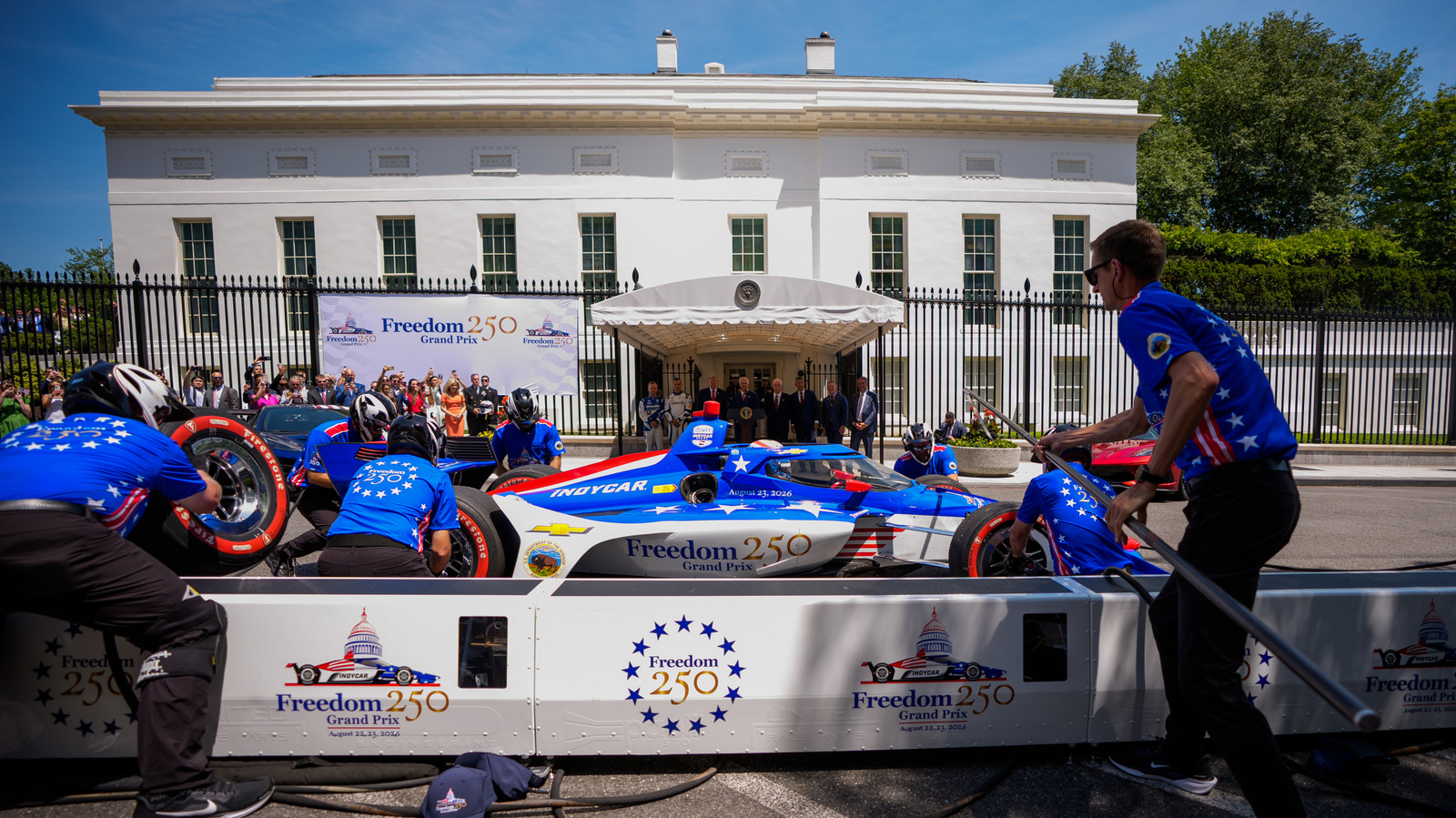
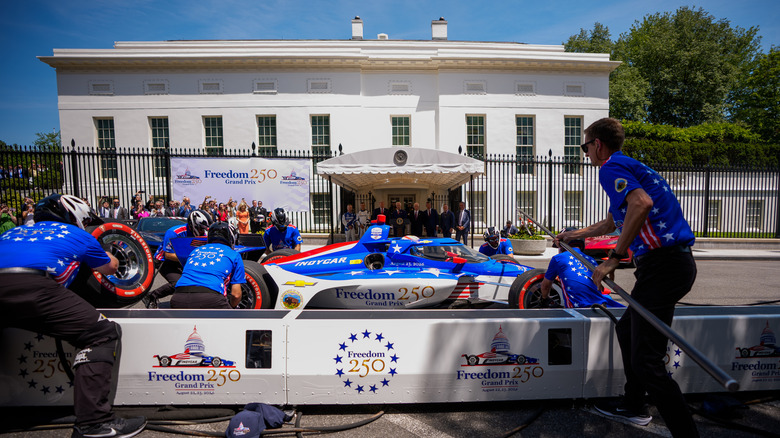
When the U.S. Department of Transportation brashly announced an IndyCar DC street race in January 2025 with an AI-slop video, it raised a multitude of concerns about President Donald Trump’s hijacking of the celebrations for the 250th anniversary of U.S. independence. With two weeks until the Freedom 250 Grand Prix, potential damage to roads around our nation’s capital has bizarrely become a political talking point. There are far more important issues, like who’s covering the IndyCar’s costs to run the race or benefiting from the event’s blue-chip corporate sponsors?
After tearing up the Reflecting Pool by driving cars over it funsies, Trump’s Freedom 250 is going to put race cars all over DC roads to go vroom vroom and tear those up, too.
apnews.com/article/trum…
— Amanda Carpenter (@amandacarpenter.bsky.social) 2026-08-06T12:08:44.361Z
Road damage became a part of the discourse when the Associated Press published a story on Thursday essentially promoting the race. Assuming that people didn’t read past “manhole cover-displacing torque” in the headline, Penske Corporation president Bud Denker noted that over 220 manhole covers need to be welded down or fitted with silicone along the 1.7-mile circuit. Lifting a manhole cover doesn’t damage a road. It’s a danger to the cars, the drivers and everyone standing along the track.
Single-seater race cars generate so much negative pressure under their floors that they will suck any loose object off the ground. Formula 1 found that out the hard way when the world championship visited Las Vegas for the first time in 2023. Carlos Sainz drove his Ferrari over an unsecured water valve cover during the first practice session. The cover punched a hole in his car’s floor, and Sainz temporarily lost feeling in his legs.
Road damage really isn’t a concern here
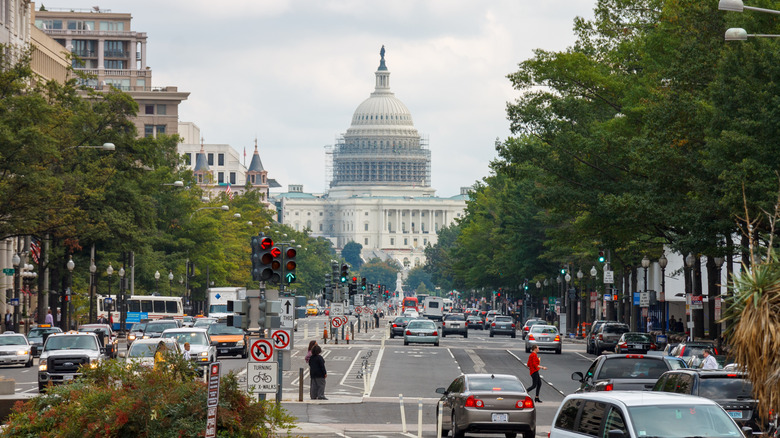
The cost doesn’t come from the race cars damaging the streets, but from repaving heavily worn roads for racing. DC is also an outlier in this regard. Denker also told the AP that the city’s roads were “in pretty good shape.” The cost of road improvements will be $3 million, a bargain compared to the $9 million price tag for IndyCar’s other debuting street race in Markham, Ontario.
All things considered, an average load of weekday traffic does more damage to a city street than a weekend of racing. Road damage can be roughly estimated using the fourth power law, a vehicle’s axle load multiplied to the fourth power. It not only takes into account how heavy a car or truck is, but how it distributes its load across the road surface. According to the National Capital Planning Commission, approximately 31,500 vehicles per day travel down the portion of Pennsylvania Avenue used for the circuit. The average weight of a new car in the U.S. is around 4,350 pounds. As a result, the collective load of weekday traffic on the avenue is 44,058 tons.
The current full-time IndyCar field of 25 cars is a literal drop in the bucket. The current IndyCar weighs 1,785 pounds. The field’s collective load is just under a ton. Even being generous and factoring in the maximum amount of downforce the car could produce on a much faster course doesn’t change much. Adding in 4,000 pounds of downforce, the collective load jumps to 109.4 tons, but it’s still a drop in the bucket. An average day of traffic on Pennsylvania Avenue does 402 times more damage.
Everyone is going to lose money, including the taxpayers
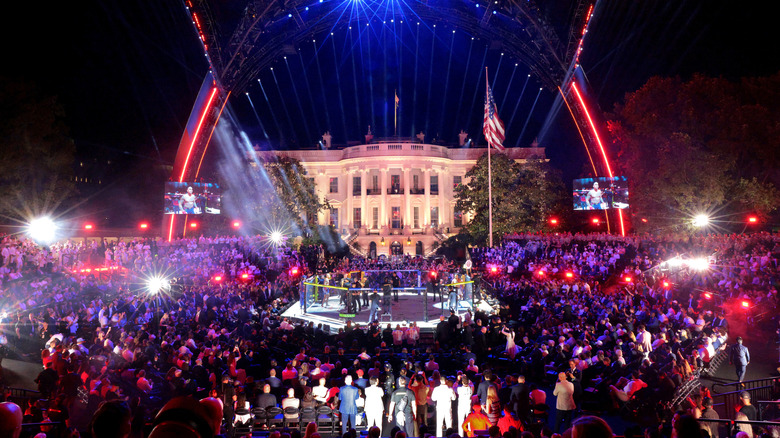
What isn’t clear is who’s paying for the Freedom 250 Grand Prix? If UFC’s Freedom 250 is anything to go by, everyone is paying for this. TKO, the organization’s parent company, announced earlier this week that it spent $60 million on the MMA fight card on the White House South Lawn. According to The Guardian, the UFC attempted to recoup the cost through sponsorships, but still lost $30 million on the garish spectacle. Taxpayers also had to foot a $10 million bill for security.
The Freedom 250 Grand Prix will have to climb the same cash-burning mountain. The event has an estimated cost of $35 million and must fulfill Trump’s demand to make every general admission ticket available free of charge. The race did amass a list of corporate sponsors that aren’t typically involved in IndyCar, including Altria, Amazon Web Services, Boeing, Booz Allen, Delta Air Lines, Phillip Morris International, and United Airlines. Not to mention, hospitality seats along the start-finish straight are up to $250,000. This all seems like a bad financial gamble to appease President Trump and maybe garner much-needed publicity for the IndyCar Series. This just isn’t good publicity.

