


You have full access to this article via your institution.

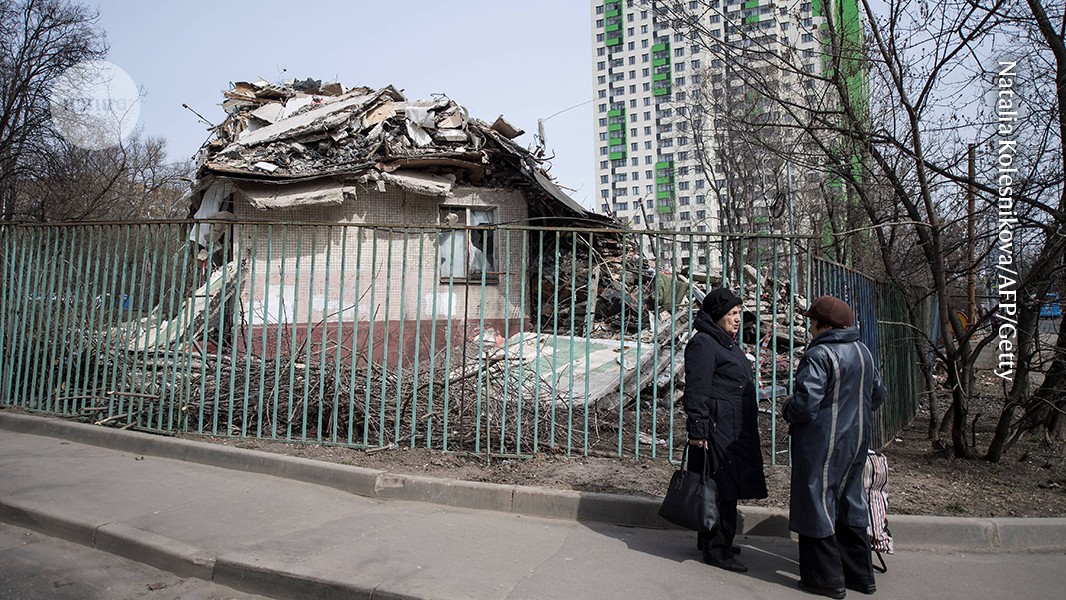
Residents of Soviet-era housing in Moscow agreed to bury political differences and unite to save the buildings from demolition.Credit: Natalia Kolesnikova/AFP/Getty
Societies are becoming further divided and more polarized. Numbers of conflicts are increasing, as are threats of political violence. Differences of opinion are normal in all societies, but polarization is linked to changes in behaviour that can cause harm, such as a decrease in social interactions between groups of people, or people having an increasingly negative perception of others because of differences in race or ethnicity, gender, religion or ideology.
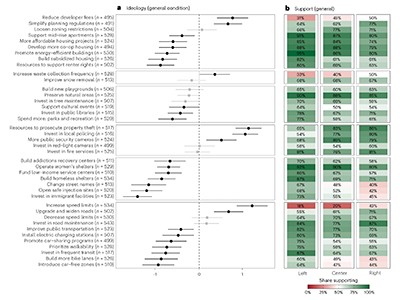
Read the paper: Geographic proximity dampens ideological policy disagreement in urban politics
Researchers in fields such as political science, sociology, psychology and history look at conflicts within and between societies. Increasingly, as psychologist Sabina Čehajić-Clancy at Stockholm University and Eran Halperin, a psychologist at The Hebrew University of Jerusalem, described in an article in Nature Reviews Psychology in 2024, these scientists and others are also using their skills to help to prevent conflict or deal with its aftermath1.
They are investigating, for instance, how divides can be bridged and polarization reduced2 along with what kinds of intervention work well, which types don’t and why. Studies exploring these questions are at a relatively early stage. But if societies want to reverse some of the current trends, researchers need to understand their causes and improve the design and testing of interventions.
Ideological divides soften near home
One way that polarization could be reduced is for communities to focus on the things that unite them. In the June issue of Nature Cities, Jack Lucas, a political scientist at the University of Calgary in Canada, and his colleagues explore this approach through a large-scale survey with 4,000 respondents in Canada who identified as having either liberal (left-wing) or conservative (right-wing) viewpoints3. People were asked about generic local policies that aligned broadly with either a liberal or conservative perspective. Examples include whether a locality should introduce car-free zones (broadly supported by the left) and whether extra security cameras should be set up for public safety (broadly supported by the right). The scientists found that respondents mostly answered in line with their ideological positions.
The participants were also asked about the same policies, with a more personal, or ‘proximate’, framing. For example, “my municipality should install more security cameras”. In this case, the researchers found that the answers were less predictable. For instance, some respondents identifying as liberal did not oppose security cameras, and some of those identifying as conservative supported building support facilities for immigrants.

Give ‘science for peace’ a chance
These results, writes public-policy researcher Mirya Holman at the University of Houston in Texas in an accompanying News and Views article, explains a familiar feature of urban life. Someone who supports increasing affordable housing might have a different view if a policy proposes building it in their neighbourhood4. Similarly, someone might try to use regulation to block a proposed development, despite usually supporting less bureaucracy.
Anna Zhelnina, a sociologist at Utrecht University in the Netherlands, found similar fluidity in 2022, in her studies of Moscow, where many identify as being pro- or anti-government5. When the authorities wanted to demolish thousands of Soviet-era buildings and replace them with new housing, the residents buried their differences and campaigned for the developments to be saved, because they did not want to be relocated. “They had to tone down their politics if they wanted to succeed at saving their building,” Zhelnina says.
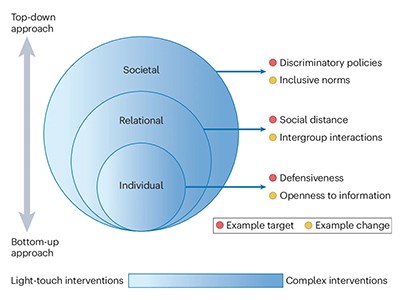
Advancing research and practice of psychological intergroup interventions
The researchers Nature spoke to emphasize that studies on reducing polarization are effectively in their infancy. One or two approaches on their own are not the answer. Moreover, what people say they might do in a specific situation might differ from what they end up doing in practice. Measures that work in a particular place and time need to be evaluated in other settings. Equally important, as Čehajić-Clancy says, is to study ways of engaging people with issues that are the source of divisions, including how to do this when divisions are aggravated by political and other influential actors.
Researchers must play a bigger part in uniting communities. Those who study the causes and effects of polarization also have a responsibility to use their knowledge and skills to help policymakers and communities to counter it.

