


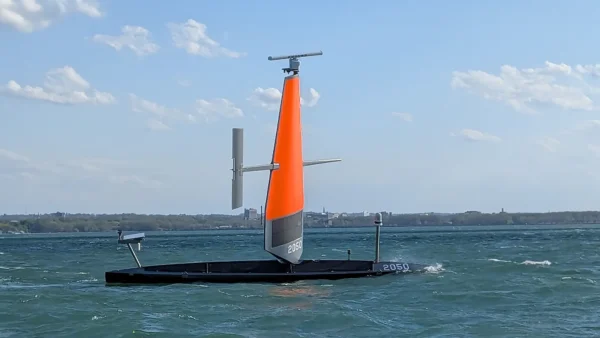
The Bay Area autonomous maritime company brings persistent surveillance to the Great Lakes and Northeast under a $15.5 million Coast Guard contract.
Saildrone is deploying 16 Voyager unmanned surface vehicles in support of US Coast Guard missions across the Great Lakes and the Northeast. The Alameda, California-based company announced the deployment on May 11, 2026. The deal runs under a $15.5 million contract signed in March.
The fleet provides persistent maritime domain awareness across two of the toughest patrol regions in the United States. The northern maritime approaches span thousands of miles of coastline, high-traffic waterways, and productive fishing grounds.
Maritime Drone Fleet Strengthens Great Lakes Border Security
The Great Lakes hold a long maritime border with Canada. Crewed patrols struggle with seasonal weather, vast distances, and busy commercial traffic.
The Voyager USVs deliver persistent, on-station presence across that border. They help the Coast Guard track cross-border vessel movement, identify suspicious activity, and provide early warning of illicit operations such as drug smuggling.
Saildrone has worked alongside the Coast Guard since 2023. Earlier missions covered counter-drug and migrant interdictions, safety of life at sea operations, and counter-IUU fishing efforts in the Southwest and Southeast districts. Earlier coverage from Dronelife reported the Voyager also supported NATO Task Force X in the Baltic Sea in 2025.
“The expansion of our partnership with the Coast Guard into the Great Lakes and Northeast regions reflects the value Saildrone has delivered in prior missions,” said Saildrone President and retired US Navy Vice Adm. John Mustin. “This Voyager fleet will help the Coast Guard maintain persistent, scalable maritime domain awareness across these expansive waters, identifying threats in real time and enabling focused, high-impact interdiction.”
Watching the North Atlantic for Illegal Fishing
In the Northeast, the Coast Guard targets illegal, unreported, and unregulated (IUU) fishing in domestic grounds. The North Atlantic is vast, remote, and operationally demanding.
Voyager USVs monitor fishing vessel activity around the clock. The Coast Guard gains a continuous maritime intelligence layer without burning out crews on long patrols.
Each Saildrone Voyager is a 10-meter (33-foot) maritime drone designed for persistent surface and subsurface surveillance. Onboard sensors include high-resolution cameras, advanced radar, and Automatic Identification System (AIS) receivers.
The platform identifies and tracks vessels and feeds near-real-time data to Coast Guard command centers. Human operators can then deploy crewed interdiction assets only when a verified threat appears.
Saildrone’s USVs run on wind and solar power, supporting multi-month missions without refueling. The fleet has logged more than 2 million nautical miles and 60,000 days at sea over 12-plus years.
More information is available at Saildrone.
Read More

Ian McNabb is a journalist focusing on drone technology and lifestyle content at Dronelife. He is based between Boston and NH and, when not writing, enjoys hiking and Boston area sports.

