


Brandon Brown 00:00
So I had to kind of look at farming the same way that I look at my academic career, and kind of take it one day at a time with my eyes towards a goal.
David Payne 00:18
This is Creativity in Science, a series brought to you by Nature Careers…
Brandon Brown 00:24
So I have lots of free time to think as I do the farming.
And many times I have to, you know, take out a small notepad that I keep with me to write down notes as I’m working, because ideas and kind of reminders and goals and deadlines pass through my mind.
David Payne 00:42
….a podcast about how science and creativity go hand in hand, and about how one can nurture the other.
Brandon Brown 00:52
It took me some time to learn that I needed to think about this work on the farm in the same way.
David Payne 01:01
Here’s a researcher who left the big city for a small farmstead and found how surprisingly compatible rural life and the academic world really are.
Brandon Brown 01:24
My name is Brandon Brown.
I’m a professor in the department of social medicine, population and public health in the University of California, Riverside School of Medicine, in the United States.
My research interests are broadly on the topics of HIV and the ethics of participant payment in research.
But I’m also working on ways that we can increase community involvement in research and addressing some of the often-unspoken challenges that faculty, students and staff face in academia, most recent with the grant terminations here in the US.
In addition to research, I teach public health ethics and I’m involved with different organizations off campus.
Brandon Brown 02:15
Yeah, so the story of how I got involved in farming is an interesting one, and I would say that honestly, I kind of fell into it during the Covid-19 pandemic.
But one evening in 2020 we were awoken from bed by loud noises in front of our house, and saw that the street was partially closed off due to a Trump rally.
And we saw hoods and Confederate flags in the garage across the street.
So that was our cue to kind of immediately try to move. And since this was still at the height of the pandemic, we decided we would look for a home with more space outside.
That way we could try and grow our own food and have a larger yard and enjoy fresh air and kind of nature and exercise, and be in the what people call the earth gym.
And then when we found our home, it was like it was meant to be, because the owners wanted to move out of state, and we were the buyer who kind of was ready to go.
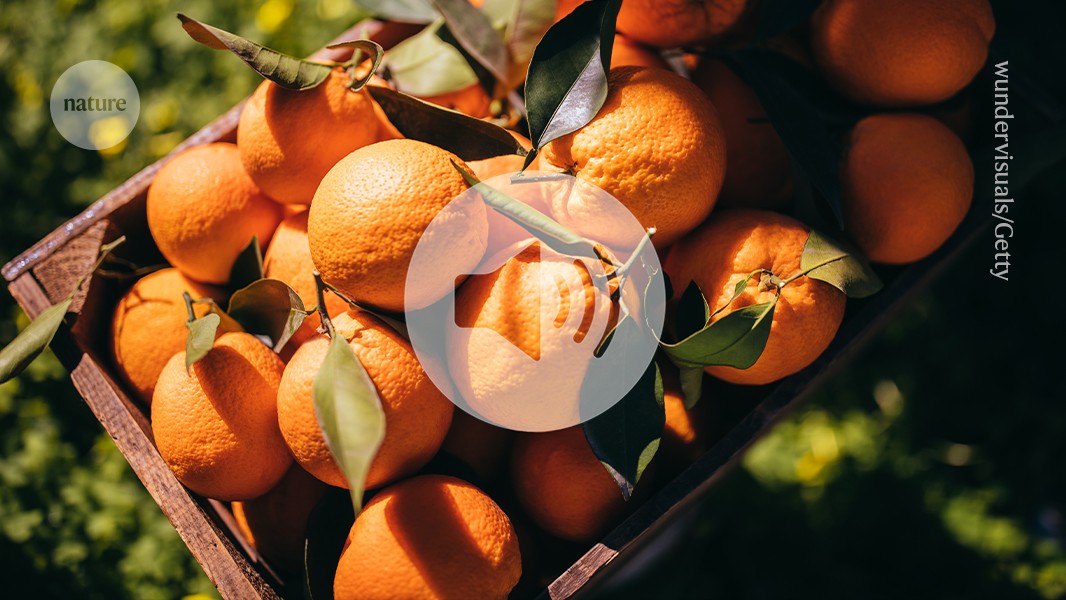
So we got the space, but we did not have any experience in managing such a large plot of land, which is primarily citrus grove.
But we learned how to manage things little by little, starting with irrigation and how irrigation works on a plot of land.
And as an added bonus the former occupant had a large chicken coop, and we assumed that they would take their chickens with them, but they left three chickens behind, and we only learned that the next day because we moved in at night.
So we were quick learners. On many fronts, we had to be quick learners.
So what we did is we kind of surveyed the land more carefully, created maps of the trees and the structures, and we’ve been learning ever since.
And that includes taking care of the trees, how they’re all different from one another in terms of their water and nutritional needs and what nourishment provides the most delicious fruit, which is different for, let’s say, oranges and avocados and guavas and peaches and apples, and so on. So that’s kind of how we fell into farming.
Brandon Brown 04:29
I would say it’s 90% trees, 5% house and 5% barn.
Like, let’s say 150 orange trees, a couple large avocado trees, apples, pomegranates, guava, persimmon, papaya. Anything edible. Vegetables. You know, a lot of tomatoes, they just grow like crazy, because birds will eat them. They’ll poop out the seeds.
Those seeds will kind of plant themselves, and then there will be more tomatoes.
We definitely have coyotes.
We hear them every night howling. And it’s actually really beautiful, but I know it’s also when they’re howling, they’re also kind of eating.
So you know that, you know the cycle of life, something lives, something dies.
But we also have possums. We have raccoons.
We have skunks, squirrels, lizards, gophers.
I mean, if you could think of it, we have it. We have a lot of birds. We have owls. We have crows. We have eagles.
Brandon Brown 05:46
One important trait for succeeding in STEM, I think education, but really in any field, is persistence and perseverance.
It’s cross country, it’s not a rapid race.
You need to get to the finish line. And sometimes it takes a while, but if my PhD kind of taught me one thing about research, it’s that the work is never done, and there’s always a new research project to pursue with community, more students to collaborate with, more policies to work on, to change.
And since research builds on research, the fun never ends.
So translating that to farming. It took me some time to learn that I needed to think about this work on the farm in the same way.
So let’s say I have 12 rows of trees that make up 150 trees across a couple acres of land.
When I first started working outside, when we moved here, my thought was that I could go and water and trim and fertilize the trees, harvest the fruits, deweed, remulch the land on a certain day.
That way, my research would not be interrupted, and my weekly routine that had been established at that point would be okay. I wouldn’t have to change much.
But going out to do that, I kind of realized quickly that that’s unreasonable. Perhaps similar to how it’s unreasonable to finish an application to the National Institutes of Health or write and submit a research paper in a day.
It’s just too much for one day, maybe even for one week, month, one month, or even a year.
So I had to kind of look at farming the same way that I look at my academic career, and kind of take it one day at a time with my eyes towards a goal that I’ll reach one day.
But perhaps the goalpost changes.
And then for my grove, I think that the goal is healthy trees, no weeds, clear furrows, happy roaming chickens, and enough fruit to share with others who come to visit the space.
For academia that’s writing an article about the research I completed, going up for promotion and further, working on my lecture slides and classroom activities.
So those are, like the goals.
So I think, you know, I kind of developed a similar set of goals for the farming as for academia.
So I think utilizing what I learned in academia has helped me with this farming.
Brandon Brown 08:28
I’m a first generation student.
Going to college I will say that I did not want to go to college. I didn’t plan to go to college.
I didn’t think that I would be able to succeed there, because my grades were not as competitive as some of my peers.
But like a lot of first generation students, I didn’t know or understand the opportunities that would be available to me if I attended college.
So I didn’t really know what it could be.
My plan after graduating high school was to be a taekwondo teacher.
And I was already kind of deep in my training for that as an assistant instructor at my academy.
And I had it all planned out. And I would have a side career as a as a personal trainer, but my mom wanted more education for me, and she saw that people at the time were graduating with computer science degrees in the 90s, and they were getting very well-paying jobs after graduating from the university.
So what did she do? She kind of forced me to apply.
And I was very upset at first, because I really had a plan of what I wanted to do. I wanted to do taekwondo.
I thought I could even go to the Olympics one day.
But looking back, that decision kind of changed the trajectory of my life.
And I think in the best way possible, because I can make an impact on science and students and kind of the world in general, in a small way, because my mom forced me to apply to school.
So now I’m kind of living our dream, and I would say, like mine and hers.
Brandon Brown 10:13
And when the weather is beautiful, as it is in the majority of days in Riverside, because, again, this is California, I can go outside and remove weeds.
I could plant small trees, move mulch, make sure the chickens and cats are adequately fed and watered.
And during all these efforts, my body is doing some repetitive work.
But my mind can be kind of wandering and thinking about what I’m going to do later in the afternoon or during the week in my research or plan out how am I going to modify this activity in my ethics course?
Or how am I going to present these files to my colleagues for university service?
So I have lots of free time to think as I do the farming, and many times I have to, you know, take out a small notepad that I keep with me to write down notes as I’m working, because ideas and kind of reminders and goals and deadlines pass through my mind as time passes through.
And if I don’t write these things down, it’ll just, they’ll go away.
So I also enjoy doing the farming work in the morning.
Since it seems that in the early morning, kind of the world, the whole world, is asleep.
You know, cars are missing from the streets. There’s no, there’s no noise from from vehicles or construction. And you could hear the birds.
You could hear the wind blowing through the trees.
And kind of everything seems more clear and peaceful. So for instance, today, when I went outside, I could see a rainbow across the street. I mean, it’s just amazing to have the opportunity to see these things in nature.
Brandon Brown 12:05
For scientists, I think our work often becomes our life, and it’s important to establish yourself as the expert in one single thing which can kind of lend itself to a successful career.
And since science in some places is currently under attack, we also have to be ready to kind of protect ourselves and have a plan in place to provide for our basic needs, in case our science is terminated.
Because more important than our science is our happiness, our loved ones, and that we kind of take care of ourselves and always remember to be good human beings.
So I’m currently in pursuit of having that peaceful mind that allows me to kind of pursue my dreams, but also to be satisfied with my present reality and what I’ve accomplished so far.
And I think that’s really tough for scientists to do, because our work never ends, but it’s also important not to get lost in our own head, in our own science.
So have you eaten lunch? Did you drink enough water today? Have you made sure that the people that you love know that you care about them?
And are you leveraging the privilege that science provides you to kind of help others who are facing challenges in the system?
And I think these are important questions about survival, and as scientists, we always have to be ready for people who care about us to pull us out of our own head. Because that’s important, because there’s a whole world outside of that.

