


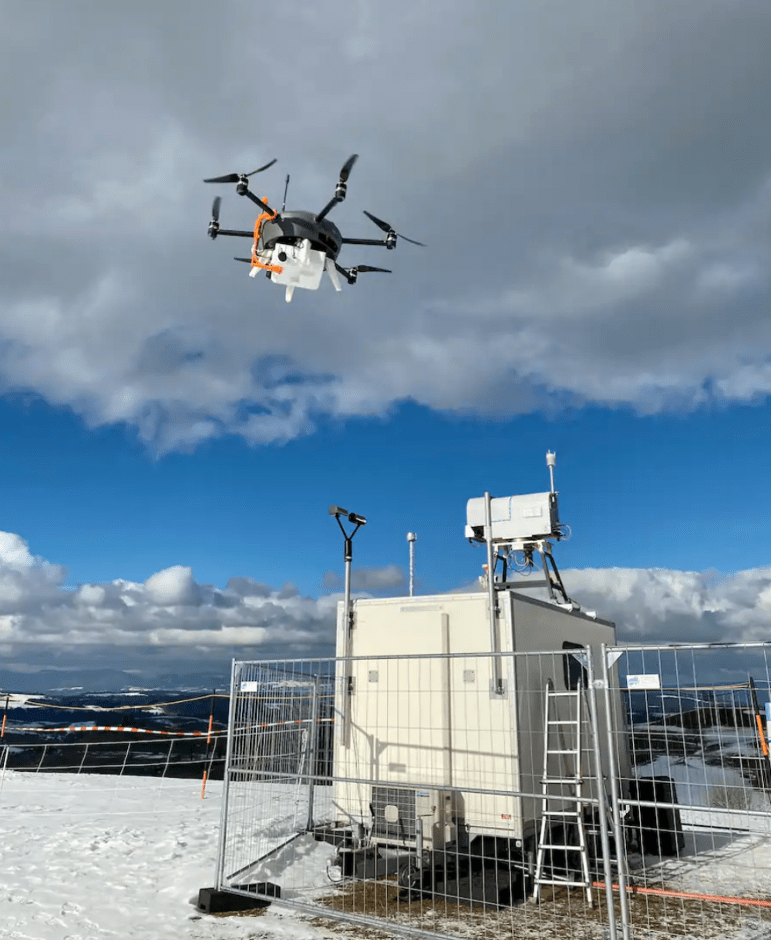
FAA, DoD, and industry partners use Grand Forks test environment to develop scalable systems for UAS, logistics, and counter-UAS coordination
At AUVSI XPONENTIAL 2026 in Detroit, officials from the FAA, Department of War (DoW), test sites, and industry described a growing effort to normalize drone operations within the National Airspace System (NAS). The initiative, known as Project ULTRA, focuses on integrating drones, counter-UAS systems, and traditional aircraft operations into a coordinated operational framework.
The discussion highlighted a shift taking place across the drone industry. Instead of treating uncrewed aircraft as exceptions requiring isolated approvals, agencies are increasingly working toward systems that allow drones to operate as part of everyday air traffic.
“We’re not asking the drones to be different, we’re asking them to be treated as aircraft,” said Christopher Hewlett of Grand Sky UAS Ecosystem.
Project ULTRA operates at Grand Forks, North Dakota, through cooperation between the FAA, the Department of War, Grand Sky, the Northern Plains UAS Test Site, and Air Force partners. The project builds on earlier Department of War UTM efforts and focuses on operational testing in complex airspace environments.
Moving Beyond Demonstrations
Speakers emphasized that the goal is no longer simply proving that drones can fly safely. The focus now is on scaling coordinated operations in shared airspace.
Ryan Simms of Patriot Strategies, who moderated the panel, described the effort as part of a broader push toward “normalizing UAV traffic so that standards can be established and interoperability can be achieved.”
That includes coordinating:
- manned aircraft
- BVLOS drone operations
- airport drone activities
- counter-UAS systems
- logistics flights
- military operations
John Sawyer of Modern Technology Solutions, representing the Department of War, explained the challenge from the DoW perspective. One essential problem is developing the operating procedures, technologies, and systems to allow airspace integration anywhere – not just on one Air Force base in the US.
“We fight wars. We defend the nation. We have to have the capability to fly a manned or unmanned aircraft… not only in our national airspace system, but overseas,” Sawyer said.
That means developing a system that merges defense requirements with civil airspace integration efforts.
Counter-UAS Becomes a Traffic Management Issue
One of the clearest themes from the session was that counter-UAS operations are increasingly connected to broader airspace management.
“You’ve got manned air traffic, helicopter operations, counter UAS detection systems, you have your on airport UAS operations, and outside of the boundary you have BVLOS UAS operations,” Sawyer said. “How do we detect? How do we coordinate that detection to be sure that all of the stakeholders are seeing what they need to see?”
Speakers repeatedly described the challenge as a “system of systems” problem. Different detection platforms, security technologies, and traffic management systems must work together without overwhelming operators with data.
Trevor Woods of the Northern Plains UAS Test Site noted that the industry still faces technical gaps around detection and identification. Too narrow, and you might miss small drones – too broad and you pick up irrelevant objects.
“You have to start figuring out, am I picking up geese? It’s a known gap,” Woods said.
Another major issue is identifying legitimate aircraft activity vs. drone flights that might pose a threat.
“There is a gap in knowing who’s friendly and who isn’t friendly,” Woods said, pointing to the need for operational intent sharing and broader visibility into authorized flights.
Building a Scalable Playbook
FAA officials said the agency is using Project ULTRA to learn how existing rules and approval pathways can adapt to increasingly complex drone operations.
“Everything Project ULTRA is doing is new and different,” said FAA representative Jim Reynolds. “Any one of them might be novel, but combining them all together requires… thinking about new pathways to get those approvals.”
Participants also stressed that the work underway at Grand Forks is intended to scale beyond a single location.
“When this was graduating from DoD UTM to Project ULTRA, the measuring stick was: what can we build up in a year that will continue to provide value 10 years from now?” Woods said.
That long-term view may be the most important takeaway from the session. Project ULTRA is not just testing drones. It is testing how the FAA, Department of War, airports, operators, and security systems may eventually function together in an airspace environment where drone traffic becomes routine.
Read more:

Miriam McNabb is the Editor-in-Chief of DRONELIFE and CEO of JobForDrones, a professional drone services marketplace, and a fascinated observer of the emerging drone industry and the regulatory environment for drones. Miriam has penned over 3,000 articles focused on the commercial drone space and is an international speaker and recognized figure in the industry. Miriam has a degree from the University of Chicago and over 20 years of experience in high tech sales and marketing for new technologies.
For drone industry consulting or writing, Email Miriam.
TWITTER:@spaldingbarker
Subscribe to DroneLife here.

