


Powerus deals point to growth in U.S., international markets
By DRONELIFE Features Editor Jim Magill
A Florida-based company that manufactures heavy-lift drones for defense and commercial applications has launched a new agriculture division to market its products in the United State and overseas. Powerus said the new business unit will be operated under the umbrella of its wholly owned subsidiary Kaizen Aerospace.
With headquarters in West Palm Beach and manufacturing facilities in Charlotte, North Carolina, Powerus said it has entered into a partnership with Sprig Aerospace, a Kentucky-based veteran-owned and -operated start-up that is developing next-generation aerial-application payloads and advanced agricultural analytics tools for use aboard Powerus’ ultra-heavy-lift H1000 drone.
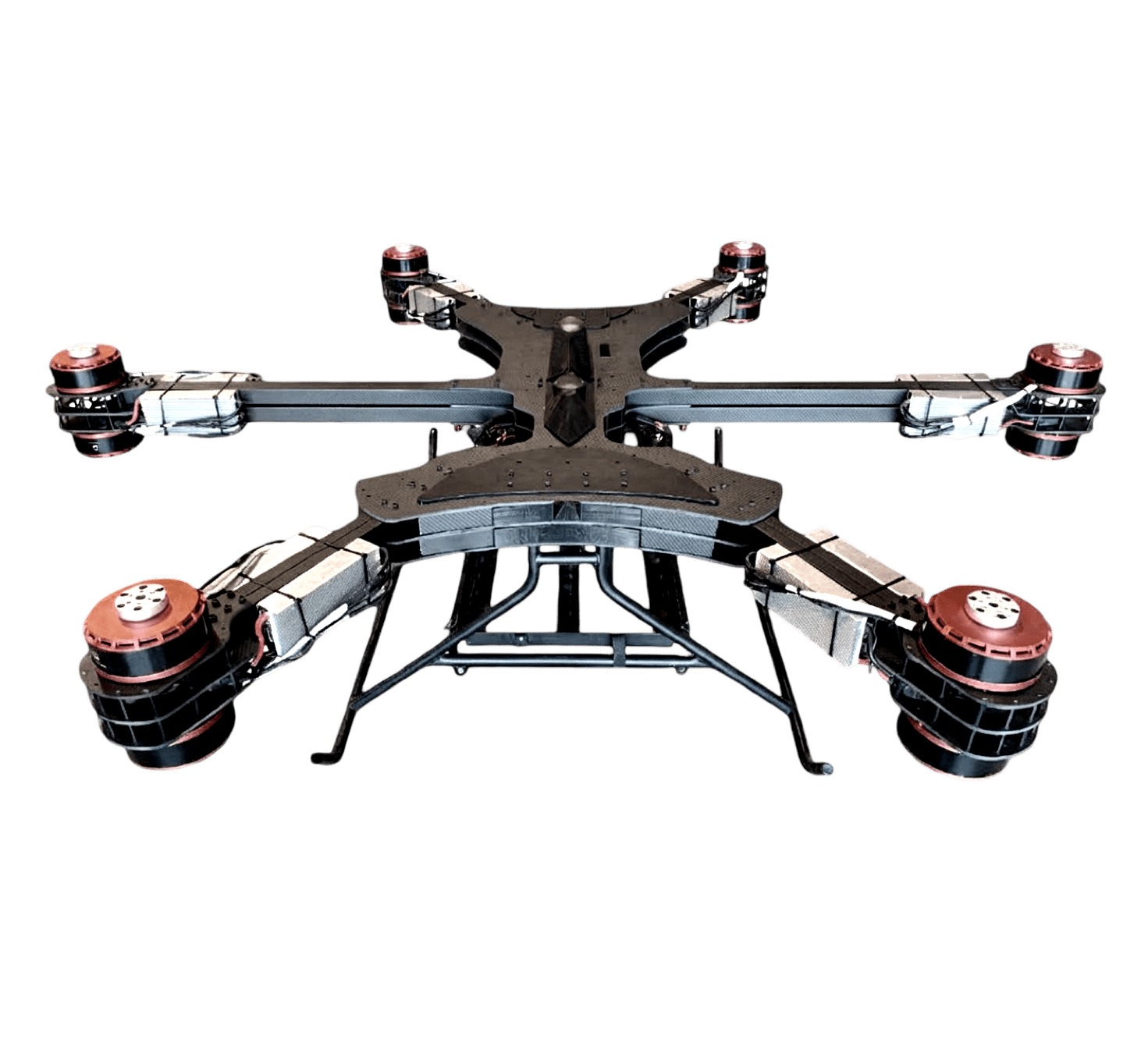
In an interview with DroneLife, Powerus co-founder and President Brett Velicovich said the company’s Sprig transaction and other moves are designed to meet the needs of the rapidly expanding global market for agricultural drones.
“These are aircraft that’re manufactured in the United States. Typically, folks have had to reach out to China to be able to get anything that is in the realm of saving them money,” he said.
In the U.S. market, Sprig will serve as Kaizen’s distributor and marketing partner for the xFold series of products. Sprig also has agreed to standardize its commercial spraying and aerial application fleet based on the use of Powerus’ aircraft, with its spray systems fitted to xFold airframes.
Velicovich said that Powerus’ deal with Sprig come at a time that the Dragon H1000 has just cleared a major regulatory step. The FAA has issued Sprig a special airworthiness certificate-experimental category and an accompanying certificate of waiver of authorization for the operation of the UAV for research-and-development purposes. Powerus and Sprig are expected to continue flying the vehicles under the certificate as the platform advances toward commercial deployment.
“This is very important because, they want to increase the payload capacity. They want to be able to carry more spraying equipment. And this special airworthiness certificate is designed to allow us to continue to refine the system, do more data collection, do a lot of sophomore flight tests,” he said.
Alex Scott, cofounder of Sprig, said that through its relationship with Kaizen, the small start-up company is designing and building an agriculture payload system for the H1000 drone, the largest platforms in the xFold series. “Once we put this out there, this will be the largest vertical-takeoff-and-landing crop duster drone in the industry,” Scott said.
International agreement announced
Meanwhile, Powerus also announced that Kaizen has signed a distribution agreement, worth an estimated $60 million, with New Zealand-based Aerospread Technologies to market its heavy-lift agricultural drones in New Zealand and Australia.
Aerospread, a major manufacturer of agricultural aerial application equipment, will become the exclusive agent for the sales and distribution Kaizen’s heavy-lift, multi-rotor xFold Dragon UAVs across the Australia and New Zealand markets. Based on Aerospread’s projected volumes, sales targets under the agreement represent about $60 million in potential product revenue over the first five years of the contract.
Aerospread currently deploys a fleet of fixed-wing aircraft for agricultural purposes.
“That’s what they’ve been using for a while to spray crops and apply these topical applications to the agriculture space. But being the innovative company that they are, they’ve decided that they can constantly improve efficiently by adding drone technology to that,” Velicovich said.
He said the transaction with Aerospread reflects a wider trend among agricultural aviation companies, as they seek to expand their product lines by incorporating rapidly advancing heavy-lift drone technology. “That’s what a number of agriculture companies need to start doing. They need to be able to remain competitive by constantly improving and adopting new technology, new software.”
Advancing position in commercial drone market
Velicovich said the company’s recent moves are designed to further enhance Powerus’ position in the commercial drone space, particularly in the markets for heavy-lift and agricultural drones.
“Based on these partnerships and based on the sales that we believe are coming as we support these different companies and sign these distribution agreements, we have formed this new agriculture division,” he said. “Just being a defense company is great, but based on my experiences all around the world, there’re a lot of ways that our drone technology can help the commercial sector.”
Velicovich has had decades of experience with drone technology starting out in the U.S. Army Special Operations community and working in the military’s intelligence world. He completed six overseas combat deployments, serving in both Iraq and Afghanistan.
“My job was basically to use the US government’s drone technology to hunt terrorists. I was behind a lot of the Predator and Reaper programs people speak about,” he said. “I had worked with Tier One Special Operations units and had all the greatest drone technology at my fingertips.”
After leaving the military, Velicovich began deploying drones for more commercial and humanitarian purposes. “I started figuring out ways that you can take commercial off-the-shelf technology and start applying it to solve a variety of complex issues that we have, whether it’s anti-poaching operations in Kenya or using drone technology during hurricanes to help spot people in need or essentially using drones to help save lives in a variety of different ways,” he said.
He founded Powerus last year, and the company soon began acquiring existing drone-related businesses such as Kaizen, an innovator in the design and production of heavy-lift drones.
“We brought them under our banner because we saw that this was one of the gaps that was heavily needed. Heavy-lift drones don’t really exist in the U.S. government’s arsenal, at least at the tactical level.”
With its specialty in the production of heavy-lift drones, the company is seeking to expand in both the defense and commercial markets.
“The Dragon series is designed to provide a number of different cost-effective solutions based on the payload that you’re looking to carry,” Velicovich said. The eight-rotor UAVs in the series can carry payloads ranging from 100 pounds to 1,000 pounds.
“The drones at their core are designed to carry whatever our customers want,” Velicovich said. “Customers have come to us and said, ‘Hey, can you carry sprayers? Can you carry electronic warfare equipment? Can you carry various cameras?’ Whatever the industry needs to carry heavy payloads, that is really where our bread and butter is.”
Read more:

Jim Magill is a Houston-based writer with almost a quarter-century of experience covering technical and economic developments in the oil and gas industry. After retiring in December 2019 as a senior editor with S&P Global Platts, Jim began writing about emerging technologies, such as artificial intelligence, robots and drones, and the ways in which they’re contributing to our society. In addition to DroneLife, Jim is a contributor to Forbes.com and his work has appeared in the Houston Chronicle, U.S. News & World Report, and Unmanned Systems, a publication of the Association for Unmanned Vehicle Systems International

