


The pandemic exposed weaknesses in global manufacturing that many companies had never been forced to confront. While the immediate crisis has passed, the pressures facing drone manufacturers today, from component restrictions to supply chain uncertainty, demand many of the same responses. In this guest commentary, ACSL Global CTO Chris Raabe reflects on how the industry’s most difficult period reshaped engineering, sourcing, and product development, and why those lessons remain just as relevant in 2026. DRONELIFE does not make or accept payment for guest posts.
Six Years Later, The Lessons of the Pandemic Remain True
By ACSL Global CTO Chris Raabe
Six years ago, manufacturers everywhere were staring down the same crisis. Factories slowed or shut entirely. Semiconductor shortages stalled the reproduction of critical components. Shipping timelines that once took weeks turned into months. Almost overnight, teams that had never worked remotely had to adjust the entire way they worked.
At ACSL, we dealt with the same issues as every other manufacturer. Looking back, it’s evident those companies that pushed through pandemic-era product development hurdles came out fundamentally different, more disciplined, more resilient, and better prepared for whatever comes next. The pressure of that period forced smarter engineering, stronger and more vetted supply chains, and faster decision-making. Those lessons continue to shape how ACSL works, and I have no doubt other companies as well.
Exposing Weaknesses in Product Development and Supply Chains
Before 2020, manufacturing ran on predictable cycles and assumptions around supply chains that had rarely been tested: parts and components would be readily available, delivery of these components was on time, and manufacturers could build products at scale. The pandemic broke this cycle and these assumptions at once. Trusted supply chains became fragile almost overnight, and teams had to completely rethink timelines, sourcing, and collaboration in real time.
ACSL was there with every other manufacturer. Just like them, we had to confront scarcity head-on. At one point, the processor we relied on for our flight controllers became nearly impossible to source through normal channels, official lead times stretched to a year and a half, with the only faster option being gray-market resellers charging a steep premium.
Scarcity Forced Better Engineering, and Built a Faster, Stronger Team
Chip shortages meant our engineers couldn’t simply order a replacement part and wait. They had to redesign around components that were actually available, prioritize modular systems, and simplify wherever possible. Every component decision suddenly carried strategic weight, and that constraint created focus. Our product teams became more intentional and efficient.
At the same time, these constraints changed how quickly we could move. Decision cycles shortened, cross-functional communication improved, and rapid prototyping became critical for turning an idea into something tangible and worth testing. Remote collaboration pushed us toward clearer communication, documentation, and accountability. None of it was comfortable at the moment, but it made us move faster with fewer resources than we could before.
Resilient Supply Chains and Building Platforms Around Whole Lifecycles
A great product means little if you can’t consistently and reliably build it. Like many other manufacturers, we learned the risk of relying too heavily on a single partner or supplier, and worked to build in redundancy where possible. Multiple suppliers, alternative sourcing paths,and closer relationships with the partners we depend on most have become essential.
Procurement moved front and center for ACSL, and became part of how we design products from the very beginning.
There’s no denying that this problem persists. Like the pandemic, the drone industry is yet again facing supply chain pressure, this time from component and product restrictions. Supply chain constraints are still an issue for many manufacturers, and it’s something that requires attention when developing a new product. But there’s a significant difference between being aware of a risk and proactively planning for it, and that difference is where we’ve tried to focus and be thoughtful in our approach.
It’s also where I think ACSL stands apart. Instead of cobbling together just enough supply chain partners for a product release and calling it done, we’ve built our approach around the whole lifecycle. Our goal is to support customers not only through a production run, but for years after.
These are multiyear production timeframes, and we maintain fleets, parts, and repairs long after a unit ships. After 13 years in business, that consistency is something we can point to, not just promise.
Why These Lessons Matter Today
Companies that endured the pandemic, adapted and built protocols for supply chain issues are far better positioned in today’s everchanging market. Those pandemic-era lessons still matter because the same underlying issues keep reappearing in new forms. What were chip shortages due to factories closing, now take the form of geo-restrictions on components. Different cause, same disruption.
Six years later, the pandemic is still shaping this industry, and the lessons we learned from it should be part of every new product being developed.
Read more:
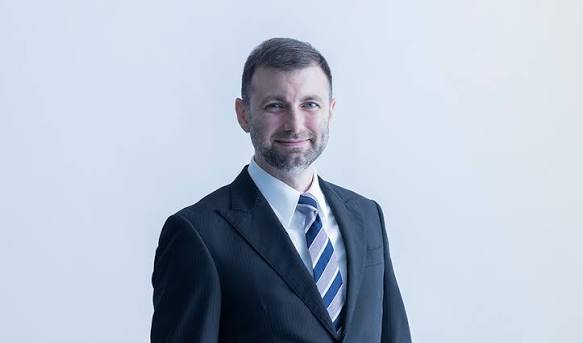
Chris Raabe has been a pioneer in the Japanese drone industry since 2010. He began his journey by developing robust control and non-GPS navigation systems for multicopters as a doctoral candidate and later as a faculty member at the renowned University of Tokyo. He then transitioned to the role of CTO and board member at ACSL, Japan’s leading manufacturer of multicopter drones. Throughout his career, Chris has collaborated with various governmental and industrial entities across Japan, focusing on infrastructure inspection, surveying and mapping, disaster response, logistics, and other specialized applications.
Since joining ACSL in 2017, Chris has overseen the development of over 10 products, achieved more than a tenfold increase in revenue, and played a critical role in ACSL’s IPO on the Tokyo Stock Exchange in December 2018. In 2023, Chris relocated to the US to spearhead ACSL’s expansion into the North American market.
Before his tenure in Japan, Chris worked as an engineer at Boeing starting in 2006, where he supported autopilot and flight control engineering for the 737-NG and 747-8 programs. Chris holds a bachelor’s degree in aerospace engineering from Georgia Tech and a master’s degree in electrical engineering from the University of Michigan.

Miriam McNabb is the Editor-in-Chief of DRONELIFE and CEO of JobForDrones, a professional drone services marketplace, and a fascinated observer of the emerging drone industry and the regulatory environment for drones. Miriam has penned over 3,000 articles focused on the commercial drone space and is an international speaker and recognized figure in the industry. Miriam has a degree from the University of Chicago and over 20 years of experience in high tech sales and marketing for new technologies.
For drone industry consulting or writing, Email Miriam.
TWITTER:@spaldingbarker
Subscribe to DroneLife here.

