


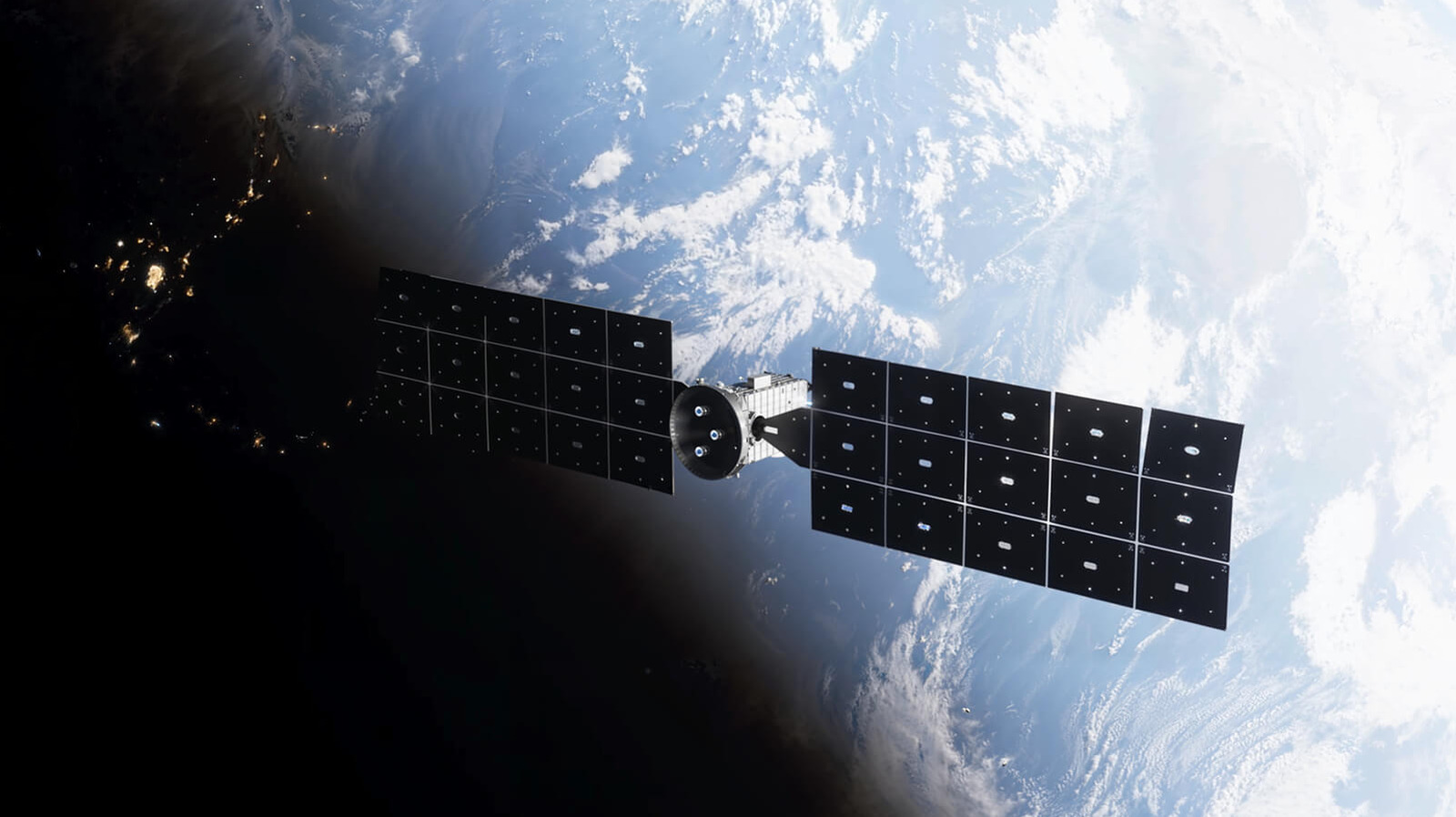
NASA has a satellite that’s slowly losing altitude; that’s old news, which the agency has known for a long time. In an unprecedented attempt to save it, NASA contracted with a commercial space company to launch a rescue satellite. Now that satellite needs to be rescued before it can rescue the NASA one. Just to make it interesting, the actual problem with the commercial satellite is truly bizarre and, so far, unexplained: It is tumbling in a rapid multi-axis spin for no discernible reason. Oh, and a bunch of stuff broke. But believe it or not, the rescue mission is still on! Welcome to space, where you learn to work with what you have.
Backing up a bit: The Neil Gehrels Swift Observatory launched back in 2004, designed to study powerful astronomical bursts of energy like gamma rays. The mission was only intended to last a few years, so there was never any plan to save it from eventual orbital decay. It was just supposed to fall back to Earth. But Swift has done well for over 20 years now, including detecting the BOAT itself (Brightest of All Time stellar explosion). It also cost $250 million, so it would be expensive to replace. What if, instead of building a whole new one, you could just grab Swift and yank it back into a higher orbit again?
So NASA threw the dice and awarded Katalyst Space Technologies a $30 million contract to design, build, launch, and operate a rescue satellite in a mere nine months. The idea was to maneuver the rescuer, called Link, into formation with Swift, then grab the observatory with three arms and pull it up, up, and away. No boost like this has ever been tried before, and throwing a mission like this together in less than a year is a mad dash by space standards.
Cascading bad news
Link launched on July 3, rushing to reach Swift before it was too far gone to save. It still needed to spend a few weeks testing out its systems in orbit and getting ready for the rescue attempt. On July 25, Link entered a known communications blackout zone (since Katalyst doesn’t have stations on Earth to be in constant contact). The operators waited the hour or so before contact could be re-established. And they kept waiting. And waiting. And waiting.
Over the next 24 hours, the ground team received enough dribbles of signal to figure out that Link had somehow gone into a multi-axis spin. A bad one, rotating at nine degrees per second, per Ars Technica. That translates to an end-to-end turnover every 40 seconds. Remember, the satellite’s own dish needs to be pointed right at Earth in order to send information, so this wild tumbling broke communication.
Unfortunately, bad news begets bad news. As a safety feature, Link is designed to do a full reboot — basically a factory reset — if it doesn’t make contact with Earth in 24 hours. So it did that, but in doing so, shut down its cooling systems. That overheated and fried some of its onboard electronics. Which electronics? The ones controlling the exact things that could bring the satellite out of its spin, of course. The orientation of the spacecraft is normally controlled by three reaction wheels, one for each axis. A reaction wheel is essentially just a fast-spinning flywheel that can be electronically sped up or slowed down. Because of the law of conservation of momentum, if it does so, something else must start spinning slower or faster: Link, in this case. Well, with its circuits fried, two of those reaction wheels don’t work anymore.
What off Earth happened to it?
So that’s all bad, but the question is, what happened? Nobody quite knows yet, because this really is pretty strange. It took quite a bit of energy to get a refrigerator-sized object like this spinning so fast. Where did that energy come from? Maybe an explosion could do it, but a boom that big would have destroyed half the satellite. Instead, it does seem to be intact, though with some failed components. Could the thrusters have fired uncontrollably for a while? Not impossible, especially since the gas thrusters also appear to be non-functional for unknown reasons. But would that have caused this much spin?
That leaves us with the last, craziest question: Could Link have hit something? Satellites are tracked pretty closely, so very unlikely that it could have crashed into one without anybody knowing. The only other options would be space debris or micrometeorites. Earth orbit is littered with these, but most are less than a millimeter in diameter and wouldn’t have affected Link this way. You’d need something larger for a real effect, say over 10cm in diameter. There are 25,000 of these in orbit, but to give some perspective, the gigantic International Space Station only needs to dodge these once a year or so. The odds that one would hit Link, which is much smaller and has only been up there a few weeks, are low.
Katalyst and NASA are hard at working trying to solve this, but it is a weird one. At this point, you might as well blame some interstellar visitors.
The rescue plan is still on
At this point, it may sound a little like the fire truck you called is on fire. But this is space, and things go wrong all the time. The question is whether you can keep using what does still work in order to accomplish the mission, even if those components weren’t designed to do that. In Link’s case, it still has one working reaction wheel and its xenon-fueled electric thrusters. The electric thrusters were intended for propulsion, not orientation, but the operators believe it could do the job. If it can, and it’s got enough fuel to handle both jobs, it is at least possible that it could still rescue Swift. That would likely take place around the end of August.
If not, there may still be some silver linings here. The very fact that a rescue was plausible in just nine months is a flex for the commercial space industry’s muscle. Depending on what went wrong, NASA may feel emboldened to try something like this again in the future. If it turns out that Link was hit by something, then this was truly a case of bad luck, not bad engineering. Should the rescue attempt be called off and NASA loses Swift, remember that it was never intended to last this long anyway. So, a loss, but not crushing. The big takeaway is really that we’re trying more and more elaborate activities in space. That will have some failures, but has some very cool potential as well.

