


The advice
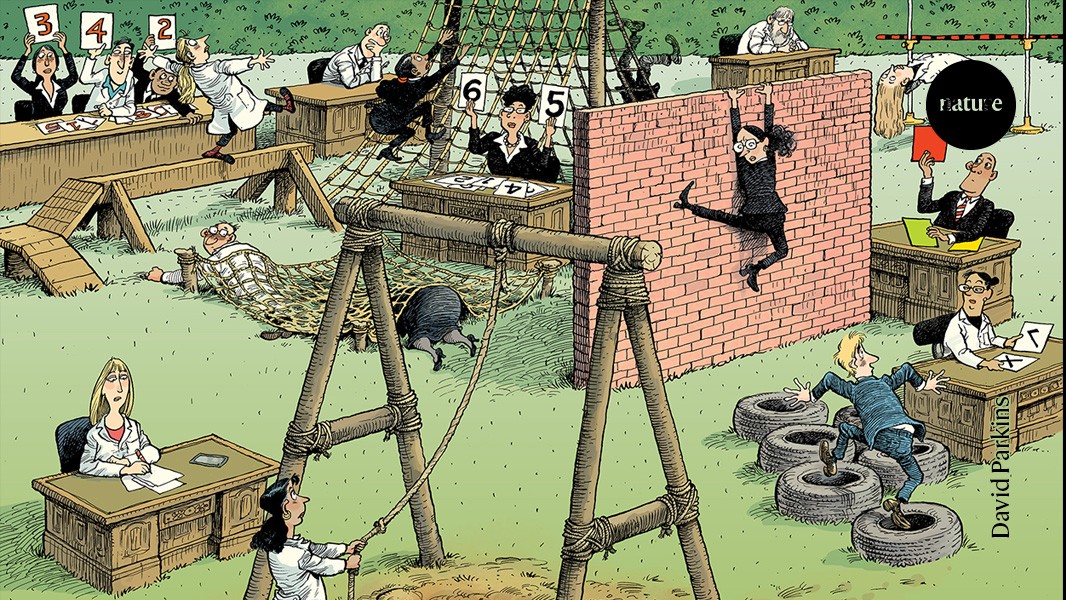
Multistage interviews are common at scientific companies. Even if you have all of the necessary qualifications, it is easy to be unsuccessful during the interview process if you do not know how to prepare properly for each stage and showcase your abilities.
How can I break into industry if my CV keeps disappearing into a black hole?
In a 2024 global survey, Nature asked more than 1,100 hiring managers from academia, industry and other sectors across 77 nations what they were looking for in candidates. The survey found that ‘soft skills’, such as communication and interpersonal skills, collaboration and how well people fit in with the team, were high up on the list of priorities for people looking to hire. But listing these skills on a CV or job application is not the same as convincing interviewers that you have them.
Nature’s Careers team spoke to recruiters, career coaches and hiring managers, as well as people who have experienced multistage interviews in the past year, to find out what to expect and how to shine throughout the hiring process.
What to expect
A recruiter or talent-acquisition specialist is usually the first point of contact in the hiring process. They have selected you on the basis of your CV and will decide whether you get through to the next round of interviews.
They are the gatekeeper, but they are also your friend, says Alona Bärtschi, head of the career centre at the Paul Scherrer Institute, a natural and engineering sciences research organization in Villigen, Switzerland. “You need to try to get as much information from them as you can.” Companies have diverse hiring processes; some might have four rounds of interviews, and some might hold more or fewer. These details are sometimes posted on their websites. If not, recruiters are the best person to ask about the organization’s selection process and who you will be speaking to at each stage. These screening interviews generally last around 30 minutes.

How LinkedIn helped me to carve out a career path after my PhD
The next stage often involves the hiring manager, who is usually the person who makes the final decision on whether to hire you. They assess whether you would fit into the team and tend to ask behavioural questions, such as “could you tell me about a time when you had to respond to negative feedback?”.
Next, there might be a technical interview with someone on the team you would be joining. This interview will focus on your specialist knowledge and whether you can apply your skills to practical problems. It will also gauge how you interact with others. The session might take the form of a panel interview and be run by colleagues at your same career level and people who would report to you if you got the job.
The final stage will probably be an interview with a senior manager, who might focus on strategic questions, such as those about your thoughts on the direction of the field. This enables them to work out if you are someone who will represent their company favourably.
Prepare for your interviews
Preparation is the most important factor for success in interviews, says Benjamin Weber, vice-president of translational and data science at pharmaceutical firm CSL in Zurich, Switzerland. Weber has spent some 15 years as a hiring manager in Europe, North America and Australia. “A major mistake people make, especially for senior roles, is being unprepared and thinking they can wing it.”
There are many ways you can get ready for an interview, ranging from investigating the role and the company — including the common salary range, the company’s hiring process, where its offices are based and the products that it sells — to coming up with pre-packaged stories that showcase your skills, and tailoring them for a variety of audiences.
A common pitfall that interviewees stumble into is not doing enough research on the company. “That’s the bare minimum,” says Elena Hoffer, a career coach based in Stockholm who is the co-founder and chief executive of online career-development platform Alma.Me. Hoffer and Weber suggest that candidates go the extra mile by learning about the business’s services and products, and even contact other people who work at the company to find out about its culture. Applicants could even try to find out why the job is open (see ‘Prepare your own impressive questions’).
Many jobseekers are eliminated from the interview pool early because they have not tailored their answers to the specific stage that they are in. “You need to be strategic,” says Bärtschi. “You need to know who these people are and what their role is in the process.”

Nail your tech-industry interviews with these six techniques
The first interview, the one with the recruiter, is crucial because it is where you can gather important information: who you will be speaking to at each stage, why the company is hiring someone and what elements of your CV are relevant to the job.
In all interview rounds, “it’s all about being concise in your communication”, says Hoffer. She warns candidates against rambling. “It’s not about fancy language, and it’s not about sounding smart. It’s about being clear,” she says.
You also need to remember that you are having a conversation with another person. Biologist Sophia Parks, who is based in Dalzell, South Carolina, spent months trying to find a job after her second postdoc position. Now, she is a project manager at the medical-analytics company Health Catalyst in South Jordan, Utah. She says that industry interviews are difficult for people coming from academia because “in academia, a question is an attack on your knowledge. But an industry interview is not like that”. She says that her job hunt became easier when she started “having conversations with people instead of lecturing them”.

