


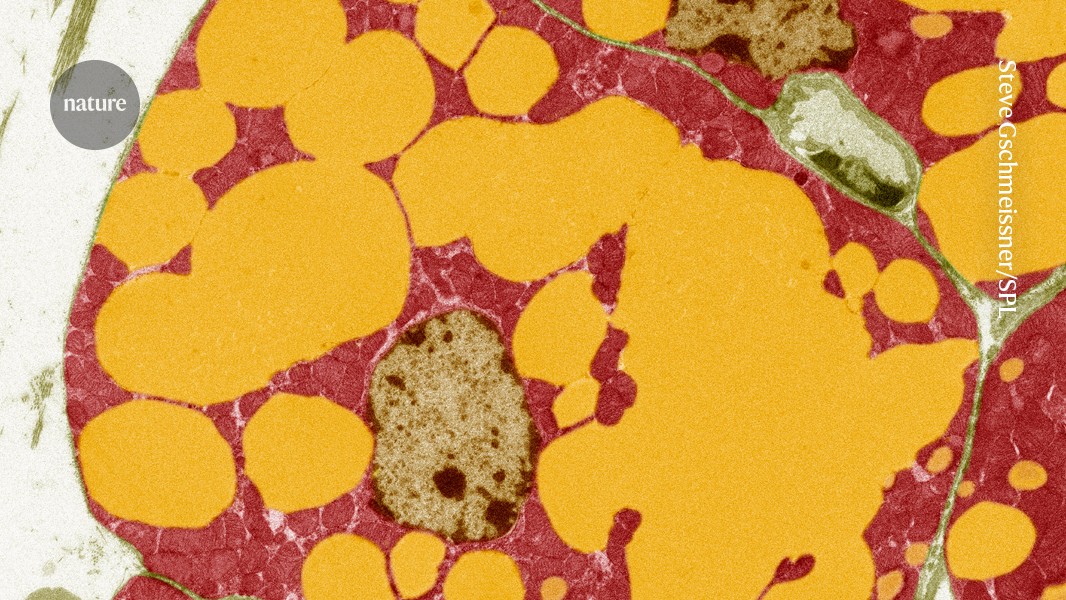

The ratio of fat tissue (fat droplets in yellow; artificially coloured) to muscle mass is reduced in people with newly identified variants of a gene that affects cellular metabolism. Credit: Steve Gschmeissner/Science Photo Library
A massive genomic study has linked mutations in a specific gene to an increased proportion of muscle, decreased levels of belly fat and blood sugar and a reduced risk of conditions including type 2 diabetes and heart disease1.
The gene, called FNIP1, plays a part in cellular metabolism and in how cells detect and respond to certain nutrients. Only about one in 7,000 of the people sequenced in the study carried one of the newly identified FNIP1 variants linked to health benefits, researchers report today in Nature.

Giant UK programme to lower people’s blood-sugar levels really works
But for the vast majority of people who lack those variants, the findings offer more than a reason for envy: they reveal a possible target for drugs that could one day reproduce some of the variants’ apparent protection against cardiometabolic diseases, a basket of interconnected conditions that includes stroke, diabetes, heart attack and some forms of liver disease.
These diseases “are the number one cause of death in the world, and they have a strong genetic basis”, says Luca Lotta, a human geneticist at the Regeneron Genetics Center in Tarrytown, New York, and a co-author of the study.
One million genomes
To understand the mechanisms behind these diseases, Lotta and his team used advanced DNA sequencing to analyse the genomes of more than one million people from diverse backgrounds on three continents. The researchers then searched for genetic variants linked to changes in a blood biomarker called the TG:HDL ratio: the ratio of levels of fats called triglycerides to levels of high-density lipoprotein (HDL) cholesterol, sometimes called ‘good’ cholesterol. “The higher this ratio is, the higher the risk of metabolic disease,” says Lotta.

This gene causes obesity — and shields against heart disease
Variants stood out in one gene: FNIP1. People carrying certain mutations that disable one of the body’s two copies of this gene had markedly healthier metabolism than the general population, including, on average, a 60% lower risk of cardiometabolic disease.
The researchers followed up on the genetic clues by silencing FNIP1 and related genes in human liver cells, which led to increased expression of genes involved in breaking up lipids. They then did the same in mice to test whether that could prevent disease — and it did.

