


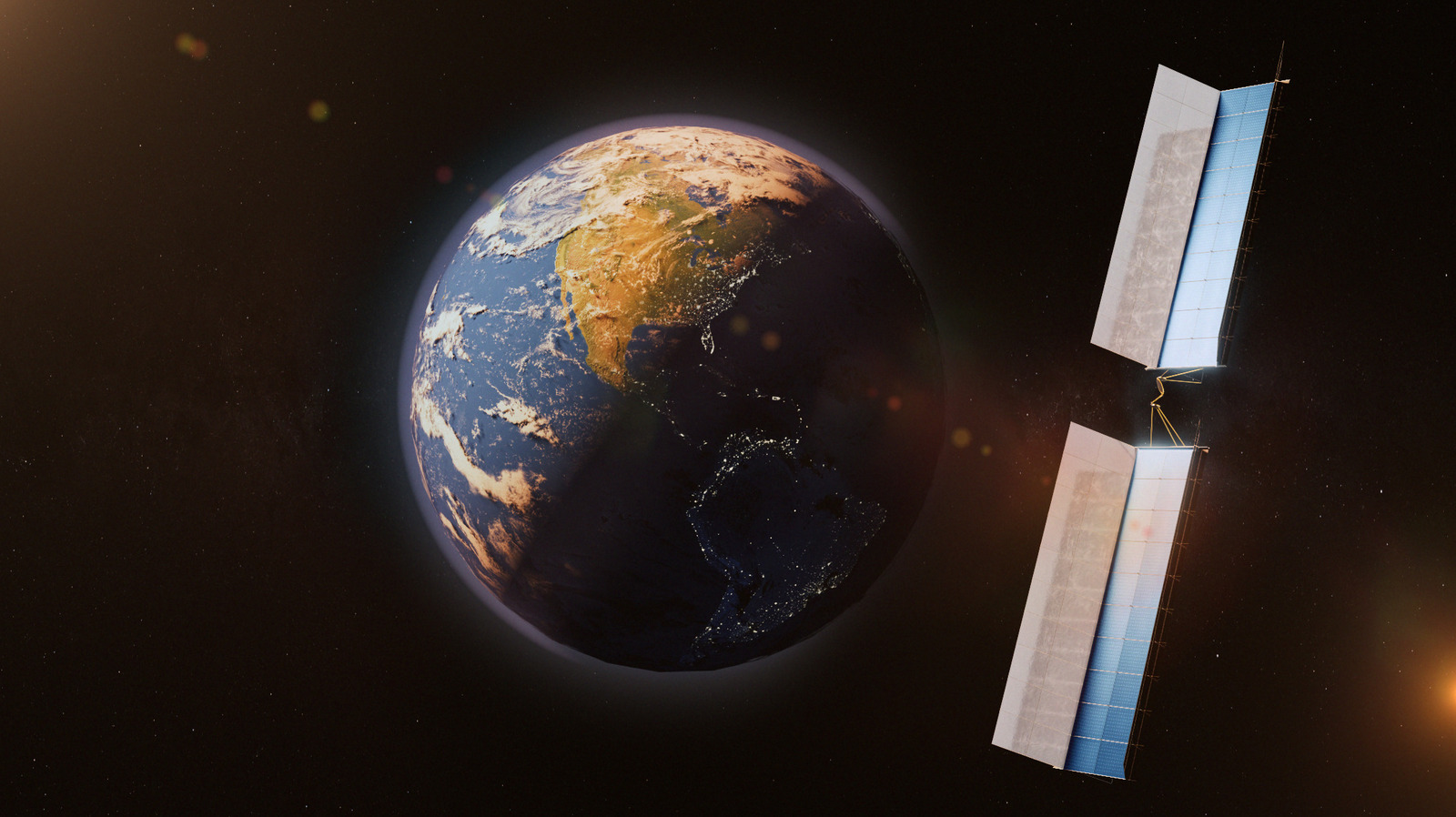
In something that sounds like it came from a supervillain’s notepad, social media juggernaut Meta has announced a new plan to use satellites to harvest the sun’s energy in space and then beam it down to its own AI data centers on Earth. This news comes by way of a partnership with Overview Energy, the satellite startup creating the technology. In principle, this gives power-hungry data centers all-day access to clean energy, which is good for keeping greenhouse gas emissions down. It would also skip the increasingly strained electrical grid altogether, preventing power lines from melting down and keeping household electrical rates from increasing further. All it has to do is work, which still needs to be proven.
While space-based solar power is a decades-old idea, and various startups are trying to bring it to reality now, Overview’s approach is novel in a number of ways. Instead of beaming energy to Earth in the form of lasers, microwaves, or focused sunlight, Overview’s satellites will use a wide-beam, near-infrared system. That comes with two main stated advantages. First and foremost is safety: at least according to Overview, this system is “safe for humans, animals, aircraft, and spacecraft.” As you can imagine, there are a lot of concerns about firing off lasers through flightpaths: just look at the tussle between the FAA and DoD over counter-drone lasers. Meanwhile, the focused sunlight approach would effectively create daytime conditions during nighttime, which is both an eyesore for people and a catastrophe for the natural cycles of wildlife. By contrast, Overview’s infrared light isn’t focused, so it shouldn’t be too intense, less than “a supermarket barcode scanner.” It will also be invisible to humans, although many animals can see in that range and may be less pleased.
The second advantage, and this is pretty big, is that a near-infrared beam is compatible with existing solar farms. Other technologies would require their own specialized receiver facilities over vast tracts of land, requiring years of construction time. Overview’s system can blanket any current solar array and power it up at night. That’s an enormous savings in cost, time, and land use. You can see the appeal for Meta as it competes in the AI race.
Will it, you know, work?
Overview says its first orbital demonstration is planned for 2028, so some of this is still scribbles on paper for the moment. On the other hand, they did test the infrared transmitter from an airplane in November 2025, which successfully carpeted a solar array at night on the move. So the technology does function. Getting it into geosynchronous orbit 22,000 miles from the Earth, and making sure its beams generate enough power to justify the cost from that distance, is another matter. Should the 2028 test go well, Overview and Meta hope to be powering AI with up to 1 GW from space by 2030.
Meanwhile, Meta’s artificially intelligent rivals also have their robotic eyes set on space, though in different ways. Google’s Project Suncatcher would just put the AI into space directly, powered by normal satellite solar panels; it would be the actual finished computations that would be messaged down to Earth, not the energy. Not to be outdone (as usual), SpaceX then declared it would also put AI satellites into space — fully one million of them.
All this talk of space beams and space robots may sound more science fiction than fact, but the threat from Earth-bound AI data centers is real. Massive demands for energy and water will strain the power grid to the point of failure, spike prices, and drain what precious fresh water we have left. Space-based solutions could solve several of those issues all at once.

