


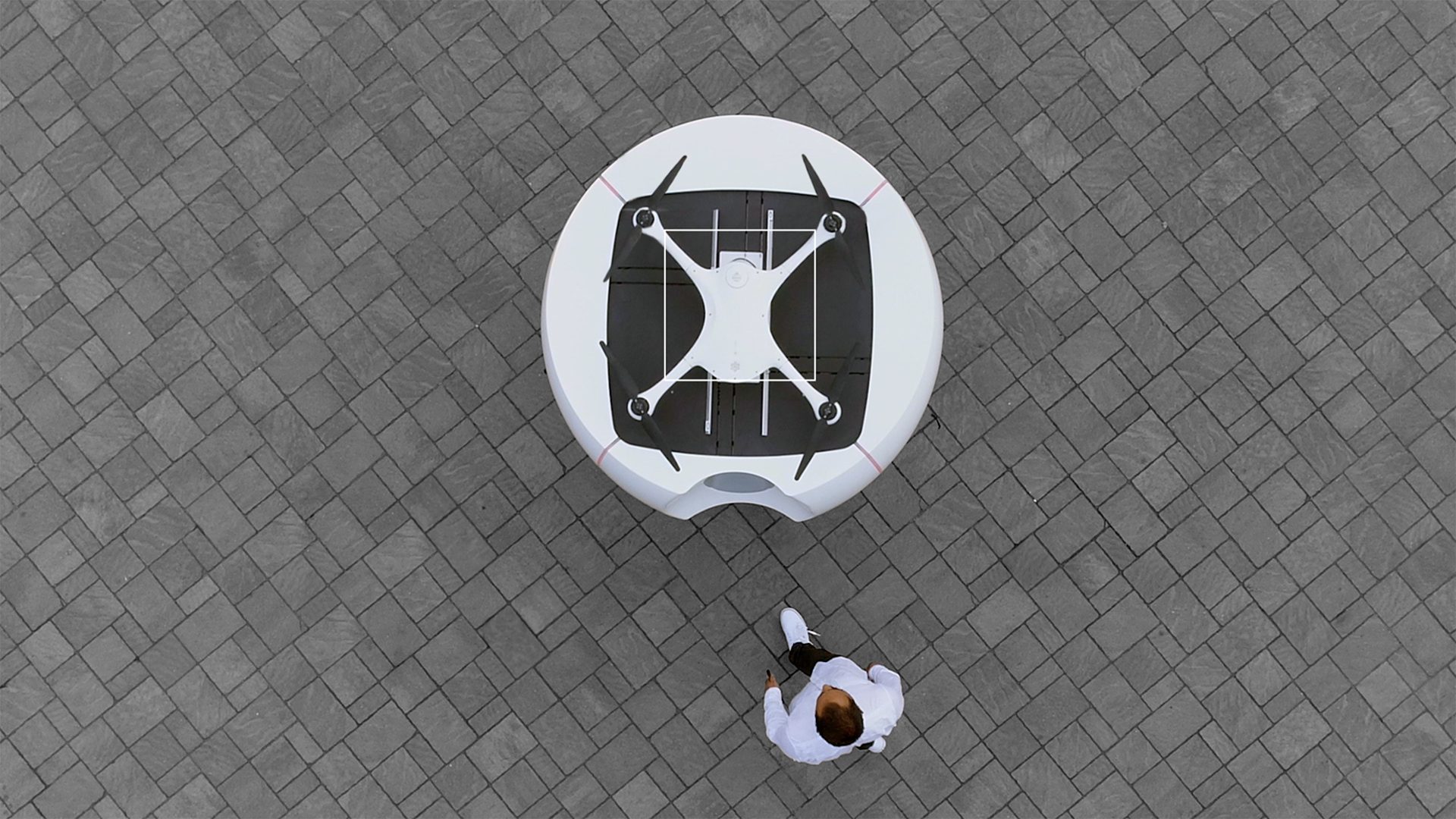
Collaboration targets healthcare and enterprise logistics with focus on real-world deployment
Matternet and SoftBank Robotics America have announced a strategic partnership to expand drone delivery networks across healthcare, retail, and enterprise logistics. The companies aim to accelerate deployment of autonomous aerial delivery systems and move the technology into broader real-world use.
The partnership brings together Matternet’s drone delivery platform and SoftBank Robotics America’s experience in commercialization and large-scale deployment. Together, they plan to address growing demand for faster, more reliable delivery while reducing reliance on traditional ground transport.
Addressing Pressure in Last-Mile Delivery
Last-mile delivery continues to face major challenges. Labor shortages, rising costs, and urban congestion all impact efficiency. At the same time, customer expectations for speed and reliability continue to grow.
Drone delivery offers a new approach. It creates an additional logistics layer that can operate above ground traffic. This can improve delivery times and reduce operational costs.
Under the agreement, the companies will focus first on healthcare and commercial delivery. These sectors depend on speed and reliability. The partnership aims to deliver measurable improvements in both areas.
SoftBank Robotics America will support manufacturing, installation, and maintenance of Matternet’s ground systems. This includes providing operational support for enterprise deployments.
Moving from Technology to Deployment
Both companies emphasized that the industry is shifting from development to execution.
“As we enter the age of Physical AI, Matternet’s vision of building autonomous networks that move atoms is becoming a reality,” said Andreas Raptopoulos, Founder and CEO of Matternet. “Our partnership with SoftBank Robotics America will accelerate deployment of our technology and help build critical autonomous delivery infrastructure for healthcare, commerce, and industry.”
SoftBank Robotics America highlighted the importance of scaling operations, not just advancing technology.
“Autonomous logistics networks are reaching an inflection point,” said Brady Watkins, President and General Manager of SoftBank Robotics America. “The challenge is no longer just the technology itself. It is how to operationalize that technology in a way that delivers consistent, measurable outcomes. Our role is to help integrate and scale platforms like Matternet in real-world delivery environments.”
The company also pointed to its role in turning emerging technologies into deployable systems.
“At SoftBank Robotics America, we focus on turning breakthrough technologies into large-scale, real-world deployments,” said Katya Akudovich, Vice President of New Ventures at SoftBank Robotics America. “By combining Matternet’s technology with our global commercialization capability and experience, we are creating a powerful partnership to bring the benefits of autonomous drone delivery into day-to-day operations for vertical markets such as healthcare where speed and reliability are mission critical.”
Building on Regulatory and Operational Progress
Matternet enters the partnership with established regulatory milestones. The company has achieved both FAA Type Certification and Production Certification. It has also supported tens of thousands of commercial drone flights in the U.S. and Europe.
These milestones signal that drone delivery is moving beyond testing. The focus now shifts to scaling operations and integrating systems into daily workflows.
The partnership reflects a broader trend in the drone industry. Delivery is evolving from pilot programs to structured deployment. Companies are focusing on repeatable operations, safety records, and cost efficiency.
Healthcare remains a key use case. Reliable transport of medical goods can improve outcomes and reduce delays. Enterprise logistics also offers strong potential, especially in controlled or campus environments.
As more companies move toward operational scale, partnerships like this one may play a central role. Combining technology providers with deployment specialists can help close the gap between capability and adoption.
Read more:

Miriam McNabb is the Editor-in-Chief of DRONELIFE and CEO of JobForDrones, a professional drone services marketplace, and a fascinated observer of the emerging drone industry and the regulatory environment for drones. Miriam has penned over 3,000 articles focused on the commercial drone space and is an international speaker and recognized figure in the industry. Miriam has a degree from the University of Chicago and over 20 years of experience in high tech sales and marketing for new technologies.
For drone industry consulting or writing, Email Miriam.
TWITTER:@spaldingbarker
Subscribe to DroneLife here.

