


Good morning! It’s Tuesday, May 19, 2026, and this is The Morning Shift, your daily roundup of the top automotive headlines from around the world, in one place. This is where you’ll find the most important stories that are shaping the way Americans drive and get around.
In this morning’s edition, Congress has cooked up a goofy new $130 fee for EV drivers to pay for road repairs, Elon Musk is once again promising widespread use of driverless cars this year, Mercedes-Benz’s CEO says the automaker is willing to enter defense production, and Jaguar-Land Rover is looking to cut more than $2 billion in spending.
1st Gear: Congress doesn’t think EV owners pay their fair shake, math says otherwise
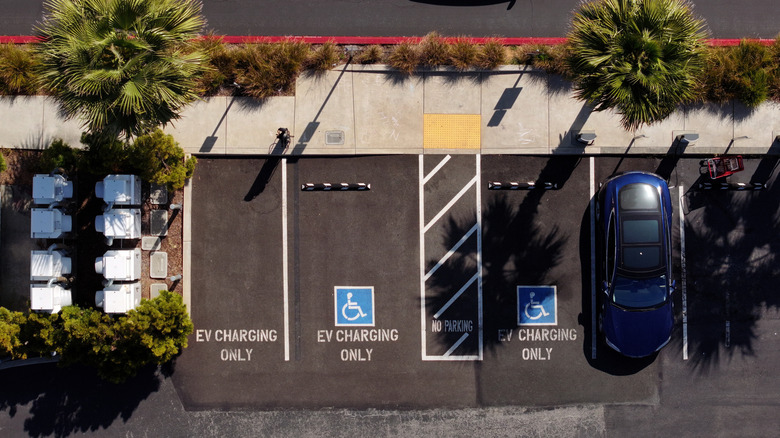
Everybody always talks about how great it is when politicians can put aside their differences and work with their colleagues across the aisle. Well, it’s clearly not all it’s cracked up to be, because lawmakers in the U.S. House just proposed a bill that would require all EV owners and some plug-in hybrid owners to pay a $130 fee ($35 for PHEVs) for road repairs annually.
It’s part of a five-year highway reauthorization bill that would authorize $580 billion ahead of the current law’s expiration on September 30. Most revenue for federally funded road repairs is collected through diesel and gasoline taxes, which, of course, EVs do not pay. The law would require the fees to be hiked by $5 per year starting in 2029, up to a total of $150 for EVs and $50 for PHEVs. From Reuters:
The U.S. House Transportation and Infrastructure Committee is expected to take up the bill on Thursday introduced by the panel’s Republican chair, Sam Graves, and the top Democrat, Rick Larsen.
Some states charge fees for EVs to cover road repair costs. Congress for the past three decades has opted not to hike fuel taxes to pay for rising road repair costs. Some Republican senators in February 2025 proposed a $1,000 tax on EVs for road repair costs.
At first glance, it might make a tiny bit of sense, but the math just isn’t there, dog. The Sierra Club, an environmental group, criticized the bill, saying it would cut funding for EV charging infrastructure and “includes an an irresponsible tax for EV and plug-in hybrid drivers.”
Last year, the Electrification Coalition, an EV advocacy group, argued a $250 fee for EVs was unfair since an average gas-powered vehicle pays just $88 yearly in federal gas taxes.
Since 2008, more than $275 billion – including $118 billion from the 2021 infrastructure law – has been shifted from the general fund to pay for road repairs.
InsideEVs ran the numbers, and they found that it just doesn’t add up to what Congress is proposing. First off, the federal gas tax has been stuck at 18.3 cents since 1993, and that’s despite regular inflation and overall vehicle efficiency improvements. Overall, the average American pays between $70 and $90 per year in federal gas taxes, which is far below where the proposed $130 fee is set to start.
2nd Gear: Musk is yapping about widespread use of self-driving cars again
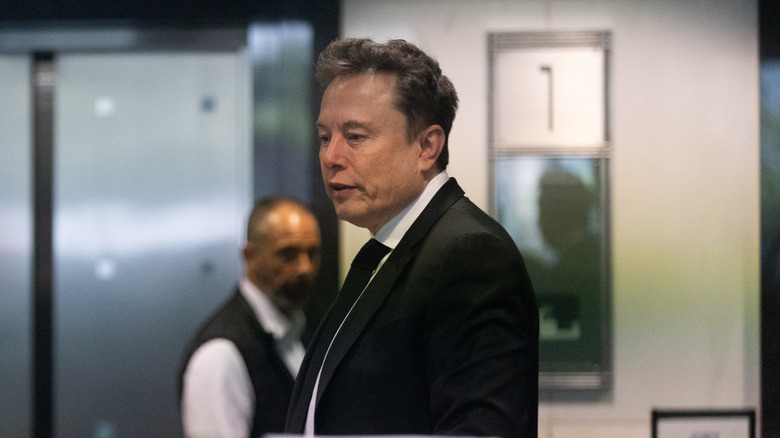
Tesla CEO Elon Musk is making claims about fully self-driving vehicles once again, which are surely going to pan out. While speaking at the Smart Mobility Summit in Tel Aviv on May 18, Musk said he expects self-driving cars with no human safety monitors to become more widespread in the U.S. later this year.
Right now, they’re only sort of operating (to incredibly mixed results) in Texan cities like Austin, Dallas, and Houston. We’ve reported on the astounding unreliability customers have experienced while trying to use Tesla’s program, so I’m sure it’ll work even better on a national scale. From Reuters:
Last November, Tesla received a permit to operate a ride-hailing service in Arizona.
[…]
“Five years from now and certainly 10 years from now … probably 90% of all distance driven will be driven by the AI in a self-driving car,” he said. “So overwhelmingly, it’ll be quite a niche thing in 10 years to actually be driving your own car.”
Tesla is recalling 218,868 vehicles in the U.S. due to delayed rearview camera images that could increase the risk of a crash, the National Highway Traffic Safety Administration (NHTSA) said this month.
Of course, Musk has been making bold predictions about autonomous vehicles since Moses wore short pants. Almost none of them have materialized on his timeline, but he, for whatever reason (read: for stock price reasons), remains upbeat that cars without human drivers will be the norm within a decade.
3rd Gear: Mercedes-Benz CEO say it’s willing to get into the war game
Mercedes-Benz CEO Ola Källenius says the German automaker is willing to get in on defense production as long as it makes “business sense.” It’s the latest in a growing trend we’ve seen from automakers like GM, Ford and Volkswagen, which have also expressed interest in answering the question: War, what is it good for? The answer is money. From friend of the show, Patrick George and The Wall Street Journal:
“The world has become a more unpredictable place, and I think it is absolutely clear that Europe needs to increase its defense profile,” Ola Källenius told The Wall Street Journal Friday. “Should we be able to play a positive role in that, we would be willing to do so.”
Källenius’s comments come as the German manufacturing sector, which has been largely stagnant for years, seeks to recast itself as a major player in the West’s defense arsenal. Volkswagen is in talks with Israeli companies to produce components for that country’s Iron Dome artillery defense system by 2027 as a means of using its idle factory capacity.
[…]
Meanwhile, in the U.S., senior defense officials in the Trump administration have held talks with General Motors and Ford Motor about using their personnel and factory capacity to increase the production of munitions, the Journal recently reported. While those talks were early and wide-ranging, they were aimed at enlisting automakers to restock supplies depleted by wars in Ukraine and Iran.
Mercedes already plays a role in the defense arena. The luxury carmaker spun off its trucks division in 2021 and remains its largest shareholder, and that unit makes large trucks used for military purposes. Mercedes has also long offered variants of its G-Class SUVs as military vehicles across the world.
But Källenius said that Mercedes’s inherent strengths as a large-volume automaker could help it operate more directly in the military hardware space.
“What car companies do extraordinarily well—and we’re good at it—is to build high-quality precision machines in higher volumes,” he said.
Källenius says that if Mercedes did enter the arena of war machine, it would be “a minor share of our business,” but he did admit that it “could be a growing niche that could contribute to our business results.”
It does make some sense why Mercedes is looking for other money-making avenues. Its profits nearly halved last year because of $1.2 billion in tariff costs, and it has struggled to stay competitive in China.
4th Gear: JLR wants to cut over $2 billion in spending, thanks to tariffs and warranty costs
Jaguar-Land Rover is looking to cut nearly $2.3 billion in spending over the next couple of years, as high warranty costs, U.S. tariffs, currency issues, and that gnarly cyberattack that cost the company at least $1.3 billion on its own dragged the struggling automaker to a loss in the fiscal year that wrapped up on March 31, 2026. These problems led to JLR posting a $327 million loss after taxes. From Automotive News:
“The business used to have a break-even of about 300,000-320,000 vehicles. Of late it has increased, and we now need to bring it back,” JLR CEO PB Balaji said on a call with journalists May 14.
JLR will seek to cut fixed costs, material costs and reduce the warranty bill. Warranty costs were £105 million higher in the fourth quarter of the fiscal year compared with the same period in the previous year.
[…]
JLR said it had worked hard on improving quality but was hit by inflationary pressure on its the dealer network. “The cost of repair has shot through the roof, particularly in markets like the U.S.,” Molyneux said.
JLR was also hit by a £114 million tariff bill in the fourth quarter on vehicles exported to the U.S. from both the U.K. and its EU plant in Slovakia, where it builds the Defender and Discovery SUVs. That has forced JLR to adjust its strategy in the U.S.
[…]
On the plus side, JLR had a £134 million boost in the fourth quarter from the relaxation of emissions requirements.
[…]
Cost savings will additionally come from streamlining operations through increased use of digital and IT solutions, Molyneux said. No further details were given on how JLR will reduce fixed costs.
In recent years, JLR has gone through a number of cost-cutting programs following deep losses in 2019. The company reduced its break-even point from 600,000 cars per year in 2019 to 400,000 cars in the 2024 fiscal year. It then dropped that number to 300,000 in 2025.
Reverse: Not bad, guys. Not bad
 History.com
I once heard D-Day described as “crow-hopping Nebraskans at those Krauts until they cried,” and it’s now what I think of every single time I see D-Day mentioned. Thank you, random video I saw on the internet years ago that I can’t find. If you aren’t a dope like me and want to learn more about FDR and Churchill planning D-Day, head over to History.com.
The Fuel Up

Things aren’t looking so great out there when it comes to gas prices as the U.S., Israel, and Iran continue their will-they-won’t-they of awfulness. At the very least, we’re not seeing the same massive daily jumps we once were, but WTI Crude Oil Futures and Brent Crude are still elevated — sitting at $103 and $110, respectively, at the time of publication.
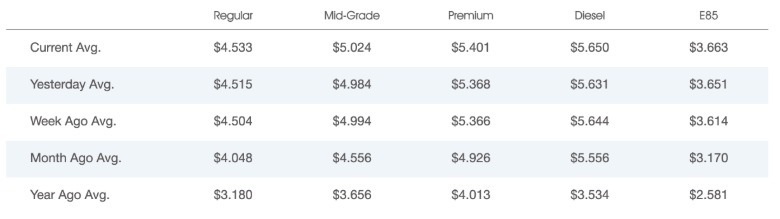
Here’s where national average prices stand right now, according to AAA:
 AAA
AAA
All of this shakes out to the average price of a gallon of regular gas jumping another two cents overnight to $4.53, according to AAA. It’s the same price we last saw on May 14, and it means we’re just three cents away from the 2026 record we saw back on May 7. Lets. go.
On the radio: Bruce Springsteen – Hungry Heart
Over the weekend, my amazing, wonderful, fantastic, beautiful, and lovely fiancée surprised me with tickets to see Bruce Springsteen perform at Madison Square Garden, and it was magic. Bruce might be 76 years old, but he’s still very much got it. I mean, the show was three hours long. Also, as someone who is a fan of doing things in spite, I got an overwhelming sense that the primary reason Springsteen and the entire E-Street Band went on this tour was to rub Donald Trump’s nose in it, and I’ve got to respect that sort of commitment.
Anyway, as a Jersey boy and lifelong Bruce fan, it was an amazing evening. I got da best lady in da world.

