


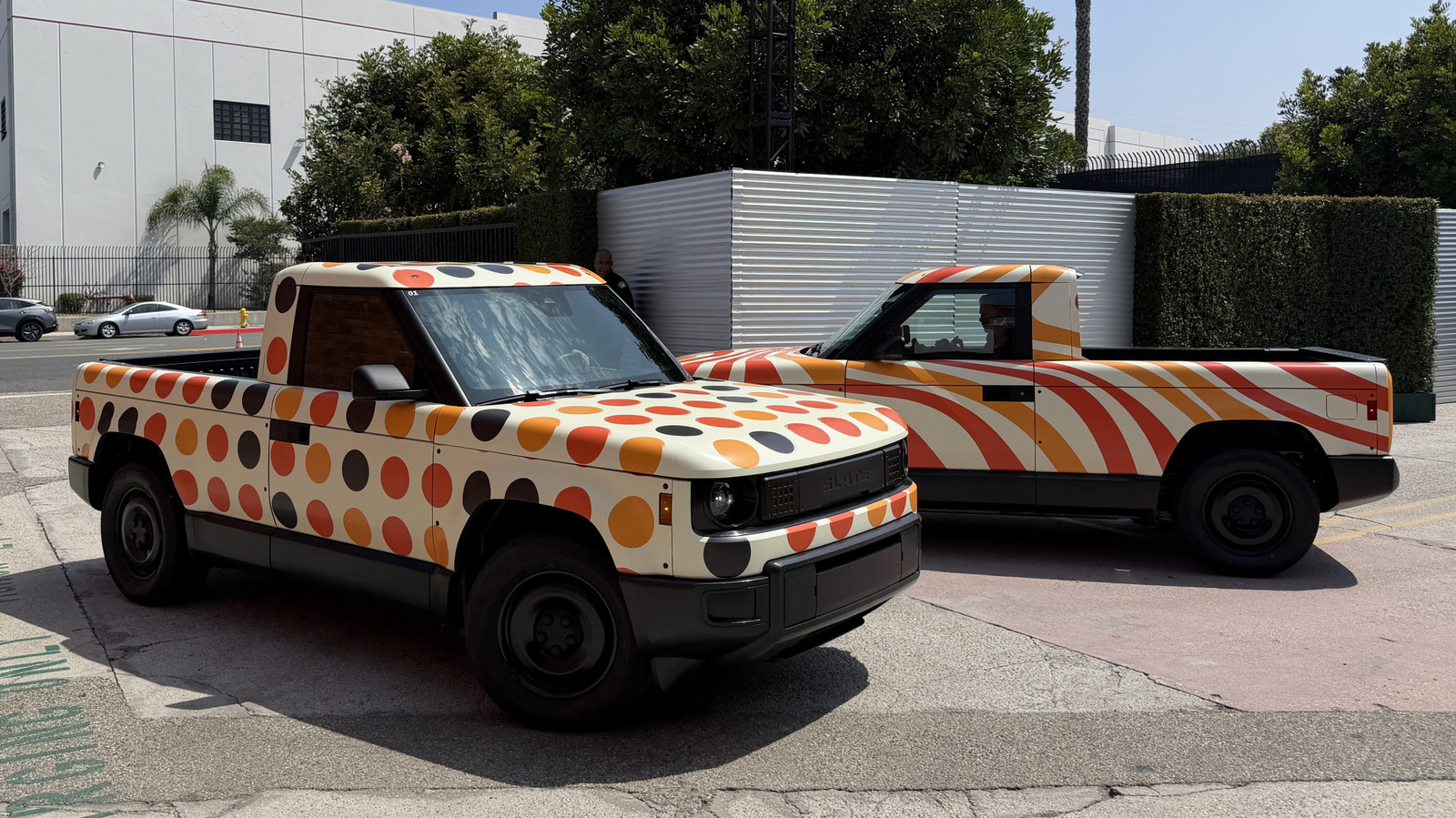
I think that once I get to drive a finished production model, I’ll have at least a slightly better opinion of the Slate’s dynamics and on-road manners, but nothing is going to sweeten my thoughts on the Slate’s interior. Like I said before, I think the actual design of the cabin is great, evoking pickups from the 1960s and ’80s, and it looks a lot more interesting when you shell out some cash for different colored panels and various accessories. It’s spacious, and there are real air vents. But that’s about where the positives end for me.
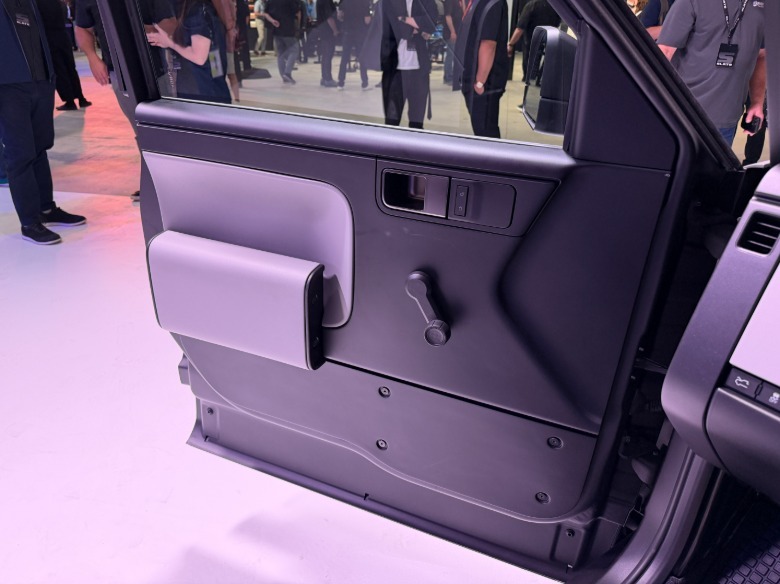
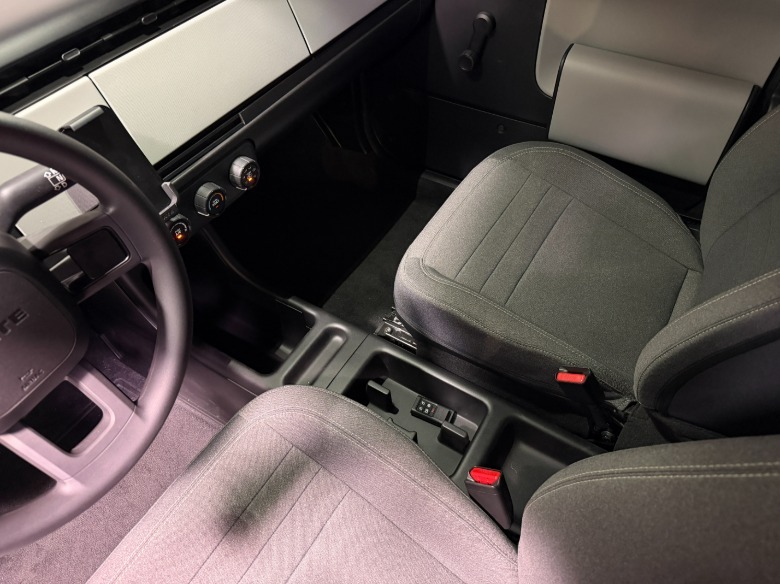
If the Slate were still able to receive the tax credit and come in at $20,000 to start, the interior would be a bit more acceptable, but at this price, it’s far too bleak for me. The rounded armrests on the door cards are made from very hard plastic, as is the rest of the door card. They immediately feel bad. If you want a storage pocket in the doors, it’ll cost $50 for a pair, which will take 30 minutes to 2 hours for you to install. Getting a center console added between the seats costs $250, and its armrest is the same piece of hard plastic used on the doors, but at least you get more storage space and better cupholders. According to Slate’s estimates, that will also take up to 2 hours to install.
One great attribute is how the doors feel when you close them. It made a nice solid thunk on these prototypes, without the tinny vibrations or uncouth noises you typically get in a cheaper car. The rectangular door handles feel nice to grab onto and pull both on the inside and outside, too.
 Daniel Golson/Jalopnik
Yes, it’s got a trio of physical knobs for the climate controls, but they look and feel boring, and the same goes for the steering wheel stalks. I like that there are two gloveboxes behind the dashboard panels, but neither would open on the truck I sat in, which was the least prototype-y of all the ones on display. The steering wheel rim was ever-so-slightly plush, but I don’t think it would be very comfortable to hold on to during longer drives. I get that it’s supposed to be a simple truck for people who want to do real work or whatever, but I think those people deserve at least some amount of armrest padding, an attempt at interesting design elements, or actual texture on interior materials.
 Daniel Golson/Jalopnik
What I really don’t understand are the crank windows and lack of speakers — this is where the Slate really falls into virtue signaling territory for me. Initially, Slate said power windows would be available as one of its accessories, but they’ve been taken off the list. A spokesperson told me they might become available in the future, but that apparently people love the crank windows, and “it’s the first thing people use when they get in the car.”
But do people really want crank windows? Especially people who are dropping $25,000+ on a brand-new car? I’m pretty sure we figured out power windows, like, six decades ago. Aside from being able to say “my car has crank windows,” is there actually a benefit there? This problem felt especially noticeable when I tried to roll down the passenger window, which I couldn’t easily do. Even at 5-foot-9, I had to fully extend my body across the cabin and slightly lift my butt off the seat to reach the passenger-side crank. Slate apparently saves $40 per truck by using crank windows instead of power ones, and I don’t think that’s worth it.

