


Frances Brodsky 00:08
It is really important to be creative.
Being creative means just thinking about things in a different way.
It doesn’t mean necessarily dropping what you’re doing and trying something entirely new.
David Payne 00:19
This is Creativity in Science, a series brought to you by Nature Careers…
Frances Brodsky 00:26
I say don’t be risk averse. Because you need to be able to take some risks in the in the way you think about things, and then, of course, discuss them with other people.
David Payne 00:36
…a podcast about how science and creativity go hand in hand, and about how one can nurture the other.
Frances Brodsky 00:46
I really want to emphasize how important letting your imagination run in even in your scientific work is.
David Payne 00:54
Meet a cell biologist who used her knowledge of the lab to create an authentic backdrop for her first and very prescient crime novel about a global pandemic.
Frances Brodsky 01:13
Hello, I’m Frances Brodsky. I’m a professor of cell biology at University College London.
I teach cell biology, and I run a research laboratory that studies how proteins move around inside cells and how that affects cell interaction and other processes in our bodies.
Well, reading has always been a huge activity in my family. Ever since I was growing up.
My grandfather was a professor of English literature at Brown University in the US, and we used to read together as a family.
And I’ve always read novels, so I got interested in how one could communicate the process of science through fiction.
And I’m a particular fan of mystery novels because they reveal a lot about the place in which they’re set, and they also have an easy plot to follow.
So I thought that using that structure would really help in talking about how science is done, and I got interested in that because for several reasons.
One is, in the days when I started this in the 1990s it was just becoming of interest to scientists to communicate their work.
And there was also a lot of bad press about science, particularly, say, with the release of the first Jurassic Park film, which infuriated me.
So I was quite inspired to write something which showed that scientists are human. They can be both good and bad, and to also explain to the public how we do our work. I had this for a long time about writing a novel set in science, and I used to, for fun, invent plots that I could use.
And then I decided that I really might try my hand at this. And so I waited until I got tenure at University of California San Francisco, where I was based previously, so that writing fiction would not be a problem in terms of future academic recognition.
So I wrote a proposal, actually, to Rockefeller University Press, who are starting to be interested in publishing about science for the public, and I proposed that I would write a novel set in the laboratory.
And they politely wrote back that they were not interested in fiction at all. It wasn’t their medium. And I thought, well, I’ve bothered to think about this.
So I will go off for a month to a place where I know nobody and sit down and write a novel and see how that goes.
So I did that the summer after I was promoted to associate professor with tenure at UCSF.
And I was fortunate enough to choose a place in Montana that’s near a level four biosafety laboratory that I had visited previously, but it’s in a beautiful part of the country.
And I went there, and it turns out that many writers completely not affiliated with the laboratory also have their homes there, and because it’s a nice, peaceful place to write.
And I met a very influential writer who read my material and gave me some excellent feedback, and I moved on from there, and ultimately was able to finish a novel in.
It took me two years to finish it, and then a year to rewrite it, according to the editor’s suggestions. So was able to publish three years later.
Frances Brodsky 04:40
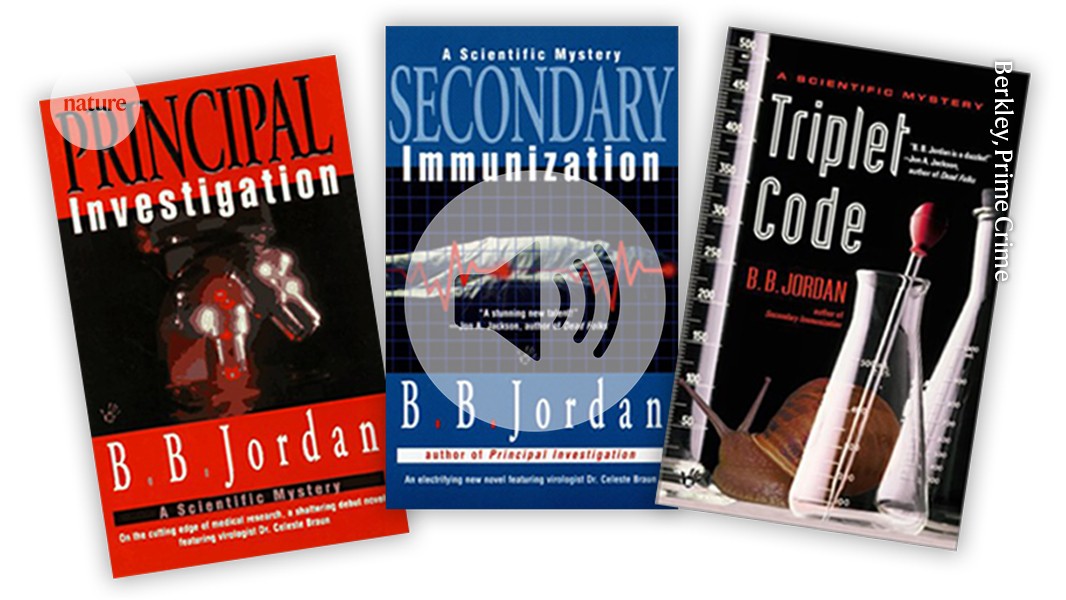
That novel was called Principal Investigation.
The main story is that I have to start with the evil perpetrator has developed acure for a particular virus. And the plan is to release that virus so that he can make a lot of money from the cure. And the investigator, who is a virologist who happens to get roped into this plot, uncovers his intent and also uncovers his Achilles heel so that she is able to prevent him from carrying out his plan.
It was interesting to have written about the potential for a pandemic and then having that happen in reality, and then now having generated a lot of fiction about pandemics subsequently.
So my novel never really made it into the public eye for its plot. But that’s fine.
I really enjoyed thinking about that. And actually, some of the things I wrote about about how a virus could be transmitted so easily because people had stopped using handkerchiefs, this kind of thing, and worrying about sanitation in public, turned out to be correct.
Frances Brodsky 06:06
I think there’s two aspects of my academic career that helped me write this, my novels. One is, all mystery novels require material, and most mystery writers write about things that they haven’t experienced, so they do a lot of research in the environment in which they want to set their plot.
And I was lazy, so I did not want to do a lot of research. So I set the plot in an environment in which I was working.
So that helped me, because I have the expert knowledge that was needed. I’m being a bit facetious there, because I wanted to set it in that environment, because I wanted to describe that environment, but I did not have to do the research that others do.
It was very interesting, because I’ve sat on a panel with other mystery writers, particularly murder mystery writers.
And they do a lot of research into how murders are done in different countries, various ways of murdering people. And it’s quite frightening, really.
And then I realized, of course, in the laboratory, we have plenty of things that can be used to destroy as well as to produce interesting results.
And then the other aspect of my academic career that’s helped me is probably that I had already quite a bit of experience in writing manuscripts.
But I would have to say that sitting down to write these novels, my scientific writing became markedly better. So that the exercise of fiction writing helped me put my work into a narrative.
Frances Brodsky 07:39
The other aspect of my, the writing that helped me with my science job is that I love making up titles.
And I was making up titles for my books and making up chapter titles, and I realized that one of the best ways to train someone in the lab to focus their project is for them to come up with the title of a paper that they want to write, and that tells them where they’re going.
And so I think that’s been a wonderful tool that I’ve used many, many times in the laboratory, and also in interviewing people about their projects and asking them: what is the title of the thesis that you plan to write, etc.
Frances Brodsky 08:25
In thinking about what part of writing makes me a better scientist, I was thinking of another thing that I haven’t thought about before, which is perseverance.
I think when you start a writing project, especially a large one, or any light writing project, that you have to edit, you have to stick with it to get it to the end.
And I think that that is true for a scientific project. And I think each one of the writing and the science helped me.
I have an amazing amount of perseverance, to the point of some people would think I banged my head against the wall. But I think that that is a really important thing to have. And I think people lose focus now.
They become more despondent sooner. And I think that just sticking with something and having faith that it will work out is is a really good quality to have.
Frances Brodsky 09:31
Yes, so my family is, I’m the first scientist in my family, and my grandmother studied mathematics at the University of Rhode Island at a time when women probably didn’t do that.
So clearly she had a quantitative bent.
But my grandfather, her husband, as I said, was a professor of English literature at Brown University. And he was also a polymath. He was absolutely interested in everything in the world, and he wrote fiction, which for him, was bad for his academic career.
But he published a best selling novel early on in his career in the English department. He stayed on and taught creative writing for most of his life.
And my mother is a creative artist. She’s a printmaker, and she’s very involved in the art world, as well as an instigator of equality and diversity in the art community, so for women and for ethnic minorities. And she’s always been interested in everything in the world.
So that when I was in fourth grade, which in the which is when you’re about eight, nine years old, in the US, we had to do newspaper reports for the class. We had to do current event reports.
And my mother was always saying: read the Science Times in the New York Times that comes out on Tuesday, and pick an article from there.
She was interested in science, and science images, in her work.
And I think my grandfather’s interest in the natural world also influenced that in her.
And so I was doing these reports about science from the New York Times at a very early age.
And that really interested me in science as a whole. And then when I really got into cell biology was when I was probably about 10 or 11.
I was, I went to middle school where I was looking down a microscope, and that just did it for me. I think it was like peering into another world.
And you see fabulous structures that you don’t see with the naked eye.
And I just thought there’s a lot out there that one could know about and know how it works.
I think what I remember was probably the classic experiment where you scrape some cells off of your inside of your mouth and put them on the slide in there.
They have a beautiful shape. These are epithelial cells. And you can see the nuclei and how they interact with each other.
So probably a very simple experiment that led to that interest.
So it was coming from this creative background which led me to science.
And I think I’ve always been interested in science from a visual point of view. The protein that I study has a fantastic shape. It’s a trsikelion shape, and makes a visible structure that you can see in microscopy. And that is similar to some of the images that my mother has used in her work on other other things in nature that make patterns. So I think that my family background has led to the way in which I do science and think about it.
Frances Brodsky 12:28
I still read a lot of fiction. I love to travel. I love to see things in the world that are different from where I am, and I’m really comfortable moving between the US and the UK now.
So, other worlds.
I’m a bird watcher. I’m interested in the natural world. And I’m also a big fan of theatre and film.
So living in London is such a treat, because I try to go to all the serious pieces that I can, and I find that really inspiring for just about everything I do.
And the older I get, the more I get out of going to plays, and realizing what the playwrights were intending to do.
I’m actually thinking of writing a play, which is another whole creative endeavour beyond writing a mystery novel.
So considering how important it is to spend time outside your discipline, I think there are two phases of one’s life as scientist.
Then when you’re a young scientist, you absolutely need to be living and breathing the project that you’re doing.
And the way to spend time outside your work is to go to seminars from other people who are working slightly outside of your discipline, and that is really informative to what you’re doing.
So I think that as I’ve got older, I’ve realized how important it is to spend time outside my work in the real world.
I think reading the newspaper is really important, or listening to news, (or however you get your news), you need to embrace the world to find out what it is we need to communicate to the rest of the world as scientists. And it helps you also see your one’s own work and perspective.
And I also think it’s really important to dabble in the humanities to understand how people work as scientists, we work with other people.
And I think that literature and art can tell you a lot about people and their personalities and how to interact with them, and I think that’s super important.
You have to be able to live and breathe science if you want to do it.
And I think that then bringing in other creative activities informs it. But that has to be your main focus.
Well, the advice to any writer is always to write as much as you possibly can. But I think if you’re really interested in writing and you’re working in the lab, a good thing to do that will help you with both things, is to write a review article.
Because that will give you background on what you’re doing. It will put your work into context, which is something that people lose a lot these days, and it will also give you some experience writing.
So for a young scientist who’s working in a lab, PhD or postdoc, you could mention to your supervisor that you’d be really interested in writing a review if they get invited to write one and working with them on that.
Frances Brodsky 15:28
It is really important to be creative. Being creative means just thinking about things in a different way. It doesn’t mean necessarily dropping what you’re doing and trying something entirely new.
I say, don’t be risk-averse, because you need to be able to take some risks in the in the way you think about things. And then, of course, discuss them with other people.
But I really want to emphasize how important letting your imagination run in even in your scientific work, is.

