


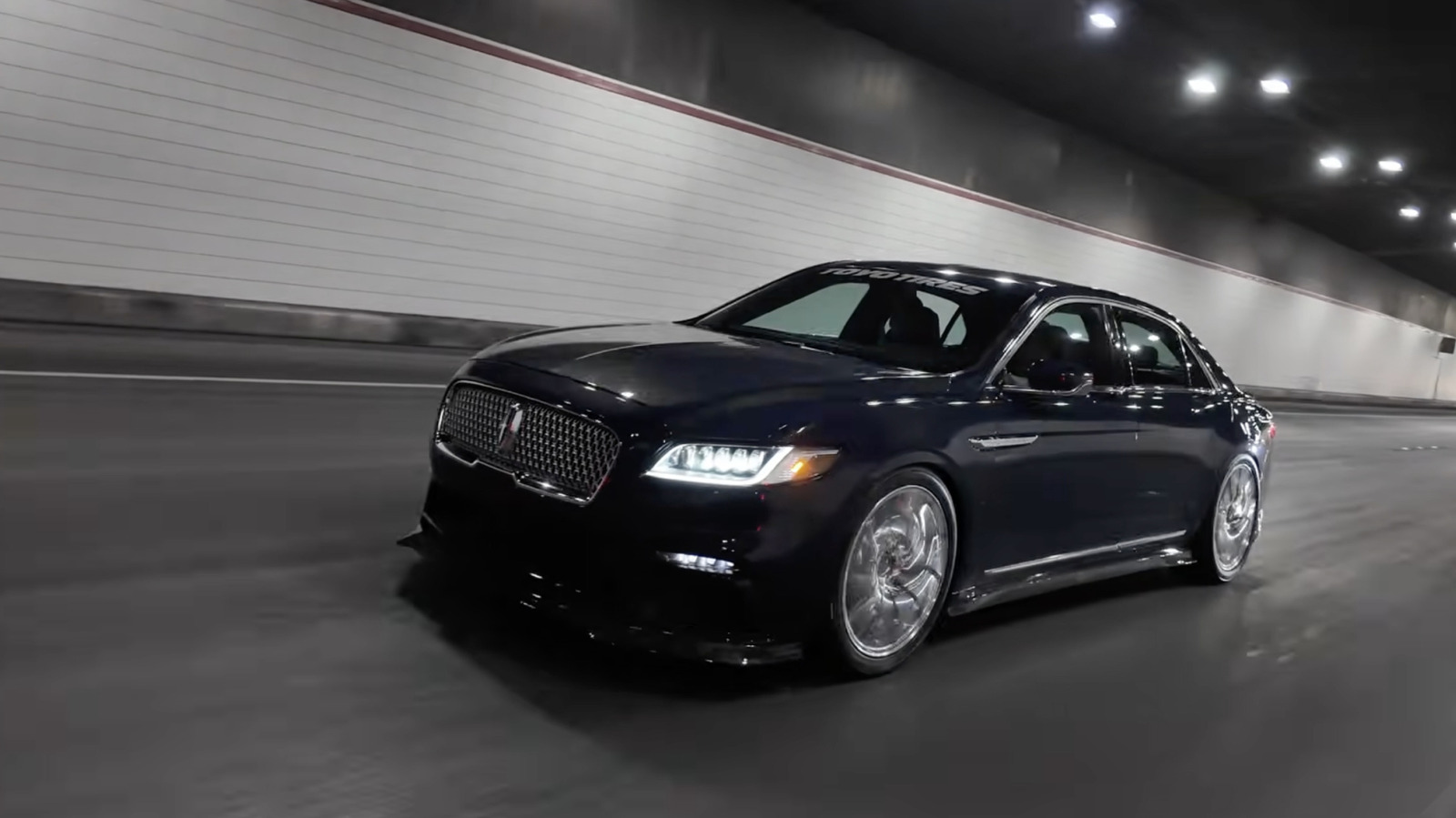
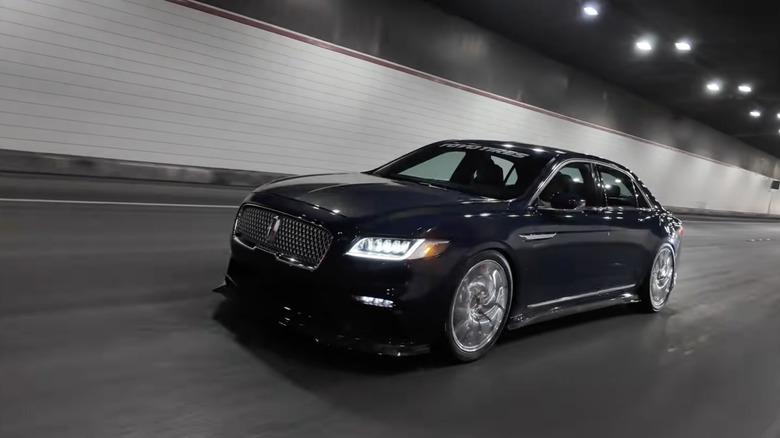
Last we checked on the V10 Continental guys, they’d successfully made it to SEMA and were taking a bit of a break with a little side project turbocharging a family member’s Chevrolet Tahoe. But before they made it to SEMA, they ran into a bit of an issue. While finishing their build on a project car that probably shouldn’t exist, the engine blew. Instead of engineering a longterm solution, the Build it Yourself boys got it back together and running well enough to make the show, but that was always a temporary solution. Sooner or later, they’d have to actually fix it.
After all, you don’t put in all the time and effort it the time and effort it takes to turn a truck engine into a custom V10 with the goal of making at least 700 horsepower at the crank, only to accept that you can’t drive it above a certain RPM. Especially when the exhaust you fabricated for the car makes said (now 40-valve) V10 sound like it may as well be a Formula 1 car. But, as you may have guessed, even with custom parts, going for that kind of power from a Triton V10 let to oil starvation issues. Above 4,500 RPM or so, the wet sump setup they were using couldn’t keep the oil pressure up, and bad things happen to engines that don’t get enough oil pressure.
Oil me up
As you can imagine, there aren’t a lot of companies out there that sell out-of-the-box oil pressure solutions for 40-valve Triton V10s that have been modified to make big power in a sedan. According to the video, one potential solution would be a high-volume pump from a Mustang GT500 and a few billet gears, but in their case, that wouldn’t work because their build already had one. Another solution could have been to use a larger oil pan, but that also wouldn’t work because there wasn’t enough room for a bigger pan. And an Accusump system reportedly felt like replacing one bandaid with another.
So, what was the fix? A dry sump system, of course. Or, more specifically, a direct-mount oil pump that didn’t need all the external hoses that would have made packaging far more complicated. Is it something a regular person needs or would benefit in any real way from adding to their Camry? Nope. But the Camry you buy new at the Toyota dealer also doesn’t have a Triton V10 under the hood that was never supposed to make this kind of power.
The new dry sump system may be a bit of a Frankenstein’s monster of available components, but for now, it looks like it’s done its job. Now we just have to wait for the next video, which should include a dyno run to demonstrate just how much power this build actually makes now that can maintain oil pressure above 4,500 RPM. Will we see more than 700 hp, or will the engine just blow up again? There’s only one way to find out.

