


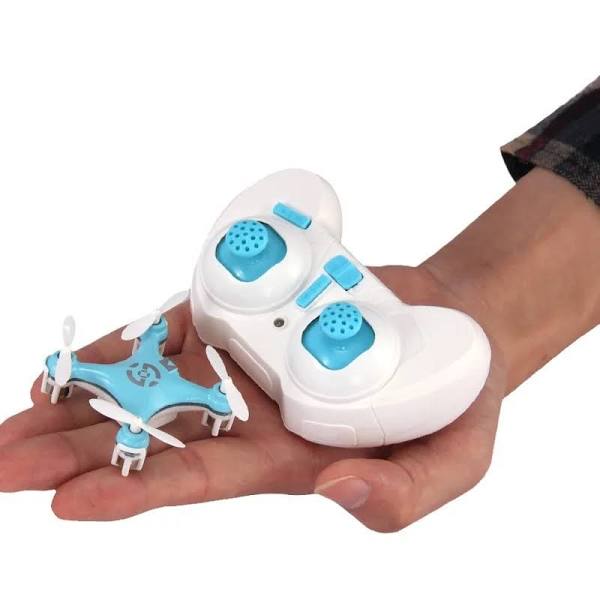
New FCC action removes certain toy drones from the Covered List and outlines the characteristics federal officials consider low risk.
The Federal Communications Commission (FCC) has updated its Covered List to remove a narrowly defined category of foreign-produced “Toy Drones” and “Toy Drones that contain foreign-produced components.” The action follows a June 12, 2026 National Security Determination from the Department of War (DoW), which concluded that these devices do not pose an unacceptable risk to U.S. national security or the safety and security of U.S. persons.
The June 15 Public Notice marks the latest refinement of the FCC’s evolving framework for regulating foreign-produced uncrewed aircraft systems (UAS). More importantly, it provides one of the clearest public explanations yet of the capabilities federal officials associate with higher-risk drone systems.
FCC Updates Covered List
The FCC’s Public Safety and Homeland Security Bureau announced the change in Public Notice DA 26-588.
The agency’s action follows a December 2025 decision that added all foreign-produced UAS and UAS critical components to the FCC Covered List. At that time, the FCC stated that it would update the list if it received a specific determination from the Department of War or the Department of Homeland Security finding that a particular UAS, class of UAS, or UAS component did not present unacceptable risks.
The June determination provides such a finding for a narrowly defined category of toy drones.
According to the DoW determination, “The core of this determination rests on a clear distinction between unsophisticated, low-risk toys that are not capable of operating efficiently in U.S. airspace and more capable UAS.”
The determination further states that toy drones lack the capabilities “in range, endurance, sensing, payload, connectivity, and data collection and storage” that would present an unacceptable risk to U.S. national security and the safety and security of U.S. persons.
What Qualifies as a Toy Drone?
The exemption applies only to devices that meet every requirement established by the DoW.
Among other criteria, a qualifying toy drone must:
- Weigh 150 grams or less.
- Operate only within visual line of sight and within 100 meters.
- Remain below 300 feet altitude.
- Lack GPS, GNSS, return-to-home functions, waypoint missions, and subject tracking.
- Have no internet, mobile app, Wi-Fi, cellular, or network connectivity.
- Have no imaging or sensing capabilities, including cameras, microphones, video transmission, recording functions, or surveillance-related sensors.
- Have a maximum flight time of 10 minutes.
- Have a maximum horizontal speed of 10 meters per second.
- Be explicitly marketed as a toy for recreational use.
- Have no modular payload capability.
- Use no brushless motors.
The determination also specifies that qualifying devices cannot be produced by entities identified in Section 1709 of the Fiscal Year 2025 National Defense Authorization Act: which specifically names DJI, Autel, and any subsidiaries.
The extensive list of restrictions means the exemption applies only to a limited class of products. Many features commonly found on modern consumer drones, including GPS navigation, camera systems, mobile app connectivity, autonomous flight functions, and brushless motors, are specifically excluded.
A Growing Framework of Exemptions
The June action does not stand alone. Instead, it becomes part of a broader set of exemptions that have emerged since foreign-produced UAS were added to the Covered List in December 2025.
The current Covered List identifies four categories of foreign-produced UAS that are exempt from Covered List treatment:
- UAS and UAS critical components included on the Blue UAS Cleared List.
- UAS and UAS critical components that qualify as domestic end products under the Buy American Standard.
- Devices that have received a Conditional Approval from the Department of War or the Department of Homeland Security.
- Foreign-produced toy drones that meet the newly established definition.
The FCC’s updated Covered List incorporates all four categories.
A Window Into Federal Risk Assessment
While the immediate impact of the decision may be limited to a small number of products, the determination offers insight into how federal officials are evaluating drone-related risks.
The DoW’s rationale focuses on specific technical capabilities rather than simply the fact that a product is a drone. The determination repeatedly highlights factors such as connectivity, sensing, data collection, payload capability, endurance, and autonomous functionality as characteristics that distinguish more capable UAS from what it describes as “unsophisticated, low-risk toys.”
As a result, the new exemption does more than remove a narrow class of products from the Covered List. It also provides a public framework describing the features federal officials believe separate low-risk recreational toys from more capable drone systems that warrant closer national security scrutiny.
Read more:

Miriam McNabb is the Editor-in-Chief of DRONELIFE and CEO of JobForDrones, a professional drone services marketplace, and a fascinated observer of the emerging drone industry and the regulatory environment for drones. Miriam has penned over 3,000 articles focused on the commercial drone space and is an international speaker and recognized figure in the industry. Miriam has a degree from the University of Chicago and over 20 years of experience in high tech sales and marketing for new technologies.
For drone industry consulting or writing, Email Miriam.
TWITTER:@spaldingbarker
Subscribe to DroneLife here.

