


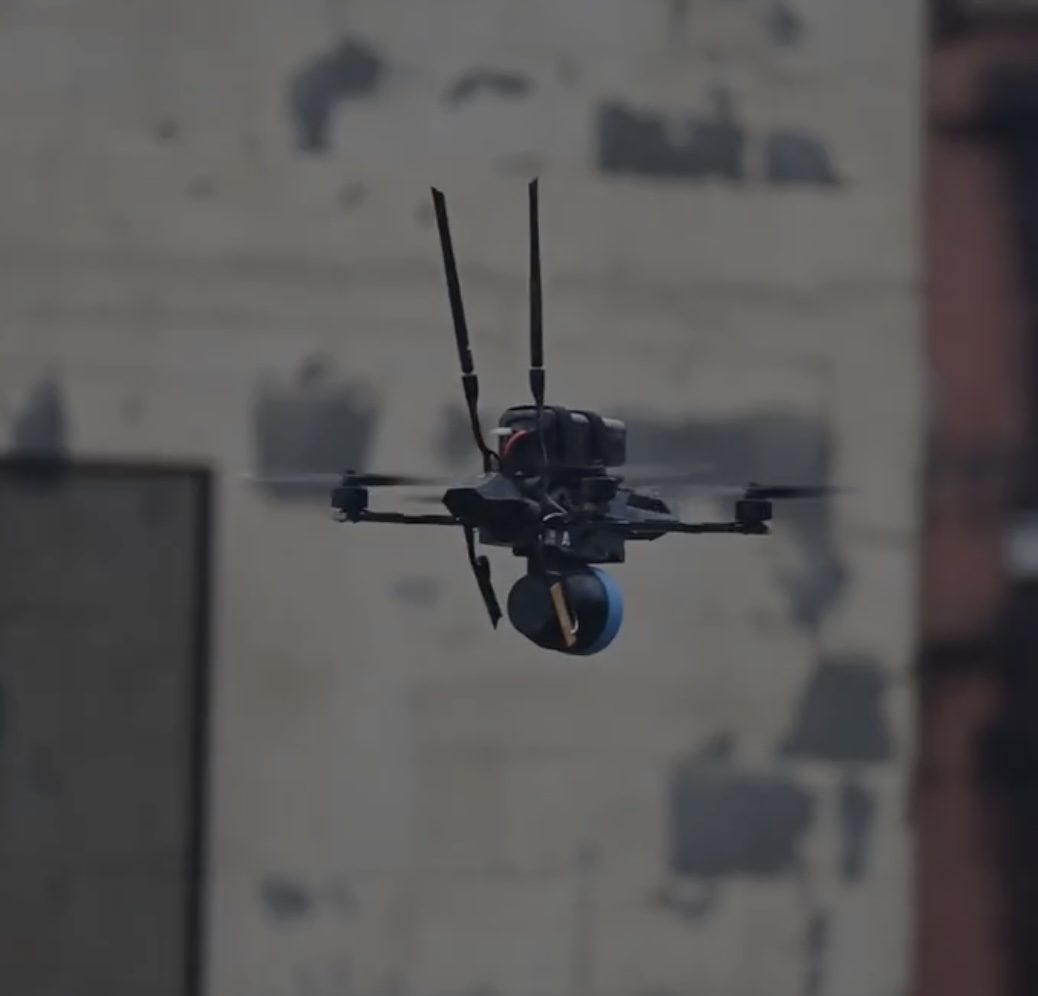
At this morning’s keynote roundtable at XPONENTIAL 2026, government and industry leaders outlined a new phase in the effort to scale the U.S. drone industry: moving from innovation and prototype development to industrial production, supply chain scrutiny, and rapid military acquisition.
Moderated by Michael Robbins of AUVSI, the panel focused on the Department of Defense’s Drone Dominance program, an initiative designed to rapidly identify, evaluate, purchase, and field drone systems at scale.
Speakers included Travis Metz of the Defense Innovation Unit, Paul Fermo of Robinson Unmanned, formerly Ascent AeroSystems and a winner in “Gauntlet 1,” Doug Reed of Auterion, and Evan Reed of Altana AI.
The message throughout the session was clear: the U.S. government is no longer focused only on finding promising drone technology. It is now focused on building a repeatable industrial system capable of producing drones at scale with trusted supply chains.
“At the Pace of Relevance”
Metz described the Drone Dominance program as a direct response to concerns that the U.S. was moving too slowly to build the drone capability needed for future conflicts.
“The Secretary of War believed we were behind when it comes to drones,” Metz said. “His view was that it simply wasn’t happening fast enough.”
The program is structured around “Gauntlets,” a repeatable process that combines operational testing, vendor evaluation, supply chain review, and purchasing. A key feature is that military end users remain directly involved throughout the process.
“We are doing this tightly wound up with the warfighters,” Metz said. “They are the ones doing these evaluations.”
Unlike traditional acquisition programs, the emphasis is on speed and operational relevance. Metz said the initiative was tasked with getting systems into the hands of operators “at the pace of relevance.”
That process is already producing results. Metz said the government has placed orders for 30,000 drones, with deliveries expected over the next two to five months. Phase 2 of the program has already been announced.
The larger goal, however, extends beyond current orders. Panelists repeatedly emphasized the need to create an industrial base capable of sustaining production during a prolonged conflict.
“If we were at war with our likely adversaries and needed millions of these drones, those adversaries would not sell us the parts to build them,” Metz said. “We have to plan for a future where we cannot purchase parts from our adversaries.”
Supply Chain Visibility Becomes a Competitive Requirement
Much of the discussion focused on the reality that scaling U.S. drone manufacturing requires a level of supply chain scrutiny unfamiliar to many companies in the sector.
Fermo said the industry has spent years asking for stronger government demand signals.
“If you want to grow the industry at scale, you need clear demand signals,” he said. “The administration delivered on that.”
At the same time, he said many drone companies are only beginning to confront the complexity of industrial manufacturing.
“It’s very different to build 4,000 systems than to build 10,” Fermo said. While Robinson Unmanned is able to take advantage of the decades of manufacturing experience Robinson Helicopters provides, most new manufacturers don’t have that background. “The drone industry hasn’t traditionally looked deeply into second- and third-tier suppliers. That level of traceability is hard.”
That challenge became a major theme of the session.
Reed explained that traditional supplier screening methods are no longer enough for programs like Drone Dominance.
“If a motherboard is assembled in the U.S. but its components are built in factories in China and Taiwan, you need to know exactly where those parts originated and which factory produced them,” he said.
The scrutiny now extends beyond country-of-origin labels to ownership structures, component sourcing, and bill-of-materials level analysis.
Reed advised companies to proactively map their supply chains now, noting that the trend extends beyond defense procurement.
“The direction of U.S. trade law and tariff policy is moving this way generally,” he pointed out.
“Capitalism Works”
Despite the challenges, the panel struck an optimistic tone about the ability of U.S. industry to respond.
Robbins noted that building domestic manufacturing capacity should eventually help reduce costs, and Metz argued that the combination of government demand signals and private investment can scale the sector rapidly.
“We have very good depth of capital,” he said. “Capitalism works. If we provide clear demand signals and clear supply chain requirements, the industrial base will scale.”
Auterion also pointed toward the next phase of operational scale. The company said future drone operations are moving beyond one drone per operator toward systems where one operator may control many aircraft simultaneously, increasing the importance of software and autonomy.
The Drone Dominance program’s evolving supply chain framework reflects that long-term ambition. Metz pointed attendees to DroneDominance.mil and the recently released supply chain framework document as a roadmap for companies seeking to qualify for future phases of the program.
Read more:

Miriam McNabb is the Editor-in-Chief of DRONELIFE and CEO of JobForDrones, a professional drone services marketplace, and a fascinated observer of the emerging drone industry and the regulatory environment for drones. Miriam has penned over 3,000 articles focused on the commercial drone space and is an international speaker and recognized figure in the industry. Miriam has a degree from the University of Chicago and over 20 years of experience in high tech sales and marketing for new technologies.
For drone industry consulting or writing, Email Miriam.
TWITTER:@spaldingbarker
Subscribe to DroneLife here.

