


Bipartisan lawmakers urge aviation bill negotiators to adopt stronger aircraft visibility measures and preserve broader safety reforms
The leaders of the House Aviation Safety Caucus are urging Congress to strengthen aircraft visibility requirements as lawmakers negotiate final aviation safety legislation.
On June 1, Representatives Nick Langworthy (R-NY) and Don Beyer (D-VA) led a bipartisan letter calling on House and Senate conferees to include additional collision-prevention measures in a final aviation safety package. The proposals focus on broader use of Automatic Dependent Surveillance-Broadcast (ADS-B) technology following the January 2025 midair collision near Ronald Reagan Washington National Airport (DCA) that killed 67 people.
The lawmakers say lessons from the National Transportation Safety Board’s investigation point to the need for stronger aircraft visibility requirements and improved pilot awareness tools.
Focus on ADS-B In and ADS-B Out
The letter urges lawmakers to require commercial aircraft to use integrated ADS-B In technology. Unlike ADS-B Out, which broadcasts an aircraft’s position, ADS-B In allows pilots to receive information about nearby aircraft and traffic conditions.
According to the lawmakers, wider deployment of ADS-B In could provide flight crews with earlier warnings about nearby aircraft operating in busy or shared airspace.
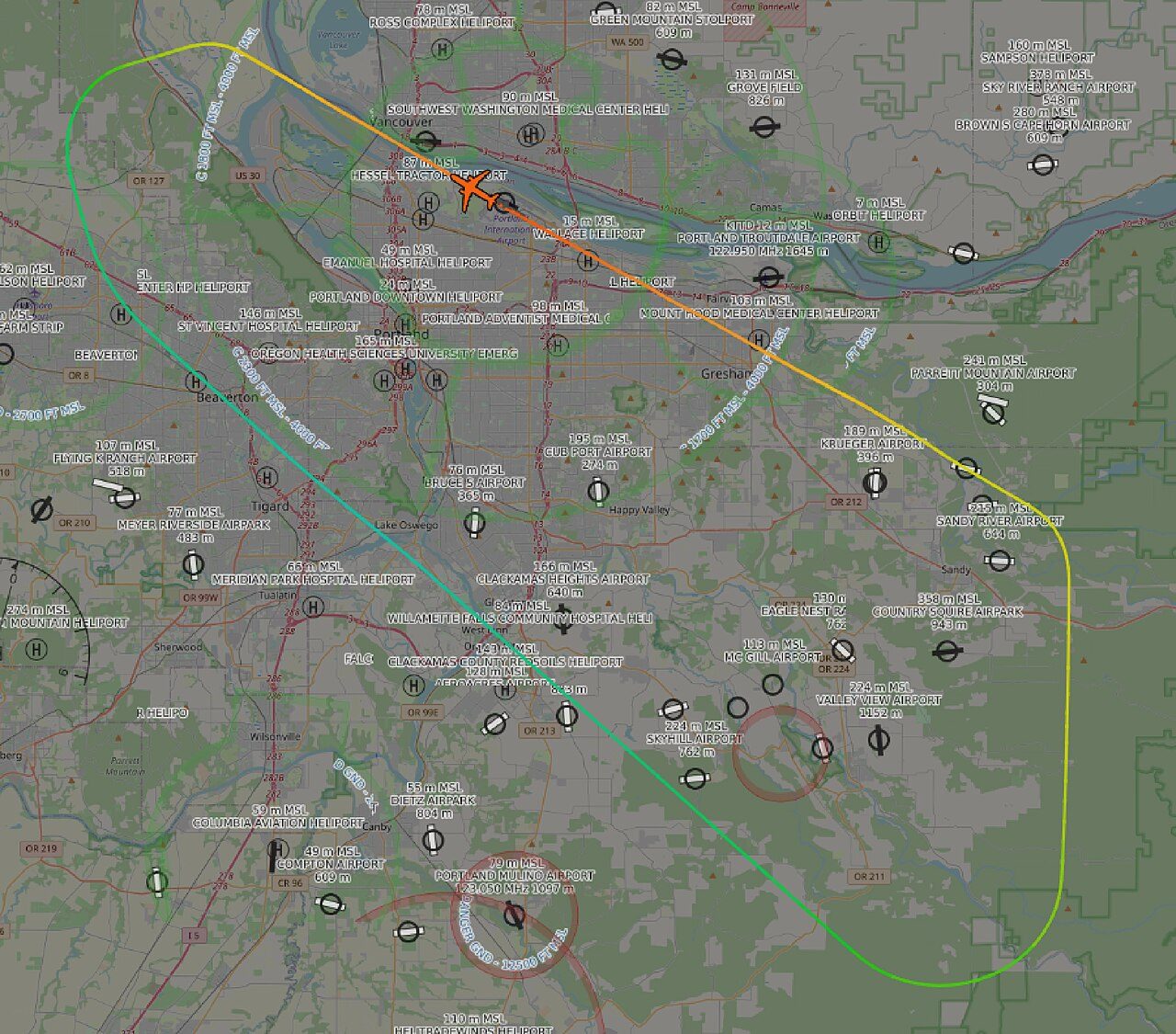
The proposal also calls for nationwide requirements that military aircraft operating in the National Airspace System transmit ADS-B Out signals. Supporters say the change would improve visibility and coordination between military and civilian aircraft.
ADS-B technology allows aircraft to share real-time position, altitude, and speed information with air traffic controllers and nearby aircraft. The system has become a key component of modern air traffic management.
The issue has broader implications beyond traditional aviation. Many drone operations also rely on ADS-B data for situational awareness and airspace awareness. While most small drones do not carry ADS-B transmitters, commercial drone operators, airspace service providers, and unmanned traffic management developers frequently use ADS-B data as part of their safety systems. Discussions about aircraft visibility and electronic conspicuity have become increasingly important as drones, advanced air mobility aircraft, military aircraft, and traditional aviation share the same airspace.
Lawmakers Cite NTSB Investigation
The lawmakers said the recommendations stem from findings related to the DCA accident investigation.
“We owe it to the American people to ensure there is never another midair collision like what happened at DCA last year,” said Congressman Langworthy, who serves as chair of the House Aviation Safety Caucus.
“We can’t get back the 67 souls that were lost in that crash, but we can honor their memory by taking every possible step to strengthen aviation safety and prevent avoidable tragedies, just like we did after the Flight 3407 crash. Improving aircraft visibility and pilot awareness through modern technology is a commonsense step that can help reduce the risk of midair collisions and improve coordination between civilian and military aircraft. Congress has an opportunity to deliver meaningful safety upgrades, and we should not miss it.”
Congressman Beyer also pointed to the NTSB’s findings.
“The NTSB investigation into last year’s devastating midair collision made clear that stronger, more consistent use of safety technology like ADS-B is essential to protecting lives,” said Congressman Beyer. “By improving real-time aircraft visibility and ensuring better coordination across civilian and military aviation, we can significantly reduce safety risks in our increasingly complex National Capital Region airspace and prevent a tragedy like the one at DCA from happening again. Congress has the opportunity to put systems in place now to save lives, and we must act quickly to pass these comprehensive safety reforms while we have this chance.”
ALERT Act and ROTOR Act Reforms
In addition to the ADS-B reforms, the letter asks negotiators to preserve broader safety reforms contained in both the House-passed ALERT Act and the Senate-passed ROTOR Act.
The lawmakers described those measures as important steps toward modernizing aviation safety systems, strengthening oversight, and improving operational safety standards.
“As conferees work to finalize this legislation, maintaining strong aviation safety reforms must remain the top priority,” the lawmakers wrote. “These measures represent important steps toward reducing risk, improving situational awareness, and helping prevent future midair collisions.”
The effort has also received support from the Air Line Pilots Association (ALPA), which represents more than 80,000 pilots across 42 airlines in the United States and Canada.
“Mandating integrated ADS-B In technology, with advanced alerting that shows pilots nearby aircraft in the air and on the airport surface, will close the gaps in the safety net that allowed the PSA Flight 5342 tragedy to happen. To be clear, this is not a matter of ROTOR versus ALERT, it is about taking the strongest elements of both and getting it right. We owe that to the 67 people lost at DCA, and to the millions who trust us with their lives every day,” said Capt. Jason Ambrosi, ALPA President.
As Congress works to reconcile the House and Senate aviation bills, the debate highlights a broader industry trend toward increasing electronic visibility for all airspace users. For the drone industry, universal conspicuity is becoming a critical enabler of BVLOS flight. Future UTM and airspace management systems will depend on the ability to identify aircraft, assess potential conflicts, and apply automated deconfliction and flight-priority rules in real time. Those capabilities require reliable sources of aircraft position data. While ADS-B alone will not solve every airspace integration challenge, broader participation in electronic visibility systems can improve situational awareness and support the development of the digital infrastructure needed for large-scale drone operations. As drones, military aircraft, advanced air mobility vehicles, and traditional aviation increasingly share the same airspace, the ability of aircraft to make themselves electronically visible may become as important as the ability to communicate with air traffic control.
Read more:

Miriam McNabb is the Editor-in-Chief of DRONELIFE and CEO of JobForDrones, a professional drone services marketplace, and a fascinated observer of the emerging drone industry and the regulatory environment for drones. Miriam has penned over 3,000 articles focused on the commercial drone space and is an international speaker and recognized figure in the industry. Miriam has a degree from the University of Chicago and over 20 years of experience in high tech sales and marketing for new technologies.
For drone industry consulting or writing, Email Miriam.
TWITTER:@spaldingbarker
Subscribe to DroneLife here.

