


Cell Lines
U2OS (ATCC; HTB-96), Saos-2 (ATCC; HTB-85) and HOS (ATCC; CRL-1543) cell lines were obtained from ATCC. The HeLa (LT, long telomere) cell line was validated using short-tandem-repeat profiling by ATCC’s cell line authentication services. The LM216J/T cells (described initially by J. P. Murnane) were provided by R. Greenberg. U2OS cells with a doxycycline-inducible ATRX allele were provided by D. Clynes26. SV40 large T-antigen immortalized IMR90 control and ATRX-KO ALT IMR90 cells were previously described and provided by H. Zheng and J. Paik8. U2OS cells stably expressing SNAP-tagged CENP-A were provided by G. Almouzni13,29. All of the cell lines were cultured in GlutaMax-DMEM supplemented with 10% bovine growth serum or fetal calf serum, non-essential amino acids and penicillin–streptomycin under 20% O2 and 7.5% CO2 at 37 °C. Cell lines were routinely tested for mycoplasma contamination.
Plasmids
Y. Dalal previously described and provided the GFP-tagged HJURP WT plasmid51. The GFP-tagged HJURP deletion mutants, Δ1-80aa and ΔTLTY box42, were generated as variants of this plasmid in this study. D. R. Foltz provided GFP-tagged Mis18BP1 (ref. 52) and YFP-H3CATD (ref. 30). pBabe-SNAP-CENP-A-HA were previously described and provided by L. Jansen13. Flag-tagged TRF1-FokI WT and D450A plasmids were gifts from R. Greenberg37,38. pINDUCER dCas9-TET1-CD plasmids53 were gifts from D. Huangfu (Addgene, 101920 and 101921). Lentiguide-puro54 was a gift from F. Zhang (Addgene, 52963) and used to express sgTel (TTAGGGTTAGGGTTAGGGTTAGG) for telomere targeting. Underlined bases indicate PAM sequence.
Direct IF analysis
For immunofluorescence (IF) analysis in Figs. 1a and 4a, cells were plated on glass coverslips, washed with PBS and fixed with 2% paraformaldehyde (PFA). After two more washes with PBS, cells were permeabilized (0.05 g of sodium citrate and 0.1% (v/v) Triton X-100) for 5 min, then washed and incubated in a blocking solution (1 mg ml−1 BSA, 10% normal goat serum, 0.1% Tween-20) for 30 min. Cells were incubated with primary antibodies diluted in blocking solution at 4 °C overnight. Next, cells were washed three times and incubated with Alexa-conjugated secondary antibodies (Life Technologies) for 1 h at room temperature. Cells were then washed three times with PBS, fixed using 2% PFA for 10 min and washed twice with PBS. Lastly, cells were dehydrated using a series of ethanol washes (70%, 95% and 100%), air-dried and mounted onto slides with Prolong Gold Anti-fade reagent with DAPI (Life Technologies). Imaging was conducted using conventional fluorescence with a ×60 Plan λ objective using a Nikon 90I.
For all other IF-related experiments, cells were plated onto glass coverslips, washed once with PBS and then permeabilized using cytoskeleton (CSK) buffer (10 mM HEPES, 300 mM sucrose, 100 mM NaCl and 3 mM MgCl2 supplemented with 0.5% Triton X-100) for 10 min. Cells were then fixed in 2% PFA for 10 min, washed twice with PBS and incubated in blocking solution for 30 min. Primary and secondary antibody incubations were performed as above, and then the cells were fixed, washed, ethanol-dehydrated and mounted. Imaging was conducted with conventional fluorescence using a ×60 Plan λ objective on the Nikon 90I system. Single z stacks (0.5 µm sections) were acquired and analysed. No maximum-intensity projections were used in co-localization experiments. Antibodies used in immunofluorescence: TRF2 (1:1,000, Novus Biologics NB110-57130), TRF1 (1:1,000, Abcam ab10579), PML (1:100, Santa Cruz, SC-966), CENP-C (1:1,000, MBL, PD 030), CENP-T (1:500, Bethyl Laboratories, A302-313A) and Flag M2 (1:1,000, Sigma-Aldrich, F1804).
IF-FISH
After the ethanol dehydration step in IF, coverslips were air-dried. Next, the coverslips were incubated with hybridization mix (70% deionized formamide, 1% maleic acid with 1 mg ml−1 of blocking reagent (Roche), 10 mM Tris-HCl, pH 7.5) containing the appropriate PNA probes at 72 °C for 10 min and then kept in the dark at room temperature overnight. The coverslips were then washed twice for 15 min each with PNA wash A (70% deionized formamide and 10 mM Tris-HCl, pH 7.5) and three times for 5 min with PNA wash B (0.1 M Tris-HCl, pH 7.5, 0.15 M NaCl and 0.08% Tween-20). Ethanol dehydration was performed as described above; the coverslips were air-dried and then mounted in Prolong Gold Anti-Fade reagent with DAPI. Tel (F1004, F1013), CENT (F3003) and CENP-B (F3005) PNA probes were purchased from PNA Bio.
siRNA transfections
In total, 300,000 and 800,000 cells were seeded into 6 cm or 10 cm plates. Then, 50 nM siRNA was diluted in Opti-MEM medium with 2.5 μl and 5 μl of DharmaFECT transfection reagent per 6 cm or 10 cm plate, respectively. For IMR90 SV40-LT control and ALT cells, the volume of Dharmafect reagent was doubled to ensure proficient knockdown. The siRNA–Dharmafect mix was added to the cells for 16 h, after which the medium was replaced. Cells were collected for western blot or immunofluorescence analysis at 72 h. Premade siRNA pools were purchased from Horizon Discovery (RAD51, L-003530; RAD52, L-011760; BLM, L-007287; SLX4, L-014895; POLH, L-006454; POLD3, L-026692; ASF1a, L-020222; ASF1b, L-020553; PML, L-006547; non-targeting (NT) siRNA: D-001206-13). The sequences of the custom-synthesized siRNAs are HJURP 1: 5′-CUACUGGGCUCAACUGCAAUU-3′29; HJURP 2: 5′-GUGUGUAGCUAGGUUAUUUUU-3′29; HJURP 3′-UTR: 5′-GAGAUAACCUCGAGUUCUUUU-3′55.
Telomere DNA synthesis detection by EdU
U2OS and HeLa cells were left either unsynchronized or synchronized in G2 with RO-3306 (Sigma-Aldrich; 10 μM) for 22 h before collection. Cells were pulsed with EdU (10 μM) 1 h before collection. Cells on glass coverslips were washed twice in PBS and fixed with 2% PFA for 10 min. Cells were permeabilized with 0.1% (w/v) sodium citrate and 0.1 % (v/v) Triton X-100 for 5 min. Cells were then washed with PBS and underwent serial ethanol dehydration before FISH as described above. After washing, the Click-IT Plus EdU Cell Proliferation Kit with Alexa Fluor 647 (Invitrogen) was used to detect EdU. When performed in conjunction with siRNA depletion, knockdowns were performed as detailed above, and the cells were analysed at around 72 h after knockdown. Imaging was conducted with conventional fluorescence using a ×60 Plan λ objective on the Nikon 90I system.
Sim analysis using DeepSIM
Image acquisition uses the Nikon Ti inverted microscope platform with a Plan Apo VC ×60 objective (NA 1.4), CrestOptics X-Light V3 spinning disk and Deep SIM scanhead, and a Photometrics Kinetix sCMOS camera optimized to acquire four fluorescent channels at excitation wavelengths 405 nm, 488 nm, 561 nm and 647 nm. The entire nuclear volume is sampled at the Nyquist frequency in x, y and z using the standard (37-image) microlens array mode, calibrated to focus lens position 1000, to produce a series of 1,024 × 1,024 16-bit single-plane images with a 200 nm step size. Images are reconstructed and projected in 3D using the Crest DeepSIM reconstruction plugin and NIS-Elements software.
Exo-FISH
Exo-FISH was performed as previously described with slight modifications45. Cells were collected by trypsinization, washed in PBS and 200,000 cells were swollen in 0.56% KCl for 20 min. After 5 min of centrifugation at 1,000 rpm, cell pellets were fixed in 3:1 methanol:acetic acid for 20 min, and then a consistent number (around 20,000) was homogeneously spread onto glass slides. After drying overnight at room temperature in the dark, slides were rehydrated in PBS for 5 min at room temperature. The following treatments were performed in a humidified chamber: slides were treated with 0.5 mg ml−1 RNase A (Invitrogen) for 10 min at 37 °C, then incubated with buffer only (−exo) or with 500 mU μl−1 exonuclease III (Promega) (+exo) for 30 min at 37 °C. Slides were hybridized with a fluorescently labelled PNA probe specific for the telomere or centromere α-sat sequence (PNA Bio) and incubated at room temperature for 90 min. Slides were washed, dried and mounted as described for IF-FISH and metaphase spreads. Imaging was conducted using conventional fluorescence with a ×60 Plan λ objective using a Nikon 90I.
Telo-seq
Telo-seq was performed as described9, with modifications for the R10 flow cell chemistry according to the instructions of Oxford Nanopore Technologies. Samples of IMR90 SV40 control and IMR90 ATRX-KO LT were sequenced using R10 flow cell chemistry. In brief, high-molecular-mass genomic DNA (gDNA) was extracted using the NEB Monarch HMW DNA extraction kit for cells and blood (NEB, T3050) according to the manufacturer’s instructions and quantified using the Qubit dsDNA BR assay (Invitrogen, Q32853). Telo-adapter oligonucleotides (T1–T6, 40 μM final concentration; see the list below) were individually hybridized with the Telo-splint oligonucleotides (40 μM final concentration; see the list below) in annealing buffer (50 mM NaCl, 2 mM Tris HCl, pH 7.5, 1 mM EDTA final concentration) using a thermocycler (Bio-Rad, C1000) (5 min 95 °C denaturation followed by gradual −0.1 °C per cycle decrease in temperature for 850 cycles). Annealed adapters were mixed in equal parts (6.6 μM final concentration each). In a final volume of 200 μl, 15 μg gDNA was mixed with 1 mM ATP (Thermo Fisher Scientific, R0441), the telo-adapter mix (final concentration 100 nM, each), 50 U μl−1 Quick T4 DNA ligase (NEB, E7180) in 1× rCutsmart buffer (NEB, B6004) and incubated at 35 °C for 16 h followed by heat inactivation at 65 °C for 10 min. The reaction mix was digested with 80 U of EcoRV-HF (NEB, R3195) at 37 °C for 30 min, then heat-inactivated at 65°C for 20 min. Next, the digested sample was treated with 1 mM Klenow fragment (3′−5′ exo-; NEB, E6053) in 250 μl 1× NEBNext dA-tailing reaction buffer (NEB, E6053) at 37 °C for 30 min to perform dA tailing. Then, 250 μl AMPure XP beads (1×, v/v) (Beckman Coulter, A63881) were added to the dA-tailing reaction, incubated at room temperature for 5 min, spun down on a magnet, washed twice with 80% ethanol and resuspended in 198 μl water. The sample was incubated at 37 °C for 15 min, then spun down using a magnet. 196 μl dA-tailed sample was incubated with 100 nM Telo-splint in the presence of 50 mM NaCl at 50°C for 1 h. Annealed DNA was purified using 100 µl of AMPure XP beads (0.5×, v/v), as described above, with 32 µl of water used to elute DNA. Next, 5 μl of Native Adapter (Oxford Nanopore Technologies (ONT), EXP-NBA114) was ligated to 30 μl of the sample using 5 μl Quick T4 DNA ligase in 1× NEBNext Quick ligation reaction buffer at room temperature for 20 s followed by purification with 25 μl AMPure XP beads (0.5×, v/v), as described above using 14 μl elution buffer (ONT) to elute the library. The 12 μl library was further processed according to the manufacturer’s instructions and loaded onto the R10.4.1 MinION flow cell (ONT, FLO-MIN114). The library was sequenced on a GridION sequencer (ONT). One flow cell was used per library. R10 reads were basecalled using SUP model (v.4.3.0) and telomeric reads were identified as described9.
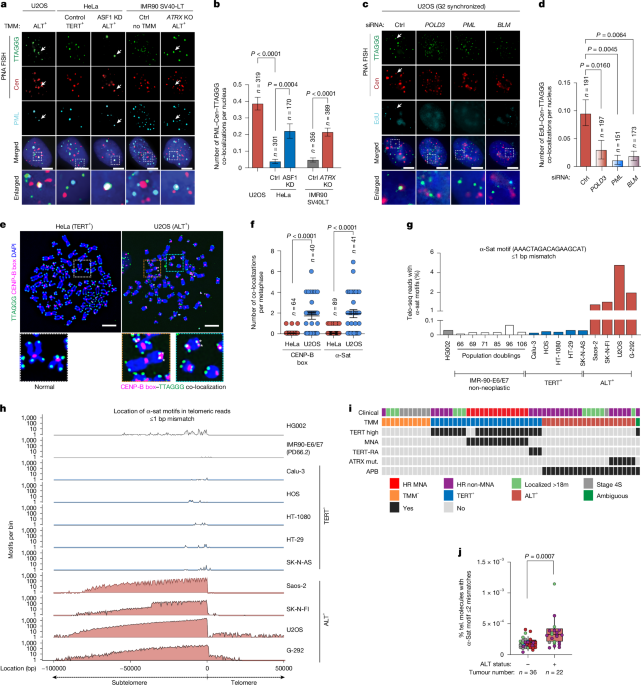
Telomeric reads were identified as described9. Telomeric reads were searched for the presence and location of α-sat motif (5′-AAACTAGACAGAAGCAT-3′), CENP-B probe (5′-ATTCGTTG GAAACGGGA-3′) and α-sat consensus sequences (5′-AGCATTCTC AGAAACTTCTTTGTGATGTGTGCATTCAACTCACAGAGTTGAACCTTCCTTTTGATAGAGCAGTTTTGAAACACTCTTTTTGT AGAATCTCCAAGTGGATATTTGGAGCGCTTTGAGGCCTTCGTTGGAAACGGGAATATCTTCACATAAAAACTAGACAGA-3′)5 using the Seqkit (v.2.6.1)56 command ‘seqkit locate -f motifs.fa seqkit_ input_ telomeric_reads.fasta –max-mismatch x > seqkit_ output_file.txt’ in conda (v.23.11.0) where x is the maximum number of allowed mismatches. Telomeric reads were also searched for the presence of singleton telomeric variants in the following pattern (5′-TTAGGGTTAGGGTTAGGG-TNNGGG-TTAGGGTTAGGGTTAGGG-3′) using the command ‘seqkit locate -r -p ‘(TTAGGG){3} (TNNGGG)(TTAGGG) {3}’ seqkit _input _telomeric_ reads. fasta > seqkit_output_file.txt’. Four variant motifs (TCAGGG, TGAGGG, TTCGGG and TTGGGG) were each searched for and flanked by three consecutive canonical (TTAGGG) repeats on either side. Data were further analysed and plotted using R (v.4.3.1) with packages dplyr (v.1.1.4), gggenes (v.0.5.1), ggplot2 (v.3.5.1), scales (v.1.3.0) and tidyr (v.1.3.0) in RStudio (Posit Software, PBC, v.2023.12.0 + 369).
Oligonucleotide sequences for Telo-seq
Telo-adapter T1: /5Phos/AAGGTTAACACAAAGACACCGACAACTTTCTTCCCCTAAC; Telo-adapter T2: /5Phos/AAGGTTAACACAAAGACACCGACAACTTTCTTCTAACCCT; Telo-adapter T3: /5Phos/AAGGTTAACACAAAGACACCGACAACTTTCTTCCCTAACC; Telo-adapter T4: /5Phos/AAGGTTAACACAAAGACACCGACAACTTTCTTCCTAACCC; Telo-adapter T5: /5Phos/AAGGTTAACACAAAGACACCGACAACTTTCTTCAACCCTA; Telo-adapter T6: /5Phos/AAGGTTAACACAAAGACACCGACAACTTTCTTCACCCTAA; Telo-Splint: GAAGAAAGTTGTCGGTGTCTTTGTGTTAACCTTAGCAAT.
Dfam repetitive DNA element analysis
To more generally identify repetitive DNA elements in IMR90 control and IMR90 ATRX-KO ALT Telo-seq data, the presence of Dfam database (v.3.9) instances were quantified in telomeric reads using HMMER (v.3.4; http://hmmer.org/). For each detected Dfam instance, the number of reads with at least one instance per read was calculated using a custom awk script (https://github.com/Salk-IGC/Dfam-Repeat-Quantification). All downstream analysis was performed in R (v.4.3.1) with dplyr (v.1.1.4), ggplot2 (v.3.5.1), stringr (v.1.5.0) and tidyr (v.1.3.0) in RStudio (Posit Software, PBC, v.2023.12.0 + 369). Instances that were not annotated as human- or human-ancestor specific were excluded from downstream analysis. To allow enrichment analysis, read counts with ‘NA’ were replaced with ‘1’ for the instances that were undetected in one sample but present in the other sample. For each instance, the percentage of reads in that instance relative to the total number of telomeric reads per sample was calculated. Ratios and log2-transformed ratios of the percentage of reads with the specific instance found in IMR90 ATRX-KO ALT relative to IMR90 control were calculated for each instance. Enrichment was statistically evaluated by Fisher’s exact test. To exclude subclonal events, all instances with a frequency of less than 1% or 2% in one of the samples, corresponding to approximately one and two chromosome arms per diploid cell, respectively, were excluded in the analysis.
Linked-read WGS
Linked-Read library preparation was performed according to the 10x Genomics protocol on the Chromium Controller instrument57. Libraries were then sequenced to 30–40× coverage on the Illumina NovaSeq 6000 system and processed using the 10x Long Ranger pipeline (v.2.2.2, default parameters, hg19 reference genome). The sequenced HMW gDNA molecules had a mean length of 80–90 kb, and reads from the same molecule were assigned a standard 16-bp barcode. To detect insertions of satellite DNA into the (sub)telomeric regions of the genome, molecules with two kinds of reads were identified: (1) reads with at least one occurrence of the 17-bp α-sat motif AAACTAGACAGAAGCAT (with up to two mismatches); and (2) reads with at least four occurrences of the telomeric repeat TTAGGG and its reverse complement (no mismatches). Molecules with at least one satellite read and two telomeric reads (all reads sharing the same barcode) were counted as an insertion event. Their number was then normalized to the total number of molecules with telomeric repeat reads only to account for varying telomere lengths between samples.
CUT&RUN analysis
CUT&RUN for CENP-A was performed with 1 × 10⁶ cells per sample as described previously15,58. Cells were incubated with CENP-A antibody (ADI-KAM-CC006-E, Enzo) overnight at 4 °C, followed by secondary antibody for rabbit IgG (ab46540, Abcam) for 1 h at 4 °C and incubation with pA/G-MNase (Epicypher) at 4 °C for 1 h. Released chromatin fragments were prepared for sequencing using the NEB Ultra II library preparation kit (E7103L). All of the samples were amplified for 12 PCR cycles, then run on a 2% agarose gel, and the band corresponding to mononucleosome fragments (275–350 bp) was selected. Excised fragments were purified by gel-extraction (Qiagen, 28704). The resulting libraries were sequenced using 150 bp, paired-end sequencing on the HiSeq X instrument according to the manufacturer’s instructions (Illumina). Reads generated from CUT&RUN were processed using Cutadapt (v.2.10) to remove adapters and retain reads with a minimum length of 20 bp, then reads were aligned to the CHM13 whole-genome assembly v2.0 (GCF_009914755.1) using bowtie2 (v.2.4.1) with the following parameters: –end-to-end –very-sensitive –no-mixed –no-discordant -I 10 -X 700 –dovetail -p 8. The resulting SAM files were converted to BAM format using SAMtools (v.1.9) with FLAG score 2,308 to remove unmapped, secondary and supplemental alignments. Normalized bigWigs were generated with deeptools (v.3.3.0) using the following command: bamCoverage -b sample.sort.bam -o sample.bw –scaleFactor X -p max/2, where the Escherichia coli spike-in coverage was used to calculate scaling factors for all samples. Significantly enriched CENP-A peaks were determined using MACS2 (v.2.2.7.1) using the default parameters: -g 3.03e9 and -q 0.00001.
DiMeLo-seq
DiMeLo-seq was performed as described previously16,59. Samples were prepared from 6 million cells. Washed and permeabilized cell pellets were resolved in 400 µl Tween-Wash containing primary CENP-A antibody (ADI-KAM-CC006-E, Enzo) at 1:50. After washing, the CENP-A samples were resuspended in 400 µl Tween-Wash with 200 nM mouse Hia5 nanobody (provided by N. Altemose). After Hia5 activation, cells were resuspended in 40 µl cold PBS and modified UHMW DNA was extracted using the NEB Monarch UHMW DNA Extraction Kit (NEB, T3050) with modifications as directed in the ONT protocol (Oxford Nanopore Technologies). Telomere-to-telomere sequencing was performed on the Promethion system (SQK-APK114, SQK-LSK114 and SQK-ULK114, version T2T_9211_v114_revF_27Nov2024; https://nanoporetech.com/document/telomere-to-telomere-sequencin g-t2t-on-promethion-sqk-apk114-sqk). Libraries were prepared using the ONT Ultra-long DNA sequencing kit (SQK-ULK110). Sequencing was performed with R9 flow cells on the Promethion (Oxford Nanopore) system. Base-calling was performed using guppy (v6.1.2_gpu) and modified bases were identified with all contexts (res_dna_r941_min_modbases-all-context_v001) and CpG (res_dna_r941_min_modbases_5mC_CpG_v001) models with a methylation threshold of 0.05. Reads were aligned to the CHM13 whole-genome assembly v.2.0 (NCBI: GCF_009914755.1) using winnowmap (v.2.03) with the following parameters: -ax map-ont –cs –eqx -Y -L -p 0.1 -I8g. The resulting SAM files were converted to BAM format using SAMtools60 (v.1.12), with a FLAG score of 2,308, to remove unmapped, secondary and supplemental alignments. Modified base tags were combined with winnowmap alignments using Samtools (v.1.12) and a merging script (provided by N. Altemose). Resulting alignments were filtered to isolate haplotypes using Samtools (v.1.12) and to remove low-quality basecalls and/or modifications using a Python script (provided by D. Xu). To further enrich telomeric reads, a biological replicate was performed as above, with the following modifications. Libraries were prepared using the ONT Ultra-long DNA sequencing kit (SQK-ULK114). Sequencing was performed with R10 flow cells on the PromethION (Oxford Nanopore Technologies) system with adaptive sampling using positive selection for telomeres, subtelomeres and centromeres. Base-calling was performed using Dorado (v.0.5.3), and modified bases were identified for 5mC and 6 mA contexts. Fastq output for independent alignment and downstream processing, as specified above. Visualizations of CENP-A (mA) and DNA methylation (mCpG) were generated using the DiMeLo package (https://github.com/streetslab/dimelo).
Metaphase spreads (FISH) and chromosome paint
To visualize telomeres and centromeres on metaphase spreads and evaluate telomere integrity, cells were treated with Colcemid (Gibco) for around 2 h, collected by trypsinization, swollen in 0.075 M KCl at 37 °C for 7 min and fixed in 70% methanol:30% acetic acid. Metaphase chromosomes were spread onto glass slides and allowed to dry overnight. The next day, metaphases were rehydrated with PBS and treated with RNase A (0.5 mg ml−1 in PBS) and pepsin (1 mg ml−1 in acidified water). Spreads were then fixed in 3.7% formaldehyde, washed with PBS, dehydrated with ethanol washes (70%, 95% and 100%) and air-dried. As in IF-FISH, metaphase spreads were hybridized with a fluorescently labelled PNA probe specific for the telomere, centromere α-sat sequence or CENP-B (PNA Bio) box at 70 °C for 10 min, then incubated at room temperature for 2 h. The slides were then washed with PNA wash A and B and, similar to the IF-FISH protocol, ethanol-dehydrated, air-dried and mounted in ProLong Gold Antifade reagent with DAPI. Metaphase chromosomes were visualized using a ×60 Plan λ objective (1.4 oil) on a Nikon 90i microscope.
For chromosome paint experiments, metaphases were prepared and hybridized with telomere and centromere PNA probes as above. Slides were fixed in 4% PFA after the PNA washes, washed three times with PBS and then dehydrated in ethanol. Then, 8 μl of the chromosome-specific probes was added per slide (Metasystems XCP D-0301-100-FI for chromosome 1, D-0311-100-FI for chromosome 11, and D-0314-100-FI for chromosome 14) and covered with a coverslip and sealed with quick-drying rubber cement. The slides were denatured at 72 °C for 2 min and then hybridized at 37 °C overnight. The next day, the rubber cement and coverslip were removed carefully. Slides were washed first in 0.4× SSC at 72 °C for 2 min, then in 2× SSC with 0.05% Tween-20 at room temperature for 30 s, before a brief rinse in water and air-dried. Metaphases were mounted in ProLong Gold Antifade reagent with DAPI and visualized as above.
Metaphase IF-FISH
A total of 1,000,000 U2OS cells were seeded onto a 10 cm plate. The next day, they were treated with Colcemid for 2 h, then collected by trypsinization, swollen in 0.075 M KCl at 37 °C for 10 min and cytospun onto slides at 1,800 rpm for 10 min (Thermo Fisher Scientific, Cytospin 4). Slides were immediately fixed in 3.7% formaldehyde for 10 min before permeabilization with 1× KCM supplemented with 0.5% Triton X-100. Cells were then washed with 1× KCM buffer with 0.1% Tween-20 and 0.25% BSA. The slides were blocked for 30 min in 1× KCM buffer containing 0.1% Tween-20 and 2.5% BSA, then incubated overnight in the same buffer with antibodies (CENP-A: Thermo Fisher Scientific, MA1-20832; CENP-C, MBL, PD030; NDC80, Novus Biologics, 9G3.23). The next day, the slides were washed three times with 1× KCM buffer containing 0.1% Tween-20 and 0.25% BSA, then incubated with secondary antibodies for 1 h. The slides were again washed three times, fixed in 3.7% formaldehyde, washed with PBS, dehydrated with ethanol washes (70%, 95% and 100%) and air-dried. As for the IF-FISH, metaphase spreads were hybridized with fluorescently labelled PNA probes as described above.
SNAP CENP-A labelling assay for newly deposited histones
U2OS, HeLa LT and U2OSiATRX inducible cells that stably express SNAP-tagged CENP-A were seeded on a 6 cm plate (300,000 cells). The next day, old parental CENP-A was quenched with 10 μM SNAP-cell block (New England Biolabs) for 30 min. This was followed by PBS washes and a 2.5 h chase in fresh growth medium. Newly synthesized SNAP-tagged histone CENP-A that was deposited to chromatin during the chase was pulsed with 2 μM SNAP-cell TMR star (New England Biolabs) for 20 min, followed by a 30 min incubation in fresh medium. Cells were then washed with PBS and analysed using immunofluorescence according to the CSK protocol described above.
When studying the effect of siRNA-mediated depletion on new SNAP–CENP-A deposition at telomere breaks, cells were transfected with siRNAs as described above. Then, 48 h later, the cells were transfected with Flag-tagged TRF1-FokI WT or DA using Lipofectamine 3000. After 6 h, the transfected cells were washed, and the medium was replenished. Then, 24 h later, cells were processed for a quench–chase–pulse experiment as above. When studying the effect of DNA methylation inhibition, 100 nM decitabine (Selleck Chemicals, S1200) was added to control and ASF1-depleted HeLa-SNAP–CENP-A cells 24 h after siRNA transfection until fixation at 72 h. For U2OSiATRX cells, 100 nM decitabine was added to cells for the 7 day duration of the experiment.
Western blotting
Cells were collected with trypsin, quickly washed in PBS, counted with Cellometer Auto T4 (Nexcelom Bioscience) and directly lysed in 4× NuPage LDS sample buffer at 10,000 cells per μl. Proteins were gently homogenized using a Nuclease (Thermo Fisher Scientific), denatured for 10 min at 70 °C, resolved by SDS–PAGE electrophoresis, transferred to nitrocellulose membranes, blocked in 5% milk in TBST for 30 min and probed. HRP-linked anti-rabbit or mouse (Amersham) was used for secondary antibodies, and the HRP signal was visualized with SuperSignal ECL substrate (Pierce). Antibodies for western blots used in this study include ASF1A (1:1,000, Cell Signaling Technologies, 2990), ASF1B (1:1,000, Cell Signaling Technologies, 2769); HRP-conjugated GFP (1:5,000, Miltenyi Biotech, 130-091-833), tubulin (1:5,000, Sigma-Aldrich, T-6557), ATRX (1:1,000, Cell Signaling Technologies, 14820), HJURP (1:1,000, Bethyl Laboratories, A302-822A), POLD3 (1:1,000, Abnova, H00010714-M01), RAD51 (1:1,000, Abcam, ab133534), RAD52 (1:300, Santa Cruz), cyclin B1 (1:1,000, Cell Signaling Technologies, 12231), phospho-histone H3.3 Ser31 (1:1,000, Active Motif, 39637), POLH (1:1,000, Cell Signaling Technologies, 13848), DNMT1 (1:1,000, Cell Signaling Technologies 5032) and Flag M2 (1:1,000, Sigma-Aldrich, F1804). BLM antibody (1:1,000) was generated in the laboratory of J. Karlseder.
BrdU IP
BrdU IP was performed as described previously38. Cells were transfected with siRNAs. Cells were then left either untreated (asynchronous) or treated with nocodazole for 17 h (100 ng ml−1; Selleck Chemicals) to arrest at the G2/M checkpoint. To evaluate DNA synthesis during mitosis, nocodazole-treated cells were washed twice and released into fresh medium for 3 h. For all these experiments, cells were pulsed with 100 μM BrdU (Sigma-Aldrich) for 2 h before collection. gDNA was isolated using phenol–chloroform extraction and then sonicated into around 200-bp fragments using a Covaris Sonicator. Equal concentrations (4 μg) of sonicated DNA for each condition were subjected to downstream analysis. Sonicated DNA was denatured at 95 °C for 10 min before incubation with 80 μl of the anti-BrdU antibody (25 μg ml−1; BD Biosciences) diluted in immunoprecipitation buffer (IP buffer, 0.0625% (v/v) Triton X-100 in 1× PBS) overnight at 4 °C. The next day, samples were incubated overnight at 4 °C with 30 μl of protein G magnetic beads (Pierce) pre-bound to a bridging antibody (Active Motif). The next day, beads were washed three times on a rotator at 4 °C with IP buffer, then once with TE buffer, before being eluted in 50 µl of elution buffer (1% (w/v) SDS in TE) for 15 min at 65 °C. The final step was repeated to achieve a final volume of 100 μl of eluted DNA. Eluted DNA was cleaned using the ChIP DNA Clean & Concentrator kit (Zymo Research). The samples, along with 10% of input DNA (around 400 ng of sonicated DNA), were diluted into 2× SSC and heated at 95 °C for 5 min and cooled before being dot-blotted onto an Amersham Hybond-N+ nylon membrane (GE) for a telomere Southern blot. The membrane was denatured (1.5 M NaCl with 0.5 M NaOH) for 10 min, neutralized (1 M NaCl with 0.5 M Tris-HCl pH 7), before cross-linking with ultraviolet light. The membrane was hybridized overnight with 32P-labelled (TTAGGG)3 oligonucleotides in ultrasensitive hybridization buffer (Invitrogen) at 55 °C. The next day, the membrane was washed thrice in 4× SSC, once in 4× SSC with 0.1% SDS, then exposed to a storage phosphor screen (GE Healthcare) and scanned using an Amersham Typhoon Scanner (Cytiva). Signal intensities were quantified using Fiji and normalized to 10% input.
Cell cycle synchronization
A total of 800,000 U2OS cells was seeded onto a 10 cm plate with two glass coverslips per plate. The next day, cells were transfected with 5 µg of the GFP-tagged HJURP plasmids. Then, 6 h after transfection, cells were washed twice with PBS and then either supplemented with fresh medium (asynchronous) or treated with 100 ng ml−1 nocodazole (Selleck Chemicals) for 16 h to arrest at the G2/M checkpoint. Cells were then either left in nocodazole or washed twice before being released into fresh medium. Cells were collected for IF and western blot analysis at 2-, 3- and 5 h after release.
MiDAS assays
Asynchronous cells were treated with 10 μM CDK1 inhibitor RO-3306 (Selleck Chemicals) for 16 h to enrich for mitotic cells. Cells were then rinsed with PBS (37 °C) three times before being released into fresh medium containing 10 μM EdU and 0.1 μg ml−1 colcemid (Karyomax, Thermo Fisher Scientific) for 1 h. Cells were then collected by mitotic shake-off and pelleted. Cells were subsequently swollen in 0.075 M KCl at 37 °C for 7 min and fixed in 70% methanol:30% acetic acid. Metaphase chromosomes were spread onto glass slides and allowed to dry overnight. The next day, metaphase chromosomes were rehydrated and processed as described in the ‘Metaphase spreads (FISH) and chromosome paint’ section, using an Alexa Fluor 488-conjugated telomere PNA probe (PNA Bio, F1004). After PNA washes, cells were blocked with blocking buffer (3% BSA in 1× PBS) for 30 min and a second wash for 20 min (0.5% Triton X-100 in 1× PBS) for 20 min at room temperature. EdU detection was then performed using Click-IT chemistry according to the manufacturer’s instructions (Click-IT EdU; Alexa Fluor 647 Imaging Kits, Life Technologies) for 30 min. Slides were washed three times for 5 min each in a wash buffer (3% BSA in 1× PBS with 0.5% Triton X-100) at room temperature. Finally, slides were rinsed with water, air-dried and then mounted with ProLong Gold Antifade Reagent with DAPI.
HJURP–TRF1 tethering experiments
In total, 400,000 U2OS cells were seeded onto a 6 cm plate with two glass coverslips per plate. The next day, cells were transfected with 1 µg of the eGFP–TRF1 and 2 μg of WT and ΔTLTY eGFP-HJURP-TRF1 constructs. Then, 6 h after transfection, cells were washed twice with PBS and then supplemented with fresh medium (asynchronous). Cells were collected for immunostaining and western blot analysis at 48 h after transfection.
dCas9-TET1-CD targeting experiments
The pInducer plasmids dCas9-TET1-CD-WT (101921) and dCas9-TET1-CD-mut (101920) were obtained from Addgene. The plasmid lentiguide-puro (52963) was obtained from Addgene and used to express sgTel (TTAGGGTTAGGGTTAGGGTTAGG) for telomere targeting. Underlined bases indicate PAM sequence. Then, 400,000 U2OS cells were seeded onto a 6 cm plate with two glass coverslips per plate. The next day, cells were transfected with 2 μg of each plasmid. Next, at 6 h after transfection, cells were washed twice with PBS and then supplemented with fresh medium with 200 ng ml−1 doxycycline to induce expression. Cells were collected for immunostaining and western blot analysis at 48 h after transfection.
Quantification and statistical analysis
All data in this study were analysed in GraphPad Prism, ImageJ and Microsoft Excel. All data were assembled into figures with Adobe Illustrator 2023. Detection, co-localization and quantification on micrographs were performed using the ComDet v.0.5.3 plugins for ImageJ. Statistical tests used are indicated in the figure legend accompanying each figure. In most cases, and unpaired two-tailed t-tests or a one-way analysis of variance (ANOVA) with a Dunnett’s post-test were used to determine statistical significance. n values refer to the number of independent experiments and the number of cells analysed, as indicated. No statistical methods were used to predetermine sample size. The experiments were not randomized, and the investigators were not blinded to allocation during the experiments or to outcome assessment.
Reporting summary
Further information on research design is available in the Nature Portfolio Reporting Summary linked to this article.

