


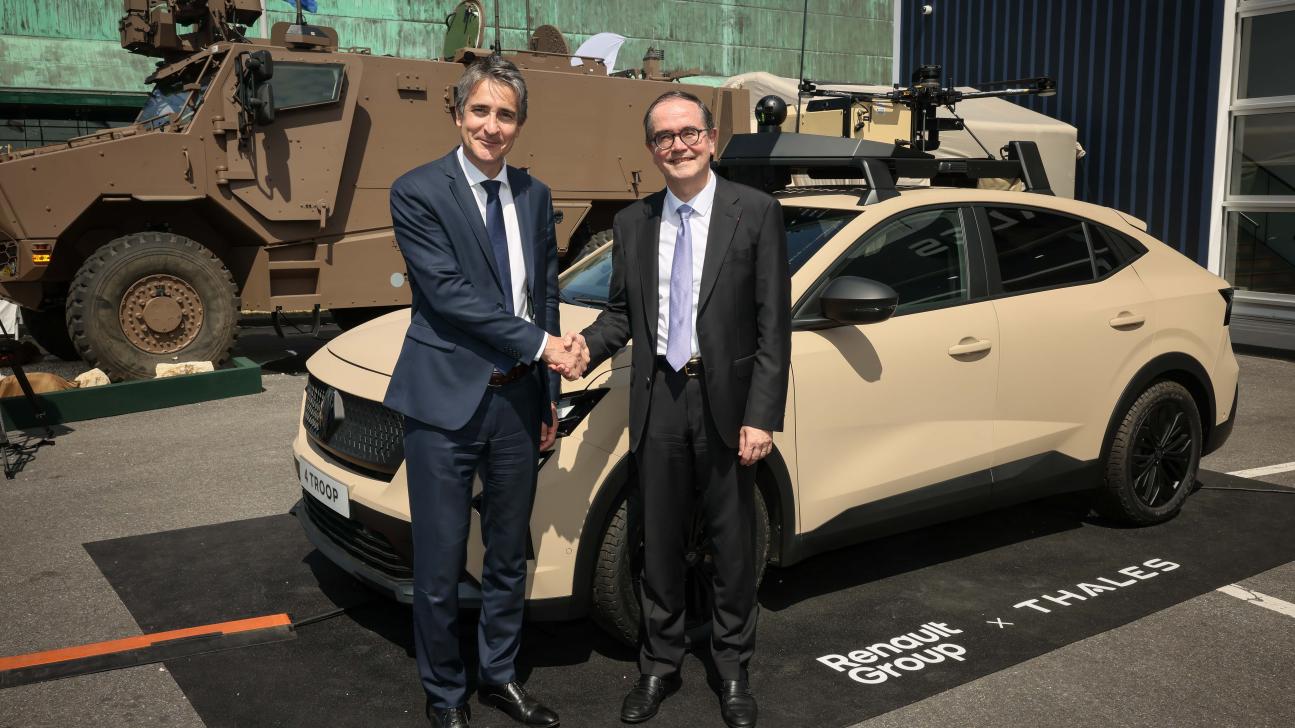
French automakers are entering drone production as governments look to build resilient manufacturing capacity for autonomous systems.
(image copyright Thales, 2026)
France’s latest effort to expand domestic drone production may say less about drones than about factories.
A series of partnerships announced this summer pairs major automotive companies with drone manufacturers, using France’s industrial base to scale production of autonomous systems. The approach reflects a broader shift across Europe and North America as governments strengthen domestic manufacturing for both commercial and defense technologies.
Rather than building new facilities, France is leveraging one of its greatest industrial strengths: automotive manufacturing.
Manufacturing at Scale
The French initiative brings together established automakers, automotive suppliers, and drone companies.
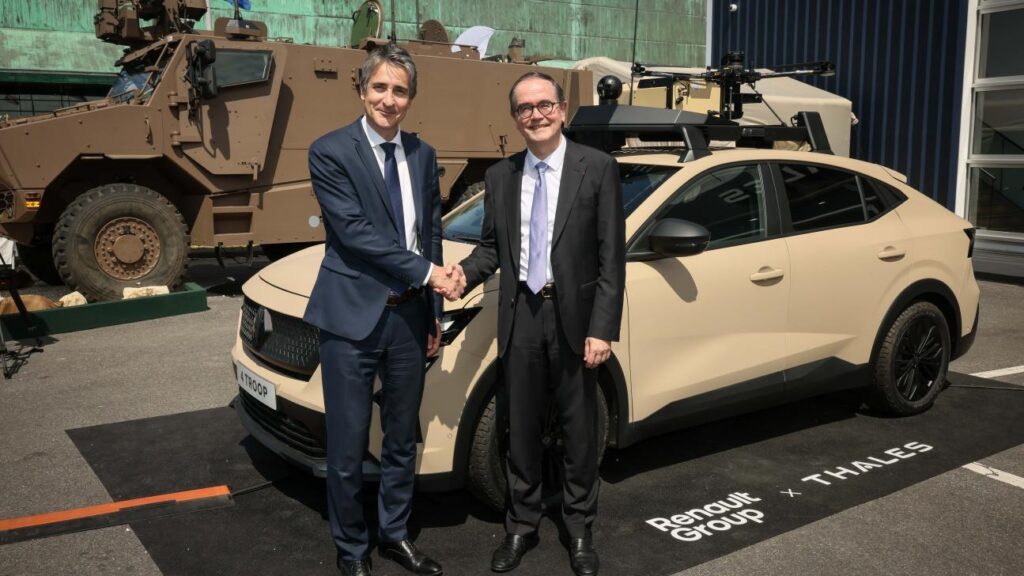
Renault is working with Thales to redesign the Toutatis loitering munition for automotive-style production. Reuters reports the redesign reduces the number of components by about 40% and replaces extensive 3D printing with injection-molded parts, with production targeted at roughly 1,000 units per month beginning in 2027.
Drone manufacturer Delair has partnered with automotive supplier Schaeffler to establish a production line expected to manufacture about 100 drones per day by November. Valeo will produce electric motors for Harmattan AI, while Forvia is expanding work on interceptor drones and counter-UAS technologies.
The partnerships focus less on designing aircraft than on building them efficiently.
Automotive manufacturers bring mature production lines, quality systems, supplier networks, and logistics expertise. Those capabilities can help expand drone production far more quickly than building new manufacturing capacity from scratch.
From Innovation to Industrial Capacity
The French announcement mirrors a broader change in the drone industry.
At AUVSI XPONENTIAL 2026 industry leaders increasingly emphasized manufacturing capacity, trusted supply chains, and operational deployment alongside technological innovation.
As AUVSI President and CEO Michael Robbins commented, “The center of gravity is shifting from invention alone to integration, manufacturing, trust, and execution.”
Detroit itself underscored that message. Long identified with automotive manufacturing, the city highlighted the growing importance of industrial capacity as demand for autonomous systems increases. It was a symbolic choice: a reminder of the manufacturing strength that can be leveraged to support the defense and commercial appetite for sovereign drone systems.
Building an Alternative Supply Chain
France’s strategy also addresses a challenge facing many Western governments.
China’s leadership in drone manufacturing rests not only on successful drone companies, but on an integrated ecosystem of suppliers, electronics, batteries, motors, and high-volume production.
Designing competitive drones is only part of the equation. Manufacturing them at scale is equally important.
Existing automotive factories offer a practical starting point. They already have skilled workers, automated equipment, established supplier relationships, and proven quality systems, allowing production to ramp more quickly than entirely new facilities.
Manufacturing capacity alone will not create an independent supply chain. Secure sources for batteries, semiconductors, flight controllers, sensors, cameras, communications systems, and software remain equally important.
A Broader Industrial Trend
Increasingly, drone manufacturing is identified as industrial policy.
The United States, the United Kingdom, and other allied nations have introduced initiatives to strengthen domestic drone production and secure critical supply chains. While the approaches differ, the objective is increasingly the same: building the industrial capacity to support autonomous systems at scale.
Reuters notes that French officials are focused less on stockpiling drones than on ensuring factories can rapidly increase production when needed. In a market where technology evolves quickly, manufacturing capacity may prove more valuable than inventory.
France’s latest partnerships suggest that the next competitive advantage may lie not only in designing better drones, but in building the industrial base to produce them quickly, reliably, and at scale.
Read more:

Miriam McNabb is the Editor-in-Chief of DRONELIFE and CEO of JobForDrones, a professional drone services marketplace, and a fascinated observer of the emerging drone industry and the regulatory environment for drones. Miriam has penned over 3,000 articles focused on the commercial drone space and is an international speaker and recognized figure in the industry. Miriam has a degree from the University of Chicago and over 20 years of experience in high tech sales and marketing for new technologies.
For drone industry consulting or writing, Email Miriam.
TWITTER:@spaldingbarker
Subscribe to DroneLife here.

