


Upgrading from a factory tire spec can improve handling, braking, tire life, and overall vehicle safety. The California Energy Commission’s proposed “Replacement Tire Efficiency Program” could change all that, however, requiring aftermarket tires to meet the same efficiency standards as the tires that originally came on your car. With some exceptions, tires that don’t meet the new efficiency standards would not be allowed to be sold in California.
Back when the federal government cared about fuel economy, manufacturers would stop at nothing to meet CAFE standards. They used tires optimized for low rolling resistance and maximum efficiency. This often came at the cost of grip and tread life, which is why many OEM tires have a reputation for mediocre performance and a short lifespan. Fortunately, the aftermarket exists, and a wide variety of tires are available to suit our particular needs.
Tires are the best bang-for-your-buck modification, and they can completely transform how your car performs. Performance enthusiasts can get super grippy tires that ignore efficiency and tread life. Off-roaders can get big blocky knobby tires that work great in the loose stuff but roar on pavement and drop MPGs. Commuters can get a long-life all-season tire that lasts for upwards of 60,000 miles, saving time and money on frequent replacements. All that could come to an end in California under this proposal.
Half the lifespan means twice as many tires
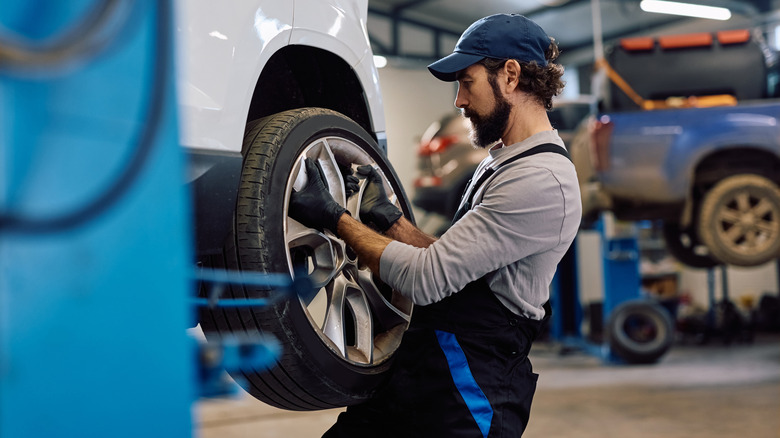
One of the main problems is that the proposal expects tires, regardless of their intended purpose, to meet the same efficiency standards as tires optimized for efficiency above all else. Car And Driver explains why this doesn’t work:
Tire manufacturers, along with the automakers they work with, generally tune factory-equipped tires with a lower rolling resistance and a lower tread depth than their aftermarket equivalents. Take the Hankook Kinergy GT all-season tire. The 195/65R-15 tire that’s standard on the Hyundai Elantra weighs 16.9 pounds and comes with 8.5/32″ of tread depth. The replacement tire in the same exact size weighs 17.9 pounds and comes with 10/32″ of tread depth and gets a 70,000-mile warranty, while the OE tire doesn’t get any warranty.
If you’ve ever purchased a brand new car and felt like the OEM tires didn’t last as long as aftermarket options, that’s probably why. From The Auto Wire:
American consumers have become accustomed to all-season tires that can last roughly 60,000 to 65,000 miles. According to the information surrounding the proposal, the European-standard tires that would effectively be favored under the new framework average closer to 27,000 miles.
With half the lifespan, that means we’ll be replacing our tires twice as frequently, doubling the number of tires getting made, used, and disposed afterward. In its quest for maximum efficiency, the California Energy Commission seems to have ignored the big picture and the larger negative environmental impact that twice as many junk tires would cause. The proposal pays lip service to drivers saving money with more-efficient tires (they say $179 over the course of four years), but that doesn’t factor into the calculations that we’ll need to buy tires much more frequently.
Enthusiasts may lose out
California auto enthusiasts are concerned that, if this proposed program be comes law, it will prevent them from being able to buy tires that match their cars’ performance potential. For example, the original Scion FR-S, Toyota 86, and Subaru BRZ came with what owners often called “Prius tires,” the same Michelin Primacy HP tires that also came with certain trim levels of the Toyota Prius. They were efficient tires, and great for drifting at low speeds, but otherwise their lack of grip seriously held back the car’s potential. Switching to Michelin Pilot Super Sports on wider wheels made my own BRZ feel like a completely different car, one far more capable than the car I drove off the showroom floor.
That simple and effective upgrade may not be possible if the California proposal becomes law. According to the proposal, specialty tires made in quantities less than 15,000 units per SKU would be exempt, meaning that low-production racing tires would probably remain available. However, some of the more popular and best high-performance tires available today, like the Michelin Pilot Sport 4 S, may not be.
Even everyday drivers would suffer, particularly when it comes to wet weather performance. The proposal also sets a minimum performance standard for wet grip on replacement tires, but Grassroots Motorsports tire editor Andy Hollis describes the problem here best:
“Low rolling resistance and wet grip are typically diametrically opposed,” Andy reminds us. “Personally, I’d rather err on the side of safety in inclement conditions even if it costs some fuel efficiency.
“Nobody’s going to trumpet their improved fuel mileage when they are sliding off the road in a downpour,” Andy continues. “You can pry my Conti ECS02s from my cold, dead hands.”
Even though it might be well intentioned, the Replacement Tire Efficiency Program would force Californians to spend money twice as often to buy worse-performing tires. And if emission standards are any indication, it’s California that sets the standards manufacturers go by, not the federal government, so regulations in the state could affect the supply and sale of tires nationwide. It’s still a proposal at this time, so nothing is for sure just yet, but there’s a public hearing on the proposal coming up on Wednesday, June 10th, and I suspect a lot of enthusiasts will be in attendance.

