


Electric aircraft developer argues that economics, infrastructure, and practical missions are bringing UAM closer to commercial reality.
While much of the advanced air mobility discussion has focused on future passenger services, BETA Technologies is making a broader case. The company argues that electric aviation can succeed by solving practical transportation challenges first.
Speaking at the Korea Drone and UAM Expo in Incheon last week, Patrick Buckles, Regional Head of Aircraft Sales at BETA Technologies, outlined the company’s strategy. BETA combines electric aircraft, charging infrastructure, and pilot training to support commercial and public service missions.
Building an Electric Aviation Ecosystem
Founded in 2017, BETA has built its approach around three core areas: electric aircraft, multimodal charging infrastructure, and enabling systems. Those systems include electric propulsion, flight controls, and battery technology.
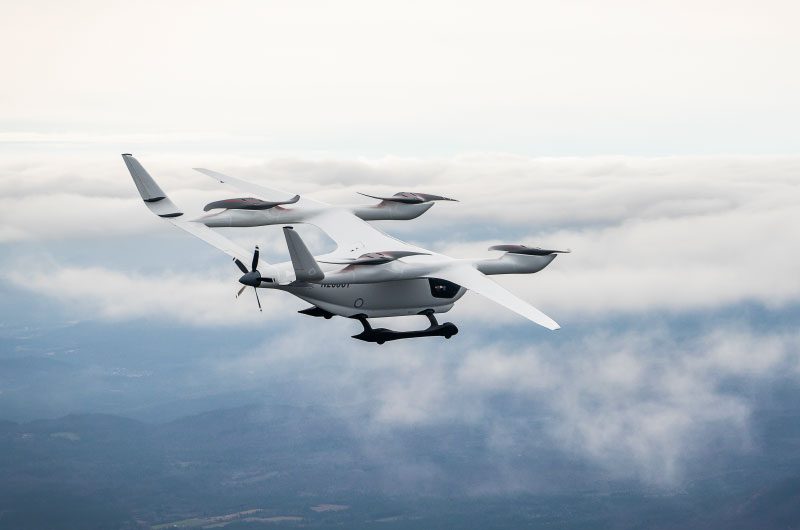
According to Buckles, the company has now flown more than 300,000 kilometers. BETA is targeting cargo, defense, medical transport, and passenger applications.
The company is developing two aircraft platforms. The ALIA CTOL uses conventional takeoff and landing, while the ALIA VTOL can take off and land vertically.
The two aircraft share a high level of commonality. BETA says that common design supports simplicity, safety, and easier operation.
The Economic Case for Electric Flight
Rather than emphasizing futuristic concepts, Buckles focused on the operational advantages that could make electric aviation economically viable.
Electric aircraft can offer significantly lower energy costs than conventional aircraft. Buckles also said electric engine maintenance costs are about one-third of those associated with combustion engines.
Simpler powertrains and fewer mechanical systems may also improve reliability. At the same time, advances in battery technology could continue to increase aircraft range and improve operating economics.
Zero operational emissions and lower noise levels may also help electric aircraft operate closer to communities.
Noise reduction could prove especially important for public acceptance. Buckles noted that quieter operations, compared with helicopters, could reduce community concerns and help accelerate adoption.
That advantage may support missions such as medical transport into rural or isolated areas. However, Buckles emphasized that aircraft used for these missions must also be weather resilient and reliable.
Charging Infrastructure Beyond Aviation
Infrastructure is another pillar of BETA’s strategy.
The company currently operates approximately 60 charging sites and plans to more than double that network next year. Because the chargers can also serve ground electric vehicles, the infrastructure supports a broader electric transportation ecosystem.
That shared-use model could help BETA demonstrate demand and build charging capacity before electric aircraft operations reach larger scale.
Moving From Demonstrations to Deployment
Buckles pointed to several real-world programs as evidence that the industry is moving beyond early demonstrations.
He cited recent FAA-supported organ transport operations, postal deliveries in Scotland, and demonstration flights in Japan.
BETA also plans to deploy 20 aircraft in Korea through work with UI Helicopter and Skyports Infrastructure. Buckles said the deployment will help show that electric aviation is “really happening at scale.”
Together, these programs support BETA’s broader argument: advanced air mobility may develop first through practical regional missions, rather than through large urban passenger networks.
Cargo, medical transport, defense, and remote-area services could provide the early operating experience needed to establish the aircraft, infrastructure, and public confidence required for wider adoption.
Read more:

Miriam McNabb is the Editor-in-Chief of DRONELIFE and CEO of JobForDrones, a professional drone services marketplace, and a fascinated observer of the emerging drone industry and the regulatory environment for drones. Miriam has penned over 3,000 articles focused on the commercial drone space and is an international speaker and recognized figure in the industry. Miriam has a degree from the University of Chicago and over 20 years of experience in high tech sales and marketing for new technologies.
For drone industry consulting or writing, Email Miriam.
TWITTER:@spaldingbarker
Subscribe to DroneLife here.

