


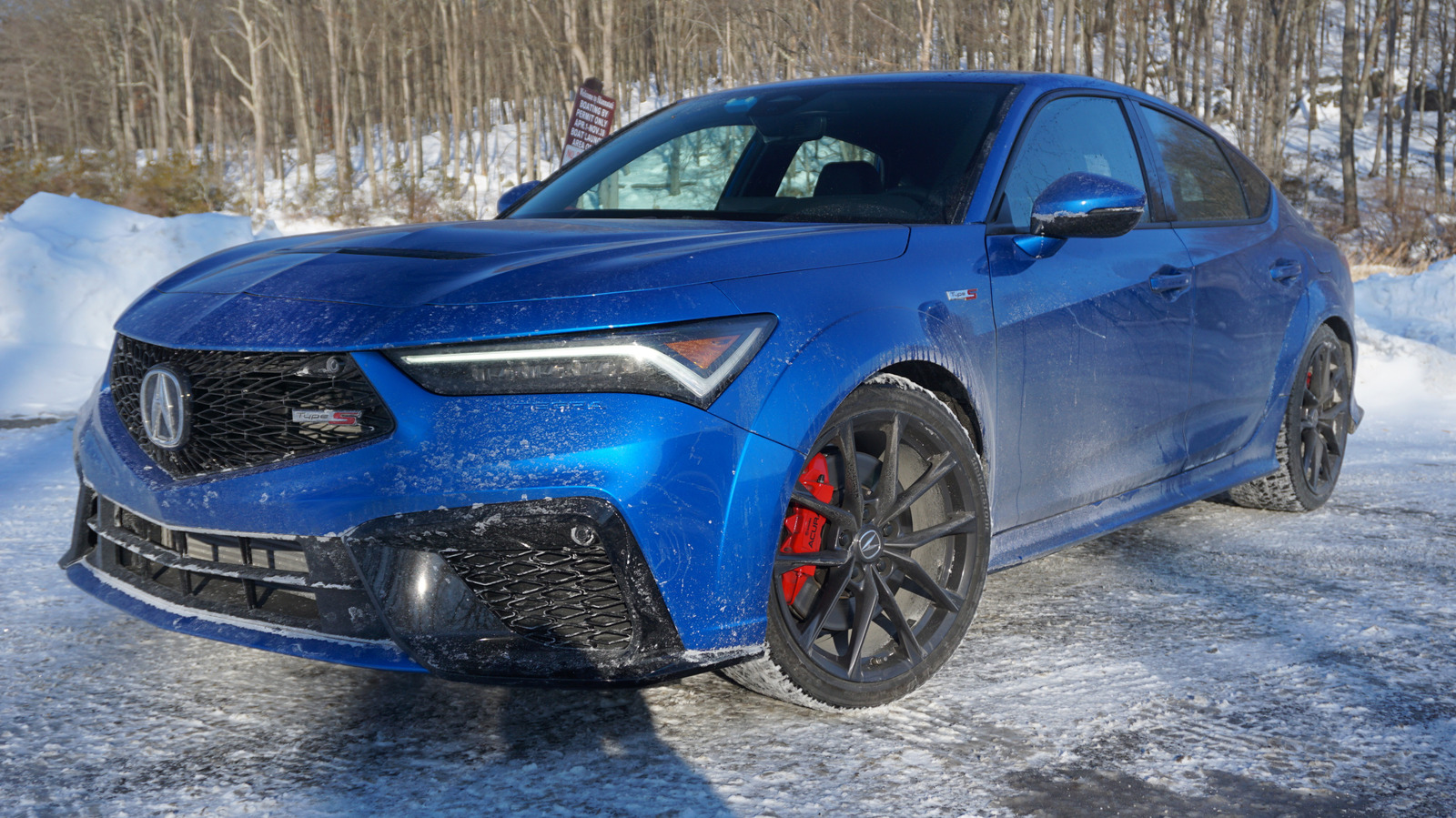
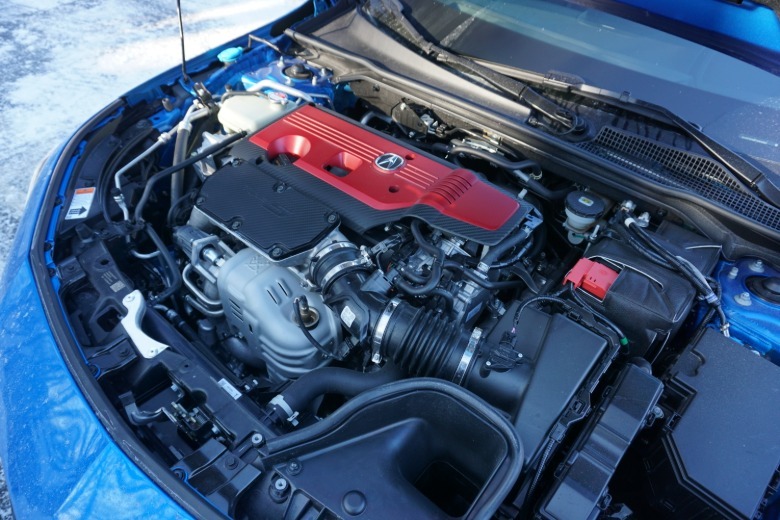
Even though the Integra Type S has been on sale for three years without too many updates, it’s still just as brilliant as when I first drove it back in October of 2023. That’s thanks mostly to its wonderful little turbocharged 2.0-liter inline-4 engine that sends 320 horsepower and 310 pound-feet of torque through a close-ratio six-speed manual transmission and limited-slip differential to the aforementioned front wheels. I may have changed a lot in the 28 months since I last drove this car, but it sure hasn’t. Yeah, there’s a new paint color to pick from, and the price has gone up ever-so-slightly, but in principle the Integra is exactly the same — and that’s a great thing, because it means that its driving characteristics haven’t changed.
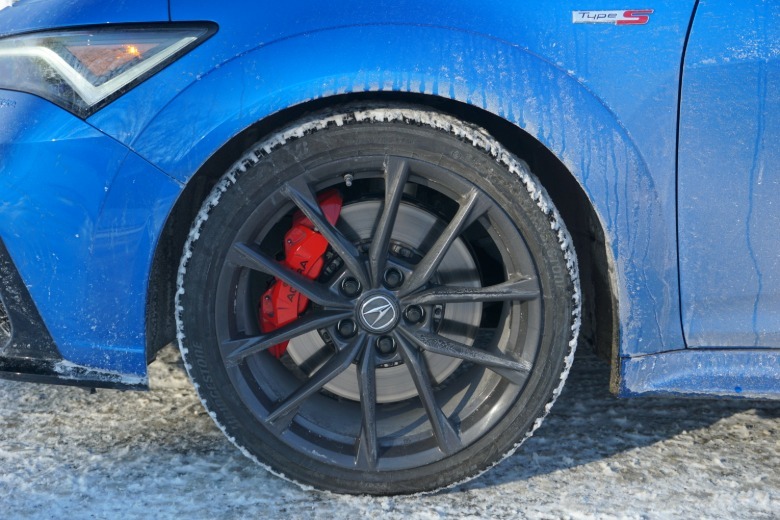
During my week with the ITS, I was able to put it through its paces in totally dry weather, rain, snow, and that kind of slushy awfulness that only exists a day after it snows in New York. While the Teggy didn’t put up a fight when it came to tackling varying conditions, the Blizzaks it was fitted with occasionally had some trouble hooking up. When there was the slightest hint of wetness on the ground, they’d flail around and make a fool of themselves like a college freshman who finally convinced his crush to come back to his dorm and listen to Death Cab for Cutie’s “Plans” with the lights dimmed.
 Andy Kalmowitz / Jalopnik
At low speeds and in more agreeable conditions, traction and stability were pretty alright. I mean, I wasn’t expecting the Blizzaks to be Michelin Pilot Cup 2s by any stretch of the imagination, but they held their own. Though I will say that they did make the Integra Type S’ already-stiff suspension feel that much stiffer, which was incredibly noticeable whenever I failed to dodge a pothole in The City. Messing around with the car’s adaptive dampers didn’t do too much to alleviate this.
The faster I went and the harder I pushed, the less I was really able to enjoy the ITS for what it is: a balls-to-the-wall fun machine. Yes, it could still make it around a corner with a moderate amount of delicacy, but I spent far more time trying to manage the understeer and the fact that the front wheels just patently refused to hook up in any meaningful way. Between VTEC and the turbocharger finally getting into boost, all hard acceleration above 3,500 RPM was immediately neutered by catastrophic amounts of wheelspin. Of course, if you’re a goofus maloofus like me, that can be quite fun, but it doesn’t exactly make for fast driving. Hell, if the road was on the wrong side of damp, the ITS would spin the tires in second and even chirp them during the shift to third. That just adds to the excitement and pageantry of using its manual transmission, though, which is in a class of its own when it comes to feeling, precision, engagement, and all the other clichés old journalists like to use.
 Andy Kalmowitz / Jalopnik
To be ever-so-slightly fair to this particular car, when it was dropped off to me, it had nearly 2,900 miles on it. That might not sound like a lot, but my industry counterparts have a habit of running through tires rather quickly. Perhaps a fresher set of Blizzaks would have held up better to everything I threw at it. I suppose we will never know. At the very least, the car’s 13.8-inch four-piston front Brembo brakes did a great job of slowing it down, regardless of the weather.

