


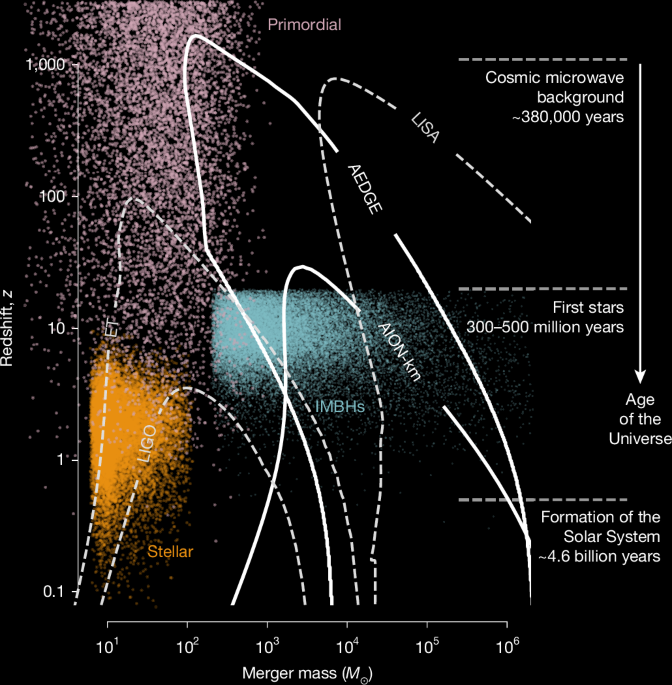
Cooling sequence
The cold-atom apparatus used in this experiment has previously been described in refs. 42,56. To prepare samples of cold 87Sr, the atoms are first collected over 1.5 s in a blue three-dimensional MOT that uses the 1S0 → 1P1 transition at 461 nm and a field gradient of 3.5 mT cm−1. Atoms that leak into the metastable 3P2 manifold are recycled into the MOT using repump lasers at 679 nm and 707 nm. For efficient repumping of 87Sr, frequency sidebands at 585 MHz and 487 MHz are applied to the 707-nm light using an electro-optic modulator to create frequency components near-resonant with transitions from all five hyperfine manifolds of 3P2 (ref. 57).
When the blue MOT is switched off, the atoms are captured in a red MOT operating on the 1S0 F = 9/2 to \(^3P_1\,F^\prime =11/2\) transition at 689 nm, using a field gradient of 390 μT cm−1. Sidebands at 1,463.265 MHz are applied to the 689-nm light using a resonant electro-optic modulator, such that the F = 9/2 to \(F^\prime =9/2\) transition stirs the atoms between Zeeman sublevels of the ground state, thus mitigating losses into sublevels where atoms are weakly confined28. During the first 220 ms in the red MOT, an intensity of 1,800Isat is used for each of the six MOT beams, where Isat = 3 μW cm−2 is the saturation intensity of the 689-nm transition. To capture the wide range of Doppler-shifted atoms released from the blue MOT, a sawtooth-wave modulation is applied to the 689-nm light at a sweep frequency of 20 nm and a peak-to-peak sweep range of 6 MHz (ref. 58). For the following 100 nm, while in the ‘narrowband’ red MOT, the sawtooth frequency modulation is switched off and the intensities of the six MOT beams are ramped linearly from 490Isat to 40Isat. To help support the atoms against the force of gravity, a seventh, unbalanced MOT beam—the ‘up’ beam—is introduced in the vertical direction during the narrowband MOT. The up beam is necessary for creating narrowband red MOTs below 100Isat without causing significant atom loss. Upon completion of the narrowband red MOT, the atoms have a temperature of 2 μK and are compressed into a region comparable in size with the optical dipole trap.
Dipole trap and state preparation
Two crossed optical dipole traps, separated vertically by 1 mm, are formed by separate 2.5-W horizontal beams at 1,064 nm with horizontal and vertical 1/e2 radii of 220 μm and 23 μm, respectively, crossed with a shared 840-mW vertical beam at 813 nm with 1/e2 radii of 60 μm in both transverse axes. Overlapping with the top crossed dipole trap, a 4-mW transparency beam at 488 nm, detuned by 25 GHz from the 5s5p 3P1 → 5s5d 3D2 transition, is applied with a 1/e2 radius of 40 μm to protect the atoms from scattered 689-nm light after they are loaded into the top crossed dipole trap region.
Immediately after the free-space red MOT stages described above, the dipole trapping beams, the transparency beam and repumpers at 679 nm and 707 nm are switched on; the red MOT is then held for 100 ms in a ‘top-trap loading’ stage, during which the bias magnetic fields, beam intensities and detunings of the red MOT are optimized to load the atoms into the upper of the two dipole traps. During the top-trap loading stage, the red MOT intensity is linearly ramped from 20Isat to 4Isat to steadily reduce the atom temperature. Next, to load the bottom optical dipole trap, the red MOT is released for 3 ms by switching off the 689-nm beams. During this time, the cold atoms already in the top trap are held in place, while the hotter atoms fall towards the bottom trap. While the atoms are falling, the vertical bias magnetic field is stepped such that the zero of the quadrupole magnetic field is close to the bottom dipole trap. After 3 ms of free fall, the red MOT beams are switched back on for 100 ms in a ‘bottom-trap loading’ stage using the same parameters as the top-trap loading stage, except for the different bias magnetic field. All but the hottest atoms in the top trap remain in the top trap during the bottom-trap loading stage, as they are protected by the 488-nm transparency beam against scattered 689-nm light.
After both dipole traps are loaded, the MOT beams are switched off, a horizontal bias field is applied and the trapped atoms are optically pumped into the stretched state MF = 9/2 by applying a horizontal bias field of 38 μT and delivering a 20-ms pulse of circularly polarized light at 689 nm, resonant with the 1S0 F = 9/2 to 3P1 \(F^\prime \) = 9/2 transition. During the optical pumping, sawtooth-wave frequency modulation is applied to the 689-nm light at a rate of 30 kHz over a range of 6 MHz. Finally, all beams except the dipole trap are switched off, and the bias magnetic field is adiabatically ramped to the final field used for atom interferometry: 31 μT aligned with the linear polarization of the vertical 698-nm clock beam.
Velocity selection on the clock transition
The clock beam at 698 nm propagates vertically upwards through both dipole trap regions with a waist of 600 μm. The clock laser linewidth is verified against an independent cavity-stabilized laser to ensure that it is below 2 Hz before delivery of the light to atoms through an uncompensated 10-m fibre42. Clock spectroscopy sequences are carried out immediately after atoms are released from both dipole traps. The excitation fraction is detected using a 200-μs fluorescence pulse at 461 nm to detect the number of atoms in the ground state 1S0, which is followed by 3.5-ms repumping pulses at 679 nm and 707 nm and another 200-μs fluorescence pulse at 461 nm to detect atoms that are in the 3P0 state after the interferometer sequence. Scattered light from each 461-nm spectroscopy pulse is gathered in separate exposures of an electron-multiplying charge-coupled device (EMCCD) camera (Andor iXon Ultra 897), and a separate EMCCD image without atoms present is used to subtract background counts.
At the maximum available clock power of 640 mW, a Rabi π-pulse time of 44 μs is measured. However, the clock transition was observed to have a peak excitation fraction of 0.3 and a Doppler-broadened linewidth of 60 kHz, which is considerably larger than the 20-kHz Fourier limit. To improve the fidelity of the Rabi pulses in the atom-interferometer sequence, a velocity selection procedure is used. The clock beam is pulsed on for 200 μs at 20 mW, which implements a π pulse that excites the slowest atoms to the upper clock state 3P0. The atoms in the ground state are then pushed away using a 500-μs pulse at 461 nm, leaving only the slow atoms in the 3P0 state to enter the interferometer sequence. After this velocity selection sequence, a resonant, 44-μs Rabi π pulse yielded a peak de-excitation fraction of 90%.
Clock atom interferometry
The clock atom interferometry consists of a sequence of three resonant pulses on the 698-nm clock transition, with pulse areas π/2 − π − π/2, a π-pulse time tπ = 44 μs and a dark time T = 200 μs between each consecutive pulse. For the data in Fig. 4, the phase of the clock light is always stepped deterministically during the dark times such that the phases of the first, second and third pulses are 0, ϕ and 4ϕ, respectively, with ϕ ranging from 0 to 2π in 100 steps in a randomized order. Each data point in the right-hand side of Fig. 4 is the result of 2 × 100 samples, interleaved between HLN and LLN samples. For the HLN samples, extra phase steps were applied during the interferometer dark times (Fig. 3). The HLN samples were drawn independently from a Gaussian distribution with a standard deviation of 4π rad and mean of 0 rad.
It is important to distinguish between the two types of randomization employed in this work. For both the LLN and HLN datasets, the clock laser phase is scanned deterministically through 100 values in randomized order; this scan-order randomization ensures that any spurious time-oscillatory signals, such as 50 Hz from room lights, are not aliased to look like apparent fringes. For the HLN dataset, we additionally applied large, uncorrelated phase jumps between shots, which fully randomize the absolute phase of each individual interferometer on a shot-by-shot basis. This per-shot phase randomization mimics the regime expected in long-baseline atom interferometers, where integrated laser frequency noise over multi-second interrogation times will produce phase excursions of many radians (see ‘Laser phase noise estimate for a kilometre-scale detector’ section). Under these conditions, a single atom interferometer retains no recoverable phase information, so this provides a stringent test of the noise rejection capability of differential measurements. The phase randomization fully masks the fringes in each individual interferometer but does not affect the measurement of the relative phase of the two interferometers.
Laser phase noise estimate for a kilometre-scale detector
The phase noise imparted onto the atoms by the laser can generally be calculated from the spectral density of the frequency fluctuations in the laser beam59. In our prototype, the laser phase imprinted on each atom interferometer in one repetition of the interferometer sequence beginning at time t is approximately ϕlaser = φ(t) − 2φ(t + T) + φ(t + 2T), where φ(t) is the time-dependent phase of the laser field oscillating as \(\cos (kz-\omega _t+\varphi (t))\). This approximation holds in the limit of short beam-splitter and mirror pulses separated by a dark time T (ref. 35). Treating φ(t) as a stationary noise process with a one-sided power spectral density Sφ(f) and applying the optical Wiener–Khinchin theorem60, we observe a variance in the interferometer laser phase:
$$\beginarrayl\langle \phi _\mathrmlaser^2\rangle \,=\,\langle (\varphi (t)-2\varphi (t+T)+\varphi (t+2T))^2\rangle \\ \,=\,6\langle \varphi (t)\varphi (t)\rangle -8\langle \varphi (t)\varphi (t+T)\rangle +2\langle \varphi (t)\varphi (t+2T)\rangle \\ \,=\,\int _^\infty S_\varphi (f)[6-8\,\cos (2\rm\pi fT)+2\,\cos (4\rm\pi fT)]\,\rmdf.\endarray$$
For a future long-baseline atom interferometer, we model the clock laser as a thermal-noise-limited, cavity-stabilized laser61 with a flicker frequency noise spectrum of the form \(S_\varphi (f)=S_\varphi (f=1\,\rmHz)\times (1\rmHz/f)^3\). Propagating this functional form through the above equation, the standard deviation of the interferometer laser phase simplifies as \(\sqrt\langle \phi _\mathrmlaser^2\rangle =4\rm\pi T\sqrt\mathrmln(2)\sqrtS_\varphi (1\,\mathrmHz)\). To provide an optimistic numerical estimate of the laser phase, we assume a laser noise spectrum at the limit of current laser technology, with fractional frequency noise Sy(f) = (10−33/f)/Hz (ref. 62). For the 87Sr clock transition at 698 nm, the corresponding noise spectral density of the clock laser phase fluctuations would be \(\sqrtS_\varphi (1\,\rmHz)\) = 14 mrad/\(\sqrt\rmHz\), resulting in a standard deviation for the interferometer laser phase \(\sqrt\langle \phi _\rmlaser^2\rangle =710\,\rmmrad\) for T = 5 s, the interferometer time projected for a kilometre-scale detector1. Even for an interferometer repetition rate of several shots per second, the laser phase noise imprinted on each individual interferometer is, therefore, far above the level needed to reach the ultimate target phase resolution of \(1^5\,\rmrad/\sqrt\rmHz\) (ref. 1), highlighting the need for laser noise cancellation in the differential phase δϕ.
Compounding the requirements for laser phase noise cancellation, a large momentum transfer of n ≈ 104 photon recoils is targeted for long-baseline detectors1, which enhances detector sensitivity but imprints laser phase noise n times onto each atom interferometer35. Taking into account the large momentum transfer, long-baseline interferometers will probably be in the fully phase-randomized regime explored by the HLN dataset in this work.
Differential bias phase
To induce a consistent relative phase offset between the top and bottom atom interferometers, another, horizontal 689-nm Stark-shifting pulse is applied to only the top interferometer for 30 μs during the gap between the first π/2 pulse and the middle π pulse. The Stark-shifting beam is detuned by −80 MHz from the 1S0 F = 9/2 to 3P1 F′ = 11/2 transition, with a waist of 500 μm and a power of 1 mW, which induces a phase shift specifically on atoms in the ground state (the lower arm) of the top interferometer. For the data in this paper, the Stark-shifting pulse is used to generate a bias differential phase ϕStark between the top and bottom interferometers, such that the data lie on a Lissajous ellipse (Fig. 4b) rather than a straight line and, thus, contain more information about the differential phase δϕ. A non-zero differential bias phase is required for efficient, low-error extraction of δϕ, whether δϕ is extracted using a maximum-likelihood estimator or the ellipse-fitting method. In a long-baseline detector, a dark matter or gravitational-wave signal would induce fluctuations in the ellipse fitting angle, on top of the static bias.
Experimental control
Electronic control signals are produced through the experimental control platform ARTIQ, which uses a field-programmable gate array63. The control software is written in Python and is available as open source at ref. 64.
Phase extraction
We extract both constant differential phases (used to quantify laser noise cancellation) and oscillatory-signal components using a unified unbinned maximum-likelihood analysis. For each experimental shot i, we modelled the measured excitation fractions (yA,i, yB,i) from the two interferometers A and B as noisy observations of sinusoidal interferometer responses that share a shot-dependent common phase ϕi but differ by a differential phase δϕ(ti). The common phase ϕi is treated as a nuisance parameter and marginalized to yield a likelihood that depends only on the differential phase. In practice, we use this marginalized likelihood for inference: we report point estimates from the maximization of the marginal likelihood and compute uncertainties from repeated Monte Carlo simulations performed with matching parameters and analysed using the same analysis pipeline, following a hybrid Bayesian–frequentist approach commonly used in precision measurements and particle physics.
The per-shot likelihood is obtained by numerical integration over the common phase using a uniform prior on [−π, π]:
$$\mathcalL_i=\int _-\rm\pi ^\rm\pi \frac\rmd\phi 2\rm\pi \,\mathcalN(\,y_\rmA,i| p_\rmA(\phi ),\sigma _\rmA,i^2)\,(\,y_\rmB,i| p_\rmB(\phi ,\rm\delta \phi _i),\sigma _\rmB,i^2),$$
(3)
where \(\mathcalN(\cdot | \mu ,\sigma ^2)\) denotes a Gaussian probability density. The response functions pA and pB are sinusoidal fringe models of the form \(p_\rmA(\phi )=p_0,\rmA+\frac\mathcalC_\mathcalA2\cos \,\phi \) and \(p_\rmB(\phi )=p_0,\rmB+\frac\mathcalC_\mathcalB2\cos \,(\phi +\rm\delta \phi )\), parameterized by offsets p0,A,B and contrasts \(\mathcalC_\\rmA,\rmB\\), with noise variance \(\sigma _\\rmA,\rmB\^2=p_\\rmA,\rmB\(1-p_\\rmA,\rmB\)/N_\\rmA,\rmB\\) describing the SQL resulting from the measured NA, B atoms in the two interferometers. This marginalization enables robust inference, even when individual interferometer fringes are fully washed out by laser phase noise.
Mode 1: differential-phase stability analysis
For the stability analysis (Allan deviation) presented in Fig. 4c, we estimated a piecewise constant δϕ over consecutive blocks of 141 shots.
Mode 2: oscillatory-signal analysis
For the oscillatory-signal searches presented in Fig. 5, we parameterized the differential phase as \(\rm\delta \phi (t)=\rm\delta \phi _+S\,\sin (\omega t)+C\,\cos (\omega t)\). This parameterization captures the leading-order differential-phase response expected from both gravitational waves and ultralight dark matter fields, which would induce coherent oscillations by modulating the effective light propagation time or the atomic transition frequency. Signal significance is quantified using a likelihood-ratio test statistic that compares the best-fitting model of the signal with the null hypothesis (C = S = 0). When scanning over frequency, we calibrate the null distribution of the test statistic with Monte Carlo simulations to account for the trials factor. In the absence of an injected signal, the framework correctly favours the null hypothesis. It, thus, provides a statistically well-defined reference for future sensitivity studies. C and S can be converted to amplitude A and phase χ using the formulas
$$A=\sqrtC^2+S^2,\,\,\chi =\mathrmatan\,2(-C/S).$$
The resolvable frequency band in the prototype is determined by the effective sampling interval in the experiment (set by the average shot cycle time) and the observation duration. At low frequencies, the sensitivity is limited by the finite run duration; at higher frequencies, it is limited by the shot rate and dead time. The injected-signal tests therefore probe the band where the prototype has statistical power over hour-to-day records. In a long-baseline detector, the same analysis framework applies, but the effective response and optimal band are engineered through the interrogation time, repetition rate and baseline to shift the instrumental peak sensitivity into the mid-frequency regime. Accordingly, the resolvable frequency band is instrument-dependent: the frequency band of the prototype implementation does not represent an intrinsic limitation of differential atom interferometry nor of the analysis framework itself.
Data filtering
The 461-nm, 689-nm and 698-nm laser locks were monitored throughout the experiment. Experiment runs in which one or more of these locks failed or in which the observed number of atoms in either trap was below a manually set threshold near 60% of the median number of atoms were considered invalid and excluded from the data.
Number of atoms
Atoms are detected at the end of atom-interferometer sequences through fluorescence imaging on an EMCCD camera. Under the assumption that fluorescence scales linearly with the number of atoms, the fluorescence signal can be converted to the number of atoms using a calibration derived from absorption imaging of clouds of atoms prepared under identical conditions as those used for the atom interferometry. The number of atoms N in the calibration dataset is extracted from the raw absorption images through the relation Nσ(ω) = ∫ OD(x, y) dx dy (ref. 65), where OD(x, y) is the optical depth of the sample at transverse position (x, y) in the absorption probe beam and σ(ω) is the absorption cross section of the 87Sr atoms at the laser frequency ω.
As the hyperfine shifts of the states 1P1 F = 7/2, 9/2 and 11/2 are respectively +37 MHz, −23 MHz and −6 MHz (ref. 66), which are significant compared with the 30.5-MHz natural linewidth of the 1P1 state67, the absorption cross section σ(ω) in 87Sr generally depends on the polarization and MF. To avoid any reliance on direct measurements of the polarization of our absorption probe light and the MF state of the atoms, we, instead, measured the absorption amplitudes of the three lines from 1S0 to 1P1 F = 7/2, 9/2 and 11/2 by carrying out spectroscopy over a ±120-MHz range of detunings using samples of atoms pumped into MF = 9/2 with the same preparation sequence used for calibrating the number of atoms and for the atom-interferometry datasets. We fitted the peak amplitudes σ7/2, σ9/2 and σ11/2 of the three Lorentzians to the absorption spectroscopy data using fixed literature values for the linewidths and the hyperfine splittings between the Lorentzians66,67. Finally, we calibrated the optical depth per unit atom using the identity that the sum of the peak absorption cross sections must match the resonant absorption cross section for the simpler isotopes with zero nuclear spin: ∑FσF = σ0 = 3λ2/2π (ref. 65). We obtained an uncertainty for the total number of atoms of 8% for the atom-interferometry datasets. This uncertainty is dominated by the uncertainty in the difference in the number of atoms between the calibration dataset and the fluorescence dataset.
For the combined HLN and LLN dataset, the median number of atoms in the top trap was 3,100(210) and in the bottom 2,040(160). The number of atoms in each trap fluctuated during the 61.9 h when the dataset was applied, with a maximum deviation of 15% from the median. No significant difference in the number of atoms was observed between shots with and without induced phase noise.
Extracting noise levels
To estimate any other form of noise in our measurement of δϕ caused by injecting laser noise, we applied the maximum-likelihood phase-extraction method independently to both the LLN and HLN datasets. The time series of phases extracted from 141-shot blocks is modelled as
$$\rm\delta \phi (t_i) \sim \mathcalN\,(\rm\delta \phi _,\sigma _\rm\delta \phi ^2),$$
where \(\mathcalN(\mu ,\sigma ^2)\) denotes a normal distribution with mean μ and standard deviation σ. We use a No-U Turn Markov-chain Monte Carlo method implemented in the PyMC package68 to sample from the posterior distribution of σδϕ. The mean and 68% credible intervals were σLLN = 3.69(19) mrad and σHLN = 3.89(20) mrad. To compare these with the standard deviations of Monte Carlo simulations with only SQL present (see ‘Monte Carlo SQL’ section), we calculated from these per-block standard deviations the standard error on the mean over the whole dataset, giving \(\sigma _\langle \rm\delta \phi _\mathrmLLN\rangle =260(13)\,\mathrm\mu rad\) and \(\sigma _\langle \rm\delta \phi _\mathrmHLN\rangle =275(14)\,\mathrm\mu rad\).
Theoretical SQL
We defined the SQL as the Cramer–Rao bound to the per-shot phase noise σδϕ, calculated using the simple likelihood model in equation (3) in which quantum projection noise is the only noise process included. The Cramer–Rao bound is a lower limit to σδϕ for any unbiased estimator of δϕ, regardless of the δϕ extraction technique used. It is used as a rigorous benchmark in differential atom interferometers and quantum sensors7,47. For the Cramer–Rao SQL calculation, we differentiate the log-likelihood with respect to variations in δϕ around a central parameter set, corresponding to the contrasts, number of atoms and mean δϕ extracted from a maximum-likelihood fit to the full dataset in Fig. 4. We also input the median for the measured number of atoms into the likelihood model. The dominant source of uncertainty in the Cramer–Rao SQL is the approximately 7% uncertainty in the calibration of the number of atoms. We calculated a standard deviation of 43.5(16) mrad per shot. Over the whole dataset of 28,312 shots, this results in a lower bound for the uncertainty in δϕ of 258(10) μrad.
Monte Carlo SQL
We validated the unbinned maximum-likelihood phase-extraction method and established the SQL reference using Monte Carlo simulations that replicated the experimental sampling and noise budget. Synthetic shots included the measured contrasts, mean numbers of atoms and their fluctuations, and the projection-noise-limited excitation read-out, with the same estimator applied as in the real data analysis. These tests verified that the estimator was unbiased and that the observed phase variance was consistent with quantum projection noise under the statistics for the measured number of atoms.
We generated 5,100 synthetic datasets such that the variation in the number of atoms was consistent with the uncertainty of the mean from the absorption method described above, the known shot-to-shot variation within datasets and zero other noise sources, as shown in Extended Data Fig. 1. Each dataset consisted of 28,312 simulated interferometer shots, each of which experienced contrasts of 0.81 and 0.84 for the two traps, and the median numbers of atoms were 3,100(210) and 2,040(160), respectively, which matches our real data. We included gaps in the simulated datasets to match the distribution of gaps in our true data. These gaps are caused by various experimental calibrations and outages. We verified that the recovered δϕ values are unbiased within the statistical uncertainty and that the nominal 68% intervals have the correct frequentist coverage. By calculating an overlapping Allan deviation for each simulation run and then considering the distribution of Allan deviations across all generated datasets, we report the 68% and 95% credible intervals for a differential interferometer limited only by atom shot noise (the SQL), as shown in Fig. 4c. In contrast to the theoretical calculation, the Monte Carlo ensembles reproduce the full experimentally observed distributions for the number of atoms, contrast and projection-noise-limited excitation read-out rather than only their mean values. The resulting SQL reference is, therefore, a prediction analysed with the same estimator as the data.
Statistical compatibility with the SQL prediction was assessed using two complementary tests applied to the Allan deviation in log-space. A global test statistic comparing the measured values with Monte Carlo ensembles at each averaging time yielded p = 0.82 for the HLN dataset and p = 0.65 for the LLN dataset, indicating that there was no significant deviation from the Monte Carlo SQL prediction. Additionally, the measured Allan deviation slopes (s = −0.465 for HLN and s = −0.463 for LLN) are consistent with the Monte Carlo SQL ensemble, which itself exhibits white-noise scaling (s =−0.5), with p = 0.45 and p = 0.43, respectively.

