


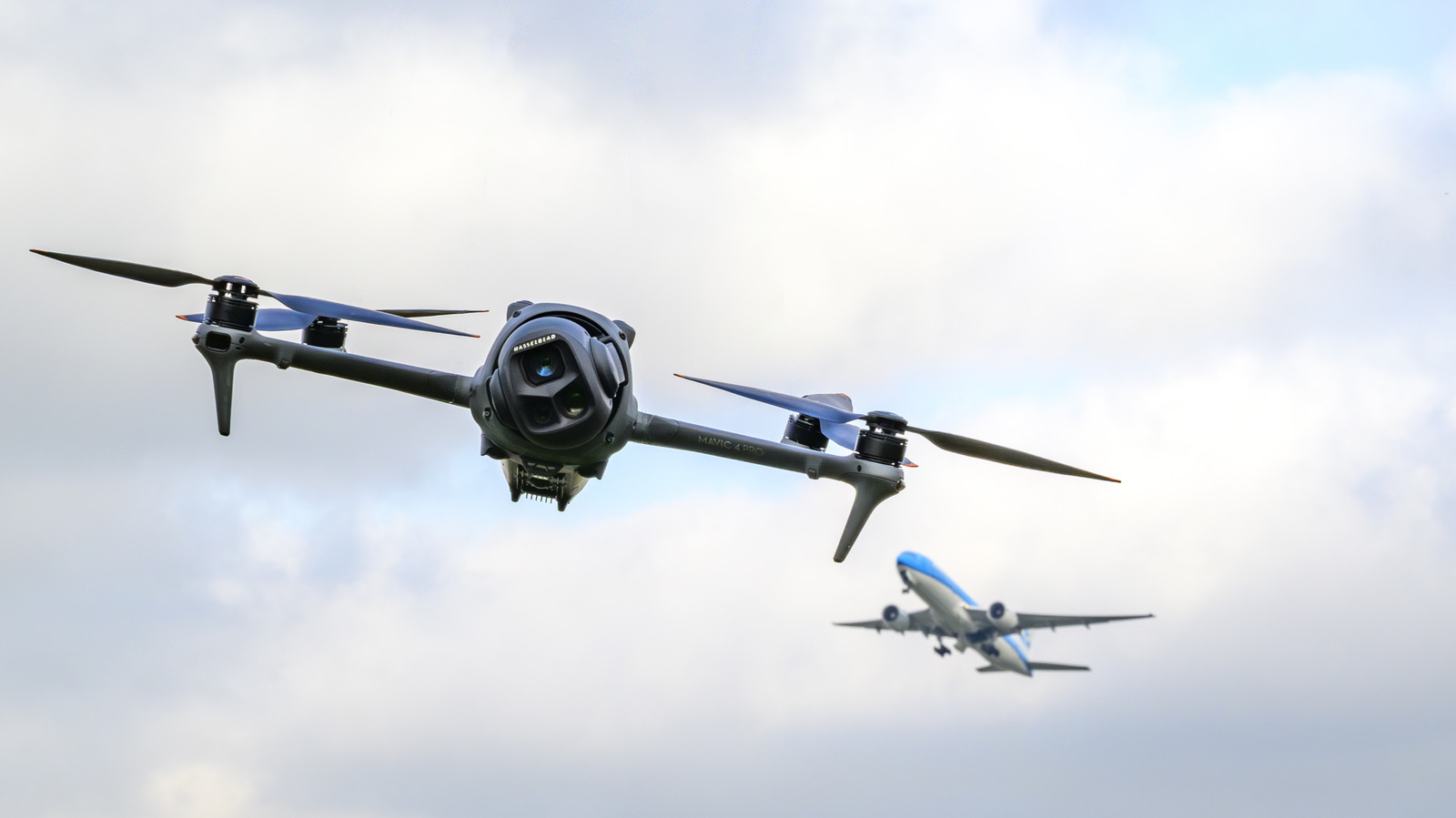
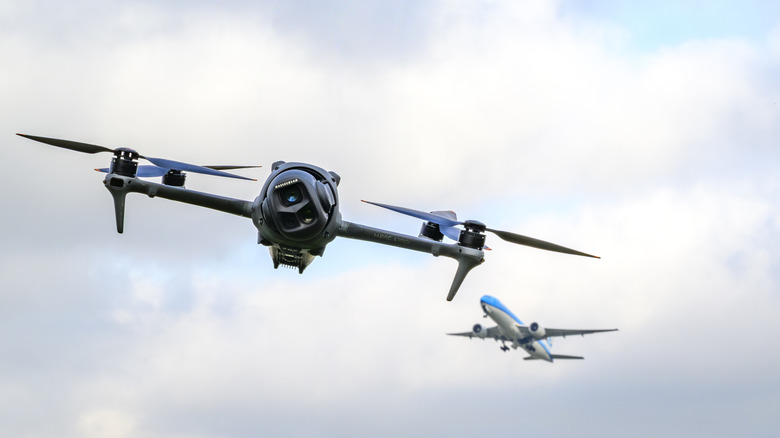
On a recent flight from San Francisco to San Diego, United flight 1980 reported to air traffic control that it might have hit a drone at 3,000 feet while coming in for landing. Fortunately, this incident didn’t disrupt the flight at all: landing went fine and all aboard are safe. In fact, a later inspection of the aircraft couldn’t find any damage, so it seems like the drone might have missed the Boeing 737 after all. Nevertheless, the event illustrates the growing danger that consumer drones pose, even outside of using them deliberately as weapons of war.
The Los Angeles Times has the details, including the flight crew’s insightful description of the offending drone: “It was red… it was shiny.” Well, if it’s going to threaten you and everyone aboard your plane, at least it looks good. But unfortunately, this sort of thing is only getting more common. Drones can’t legally fly above 400 feet, with some exceptions. Even those exceptions only let them fly a few extra hundred feet, though; without special permission from the FAA, there’s no reason a consumer drone should be at 3,000 feet. Yet a 2025 study by the FAA’s Assure center found that “many recorded flights exceeded 500 feet” and “a substantial number of sUAS [small unmanned aerial systems] flights occurred near airports.”
Why is this happening? Part of it may be drone operators that either don’t know or don’t care that they’re putting their toys (and, oh yeah, potentially hundreds of people) in harm’s way. But a growing part of it may be a change in policy from the biggest dronemaker in the world.
DJI jumps the geofence
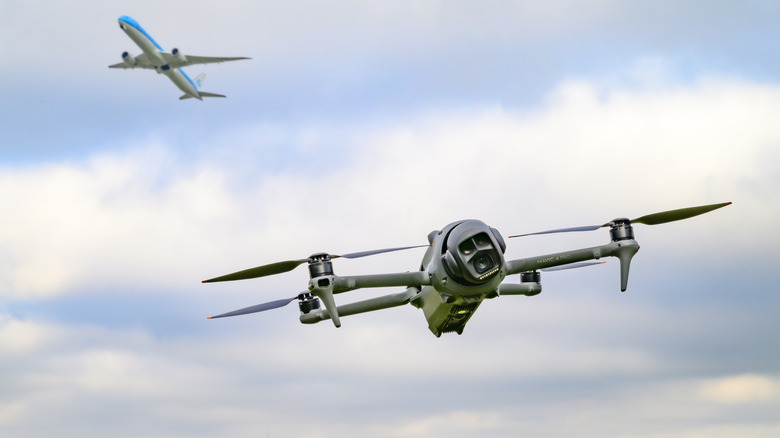
Many off-the-shelf drones are self-aware, in the sense that they know where they are and where they’re not supposed to be. They will automatically stop themselves from flying too high or into restricted airspace, such as a landing path or an airport, a system called “geofencing.” That’s a great safety feature for the unaware drone operator.
So great that Chinese manufacturer DJI decided to get rid of it for some reason. In January 2025, DJI informed users that a new software update would simply notify operators that they were flying where they shouldn’t, rather than automatically stopping the drone itself. This was “in line with regulatory principles of the operator bearing final responsibility,” meaning DJI isn’t legally liable, so why bother, I guess.
This one company absolutely dominates the consumer drone market: Assure’s study puts DJI at 86.3% of all detected models. If DJI has decided to tear down the geofence, that basically lets most drones in America fly free. Into airports, if they want.
Notably, the FCC banned the sale of new foreign-made drones in the U.S. earlier this year. This is something of a brute-force method of boosting domestic drone production, something that the Pentagon has been asking for. That might reduce DJI’s dominance of the skies and hopefully put a geofence back up. Then again, the ban is only for new models, so DJI can just keep on selling its older stuff, which was already pretty good.
Moral of the story: keep your drones under 400 feet, kids. You really, really don’t want to hit an airplane filled with people.

