


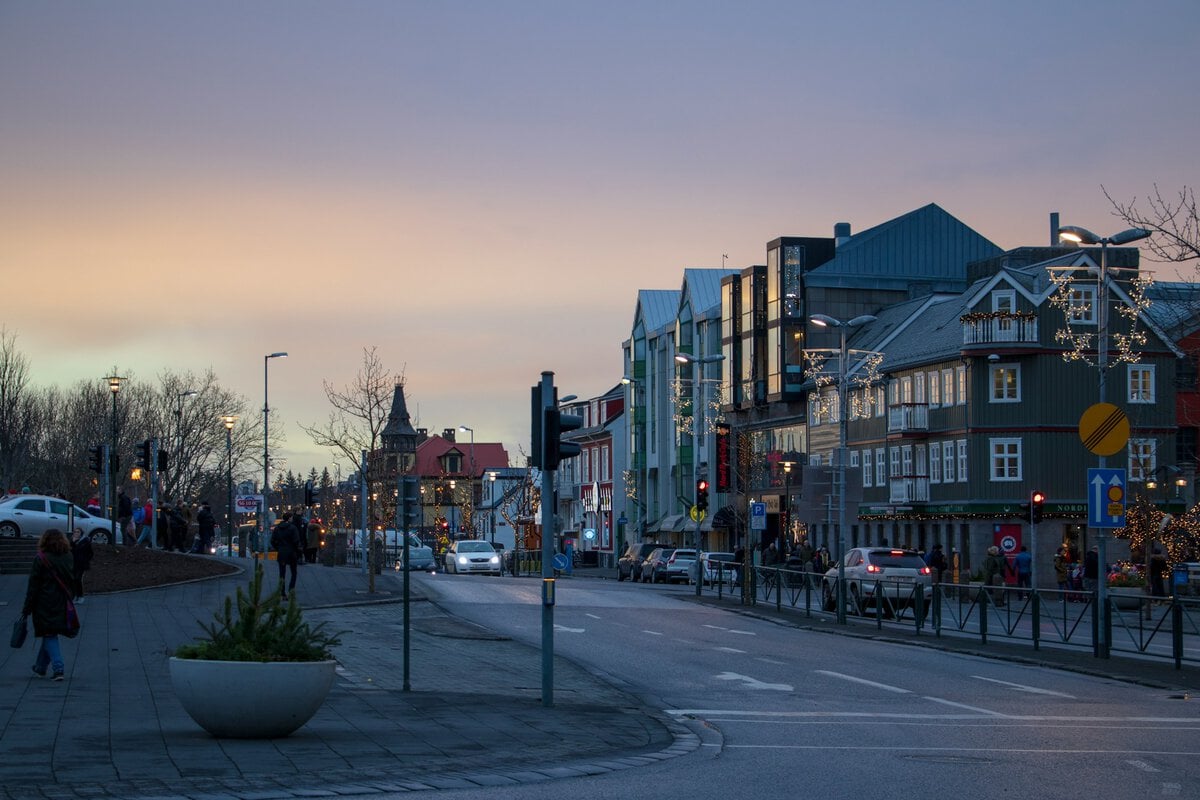
Most visitors to Reykjavik spend their days chasing waterfalls and Northern Lights. Then the sun dips — or doesn’t, depending on the season — and they find themselves on Laugavegur wondering where to go. The city’s nightlife has its own culture, its own history, and its own humor. Walking into it with a local who knows the stories behind every bar changes the experience considerably.
Here’s your guide on how to spend a night out in Reykjavik just as the locals would.
A Night Out in Reykjavik: What to Expect
For a capital city, Reykjavik operates on a surprisingly human scale. The entire nightlife strip fits within a short walk, centered on Laugavegur and the streets that branch off it. There are no neighborhoods to research, no cab rides between venues — the bar scene is compact enough that the night unfolds on foot.
The culture is unhurried. Icelanders tend to start late, and the energy on Laugavegur doesn’t peak until well after midnight, particularly on weekends. Showing up at 9pm means you’ll have your pick of seats. Showing up at 1am means you won’t. Neither is wrong — it depends what kind of evening you’re after.
What you won’t find here are velvet ropes, dress codes, or much in the way of attitude. The bars are small, the rooms get loud, and the default mode is conversation. Icelanders are direct and dry-humored, and strangers at the bar tend to talk — especially once it comes out that you’re visiting.
Beer is the common currency. Iceland’s craft brewing scene has grown steadily since prohibition ended in 1989, and most bars now carry a mix of local and Scandinavian options alongside international taps. If you want something more specifically Icelandic, Brennivín — a caraway-flavored schnapps sometimes called “Black Death” — is widely available and worth trying at least once. It pairs, perhaps inevitably, with fermented shark if you’re feeling thorough.
The summer midnight sun is its own thing. Stepping out of a bar at midnight into broad daylight is disorienting in a way that’s hard to prepare for. In winter, the dark arrives early and the bars feel warmer for it. Reykjavik’s nightlife doesn’t have an off-season — the calendar doesn’t change the appeal so much as the light does.
Related read: Staying in Downtown Reykjavik, Iceland
What Pöbbarölt Really Means
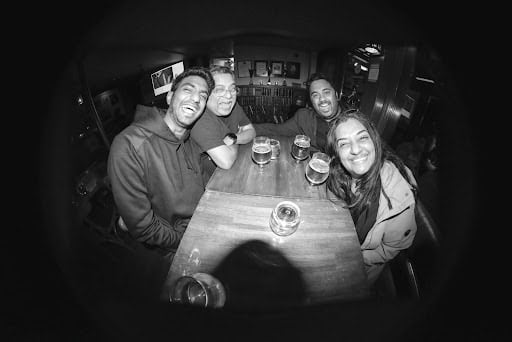
Icelanders call it pöbbarölt: bar crawling. The word alone tells you something. There’s a casualness to it, a community ritual rather than a mission to get drunk. Reykjavik’s bar scene isn’t about VIP lists or velvet ropes. It’s small rooms, cold beer, and conversation with whoever’s next to you.
What most travelers don’t realize is that Iceland had a full prohibition that lasted until 1989. Beer was illegal here for decades after spirits and wine became legal. The stories that came out of that era are strange and funny, and they shape how Icelanders relate to their drinking culture today. That context gives your first pint in the city a different weight.
Reykjavik After Dark: The Pöbbarölt Bar Crawl
Three and a half hours walking Laugavegur with a local guide who knows the stories behind every stop.
➡ Three carefully chosen bars, each with a different character — craft beer, Icelandic spirits, late-night energy
➡ A guide who moves between history, humor, and insider knowledge across the evening
➡ Small group of six, so the night stays conversational rather than chaotic
➡ Drinks included throughout
➡ No prior knowledge needed — of beer, Iceland, or bar crawls
The Tour, Bar by Bar
Reykjavik is a small city, and its nightlife reflects that. The bars are close together, the rooms are small, and the evenings tend to move at their own pace — unhurried, conversational, with no particular agenda beyond the next round and whoever you end up talking to.
A bar crawl here isn’t a checklist exercise. It’s closer to how locals actually spend a Friday night, drifting between a handful of places they know well, with enough time at each to settle in. Going with a guide who can explain what you’re drinking, why prohibition lasted as long as it did, and what the runic symbols above the bar mean turns a good night out into something with a bit more to it.
Lemmy: Where the Night Begins
The evening opens at Lemmy, a rock bar dedicated to Lemmy Kilmister of Motörhead. Walk in and you’re looking at 50 beers on tap, walls that make no apologies for what they’re celebrating, and a soundtrack that moves between rock and folk without warning. It’s a loud, lived-in room.
This is also where you learn to pour a draft properly. Your guide Stefán walks you through the angle, the wait, the finish — and you get four glasses to practice on. It sounds minor until you realize you’ve probably been drinking badly poured beer for years. Stefán also covers the history of beer in Iceland here, including the prohibition years and the answer to a question plenty of people have but don’t always think to ask: did the Vikings drink beer? No, as it turns out. They drank mead and a fermented potato spirit called Brennivín, which translates, fairly accurately, as “Black Death.”
Ægir 101: The Craft Stop
From Lemmy, the group moves to Ægir 101, a session craft bar where the format shifts. You get a flight of beers — smaller pours, different styles, ranging from raspberry sours to caramel stouts. Reykjavik’s craft beer scene has grown considerably since the end of prohibition, and Ægir 101 is a good place to get a cross-section of what local brewers have been doing with it. It’s the right stop to start distinguishing what you actually like from what you’ve always ordered out of habit.
The conversation tends to open up here. People who didn’t know each other at the start of the evening are usually talking freely by the time the flight arrives — something about the format of smaller pours and shared tasting notes that loosens things up.
Ölstofan: Where the Night Ends
The last stop is Ölstofan, and it has the feel of a place that hasn’t tried to update itself for tourists, which is exactly why it works. Stefán brings one of his best stories here, along with what he calls the most awarded beer in the world.
The real ending, though, isn’t the beer. Stefán closes every tour by explaining the runic symbols and their meanings. It’s a quieter note after a night of music and laughter, and it consistently lands in a way that surprises people. Guests who’ve been joking for three hours get a little still. It sounds like something you’d roll your eyes at in a description, but it doesn’t feel that way in the room.
The Guide: Stefán
Stefán is an engineer, an actor, a musician, and a storyteller. That combination sounds like a résumé, but you feel all of it across the evening — the precision of someone who explains things carefully, the performance instinct that keeps a room engaged, the musical ear that notices when the mood shifts. He’s been guiding long enough to know which jokes land with which groups, and curious enough that the conversation never goes stale.
What This Tour Is Really About
Iceland sells itself on landscape, and the landscape delivers. But most people who spend real time here come away saying the same thing: it’s the people and the culture that stay with them. The humor is dry and self-aware. The history is stranger than you’d expect. The sense of community in a city of 130,000 people on an island in the North Atlantic has a particular texture.
A bar crawl done this way is a faster route to that texture than almost anything else. You’re not watching the culture from outside — you’re sitting in it, drinking the beer, hearing the stories, talking to whoever ended up at the same table.
Practical Information
When to Go
The tour runs year-round. A night out in Reykjavik doesn’t follow seasonal rules the way outdoor activities do. In summer, the sun barely sets, which creates its own surreal quality for a night out. In winter, you’re out in the dark early and the bars feel correspondingly warm. Both versions work.
Weather
Iceland’s weather is famously unpredictable. Dress in layers and assume conditions can change between bars. A light waterproof layer is always sensible.
Who It’s For
Couples, solo travelers, and anyone with an interest in culture and local history will find the format natural. You don’t need any knowledge of beer — the tour doesn’t assume any, and part of the point is learning as you go. Solo travelers tend to do particularly well here, since the group format means you’re never actually on your own.
Meeting Point and Duration
The tour begins at a designated meeting point in Reykjavik. Check current details with Reykjavik Wayfinder for exact location and timing.
Frequently Asked Questions
Did the Vikings really not drink beer?
That’s correct. Beer as we know it wasn’t part of the Norse diet — they drank mead, a fermented honey drink, and Brennivín, a potato spirit sometimes called “Black Death.” Iceland’s relationship with alcohol has always been complicated; the country only lifted its ban on beer in 1989, long after spirits and wine had become legal again.
What is Brennivín, and can I try it in Reykjavik?
Brennivín is Iceland’s signature spirit — a caraway-flavored schnapps that translates roughly as “Black Death.” It’s widely available in Reykjavik bars and is considered the closest thing Iceland has to a national drink. Most bars along Laugavegur will stock it, and it pairs, perhaps inevitably, with fermented shark.
What’s the bar scene on Laugavegur actually like?
Laugavegur is Reykjavik’s main street and the center of its nightlife. The bars tend to be small, unpretentious, and mixed in with restaurants and shops. There are no real VIP venues or door policies to navigate — the culture is informal, and it’s common to move between several places in one evening. Weekends get busy after midnight.
What kinds of beer should I expect to find in Reykjavik?
Icelandic craft brewing has expanded significantly since the late 1980s. Local styles range from clean lagers to more experimental options — raspberry sours, caramel stouts, and seasonal releases are common. Most bars carry a mix of Icelandic and Scandinavian options alongside international taps.
Is Reykjavik nightlife seasonal?
Not particularly. Unlike Iceland’s outdoor activities, the bar scene runs year-round without major variation. Summer brings the midnight sun, which gives late nights a disorienting quality — it’s 2am and still light outside. Winter nights are long and dark, and the bars feel correspondingly warm. Both have their appeal.

