


The Chip Age: How Chips Shaped Our Past and Will Define Our Future Rakesh Kumar Icon (2026)
Few items are so imperceptible to the public, yet so essential to their lives, as the semiconductor. The computer chip powers the machinery, systems and interfaces that people interact with on a daily basis. The average person will encounter a semiconductor dozens of times a day, whether it’s a small chip in their thermostat, in their computer or phone’s motherboard or in their vehicle’s entertainment system.
Despite their diminutive status, chips have become a very big deal. They are the object through which almost every modern anxiety passes: artificial intelligence, industrial sovereignty, military escalation, environmental strain, supply-chain fragility and the future of scientific discovery.

How wealthy tech entrepreneurs seek to shape politics, culture and the future — and why we must resist
Rakesh Kumar, a computer engineer at the University of Illinois Urbana-Champaign, understands how important chips are. And in The Chip Age, he tries to explain how these fingernail-sized gizmos have become the material substrate of contemporary power.
At its best, the book is a reminder that the history of computing is not just the history of software, entrepreneurs and Californian myth-making. It is a history of materials, manufacturing, state subsidy, trade battles and small technical decisions that later change the world.
Kumar outlines the geological accident 380 million years ago that made the town of Spruce Pine, North Carolina, the world’s main source of the high-purity quartz needed for chip-manufacturing crucibles. And he describes the fierce 1980s trade battles, tariffs and lawsuits against the ‘dumping’ of goods into domestic markets between the United States and Japan that ultimately led to the decline of the Japanese memory-chip industry.
Industrial history
The account is particularly strong when describing the early history of chip integration, when electronics moved from discrete components to circuits etched on a single substrate. Kumar writes that institutions, not lone geniuses, pushed forward the development of chips. However, he notes the breakthroughs of engineer Jack Kilby at Texas Instruments in Dallas and physicist Robert Noyce at Fairchild Semiconductor: Kilby invented the first integrated circuit on a single block of germanium in 1958, and Noyce subsequently worked out how to build a mass-producible chip that integrated all of the components and their interconnections onto a single block of silicon.
Breakthrough computer-chip tech could help meet ‘monumental demand’ driven by AI
Kumar’s account of Acorn Computers, the BBC Micro and the eventual birth of UK-based chip titan Arm, is wonderful. In the late 1970s, the UK broadcaster the BBC launched a computer-literacy project, and the computing firm Acorn won the contract to build the BBC Micro, which became a hit in UK schools and homes. When planning their next computer, Acorn found that the existing microprocessors were inadequate and partnered with US electronics company VLSI Technology in 1983 to design their own chip: the Acorn RISC Machine. This highly efficient chip caught the attention of US technology giant Apple for its Newton handheld device. To manage this collaboration, Acorn spun off its 12-person processor division in 1990 to form Advanced RISC Machines (now Arm), which pioneered the revolutionary and wildly successful model of licensing its chip designs rather than manufacturing them.
Similarly, Kumar’s sections on Japan’s rise to become a leading producer of memory chips, the 1986 Japan–United States Semiconductor Agreement, South Korea’s ascent through the dynamic random-access memory market and Taiwan’s foundry model are larded with reflections on today’s chip hierarchy, showing how the current global race was confected through policy choices, industrial bets and ruthless trade pressure.
Concentrated market
Explaining semiconductors to a lay audience is no mean feat, and Kumar does so admirably. The book is full of details that make a reader sit up: Taiwan Semiconductor Manufacturing Company in Hsinchu produces more than half of the world’s chips and more than 90% of the most advanced ones. Globally, more than one trillion chips are shipped every year, with a total value of almost US$700 billion, and annual sales could exceed $1 trillion by 2030.
Kumar also gives a sense of scale to the state subsidy race to ensure chip supremacy: $52 billion from the United States, €43 billion ($48 billion) from Europe, $24.5 billion from Japan, $10 billion from India and more than $100 billion each from South Korea and China.

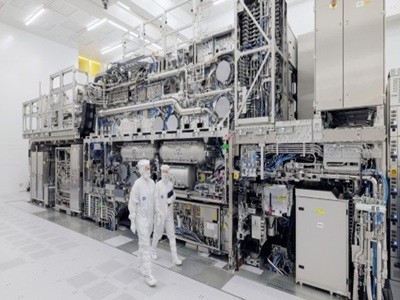
Staff wear protective suits to inspect semiconductor wafers at a facility in Taiwan.Credit: Billy H.C. Kwok/Bloomberg/Getty
He also goes beyond the usual geopolitical debate and addresses the issues of environmental damage, labour, rare-earth minerals, counterfeit components and the geopolitical quandaries that world leaders face.

