


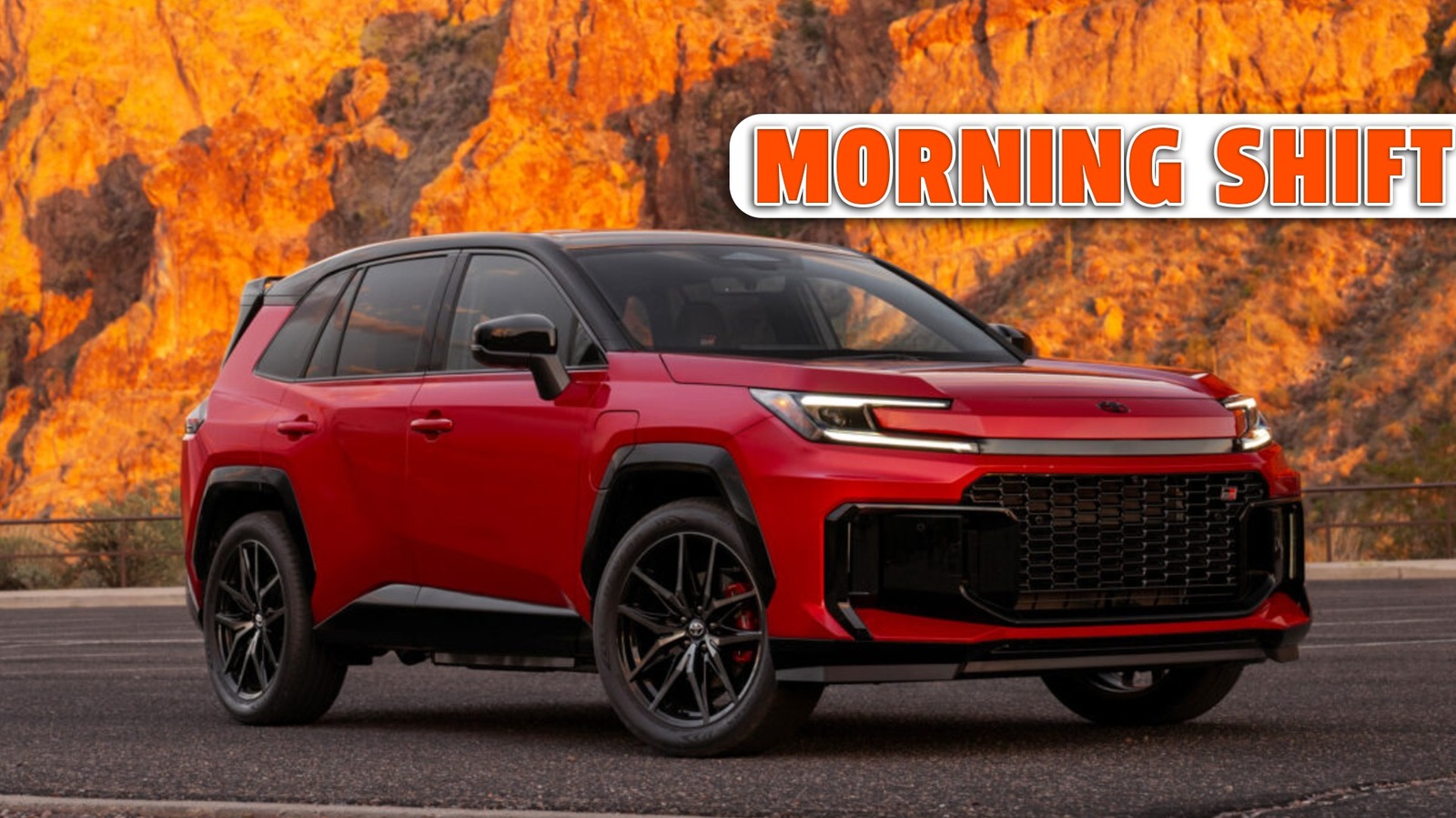
I’m not sure if you’ve noticed, but gas prices are pretty damn diabolical right now. Yeah, they’ve come down a bit, but they’re certainly not at the under-$3.00 levels we were used to before the U.S. and Israel decided to go to war with Iran and jack up fuel prices across the globe. Well, that choice has had the cascading effect of pushing car shopping into more fuel-efficient vehicles. Though instead of going for EVs, they’re opting for hybrids.
Much like Charli XCX in 2024, hybrids are having “a moment,” according to Karl Brauer, executive analyst over at iSeeCars. It’s not just new cars either; the used hybrid market, where prices are even more affordable, is hot, hot, hot. Oh, and just for clarity, “hybrid” refers to both traditional and plug-in hybrids in this context. From the Detroit Free Press:
In the used market, hybrids are steadily gaining share and taking market share from traditional gas vehicles, Brauer said, as consumers look for a practical, range-anxiety-free alternative to fully electric cars. Brauer said the prices for all used vehicles are rising. Between January through May this year, the average 1- to 5-year-old car’s price has increased by 4.9% compared with the same period in 2025. In dollar amounts, that means the average 1- to 5-year-old used car sold for $31,266 in the first five months of 2025 compared with $32,794 this year.
The average 1- to 5-year-old [Ford] Maverick hybrid’s price between January through May of this year has increased by 2.6% compared with the same period a year ago. In dollar terms, that is an average transaction price of $27,766 compared with $27,061.
It isn’t just the used market, though. They’re also selling very well on the new market. Keep in mind, this data from Stephanie Valdez Streaty, director of Industry Insights at Cox Automotive excludes PHEVs.
“Hybrids are hot, hybrids are having their moment,” Streaty told the Detroit Free Press. “There’s a lot of product out there. There’s trust around the hybrid because it’s been around a long time with Toyota RAV4 and Ford Maverick establishing it. Then you have these high gas prices. If you don’t want to worry about charging an EV, (a hybrid) takes away that friction.”
[…]
January through April sales this year of traditional hybrid new vehicles are up 11% compared with the same period last year, Streaty said. Whereas the total U.S. new car sales in the same period are down 5.7% compared with the period last year.
[…]
Some of that boost can be attributed to the fact that there are more products. While Toyota has dominated hybrid offerings, more brands such as Hyundai, Kia and Ford are offering hybrid options. Besides the Maverick, Ford offers the F-150 Hybrid pickup — officially known as the PowerBoost. It has a 3.5-liter V6 engine paired with a 47-horsepower electric motor. The PowerBoost can add $1,900 to $3,000 onto the sticker price of the truck, which starts at about $40,300. But Ford said due to the combined electric motor efficiency and a large 30.6-gallon fuel tank, the truck drives more than 700 miles per tank on the highway.
Also, luxury brands such as BMW, Mercedes-Benz, Volvo, Porsche and Audi offer various hybrid options.
It’s easy to see why this transition is happening. In May, Cox Automotive surveyed about 1,000 in-market car shoppers, and gas prices ranked as the second most influential factor when picking a vehicle type — pushing nearly one-in-three buyers to delay their purchase timing. It also boosted more than half of them to look at more fuel-efficient options like hybrids rather than full EVs.
Younger shoppers — those 29 and under — or folks with higher incomes, pivoted toward electric vehicles. Even though price parity between gas and electric vehicles is closer than it ever has been, automakers are clearly not getting that message across to buyers, and hybrids are reaping all the benefits.

