


The Common Good Economy: A New Compass Mariana Mazzucato Allen Lane (2026)
The 500 richest individuals on the planet added a record US$2.2 trillion to their fortunes in 2025 alone, while more than two billion people experienced moderate or severe food insecurity. The charity Oxfam International, based in Nairobi, estimates that the super-rich in high-income countries extract around $30 million per hour from low- and middle-income nations, where roughly 85% of people in the world live.
As ever more people struggle to keep a roof over their heads, public money is increasingly being absorbed by military spending, which reached a staggering $2.7 trillion in 2024. Government-sponsored investments into ‘high-tech solutions’ are concentrated in this industry of death, further fuelling ecological devastation through mineral extraction and fossil-fuel use.
How to measure a good life — tips for moving beyond GDP
These figures offer only a glimpse into the profound irrationality of a society in which the production of goods and services — even those most essential to life — is subordinated to an abstract and violent logic of capitalist profit.
Building on her earlier influential ideas on technological change and the role of the state in innovation, economist Mariana Mazzucato argues that today’s environmental and social crises stem from an economy that is organized around extraction and shielded from meaningful democratic accountability. The Common Good Economy presents a road map for the urgent transformation that our societies must undertake.
The book challenges the dominant narratives of power and value that many of us have internalized through the framework of neoclassical economics. Rather than treating capitalist markets as natural developments that allow for freedom and collective opportunity, Mazzucato draws on the work of economic historian Karl Polanyi to emphasize how markets are politically constructed and deeply embedded, often in ways that undermine the common good.
She shows, for instance, how the prioritization of short-term financial returns and shareholder value has driven corporations to spend trillions buying back their own shares instead of investing productively. She also highlights how the housing crisis, even in wealthy countries such as the United Kingdom, has been intensified by governments increasingly subsidizing private landlords rather than funding social housing.
Although neoclassical economics reduces climate change and social injustice to ‘externalities’ — indirect inconveniences unrelated to the broader system — Mazzucato argues that today’s challenges require centring our collective actions around the common good. In her words, it means “getting economic relationships and structures right from the start, instead of correcting and picking up the pieces afterwards”.
Put people at the centre
Mazzucato exposes the sterile intellectual foundations of mainstream economics by elegantly juxtaposing it with a broad array of ideas grounded in Indigenous knowledge, political philosophy and biology. She highlights the important contrast between parasitic systems that enrich a few at the expense of many and symbiotic ones rooted in reciprocity and interdependence. Furthermore, she cites the incorporation of sumak kawsay, a philosophy of the Quechua Indigenous group in the Andes Mountains that rejects accumulation in favour of harmony with nature and balance in communities, into Ecuador’s constitution.

GDP and beyond: why treating nature as capital cannot save the planet
The real strength of Mazzucato’s “compass” — five principles that can guide the way to a better economy — is to leave the world of ideas and enter that of praxis: the translation of theories into actions. Combining theoretical reflection with collective participation provides the most fertile ground for achieving forward-thinking institutional innovation. What cannot be learnt from academic economists can be gained only through engagement on the ground.
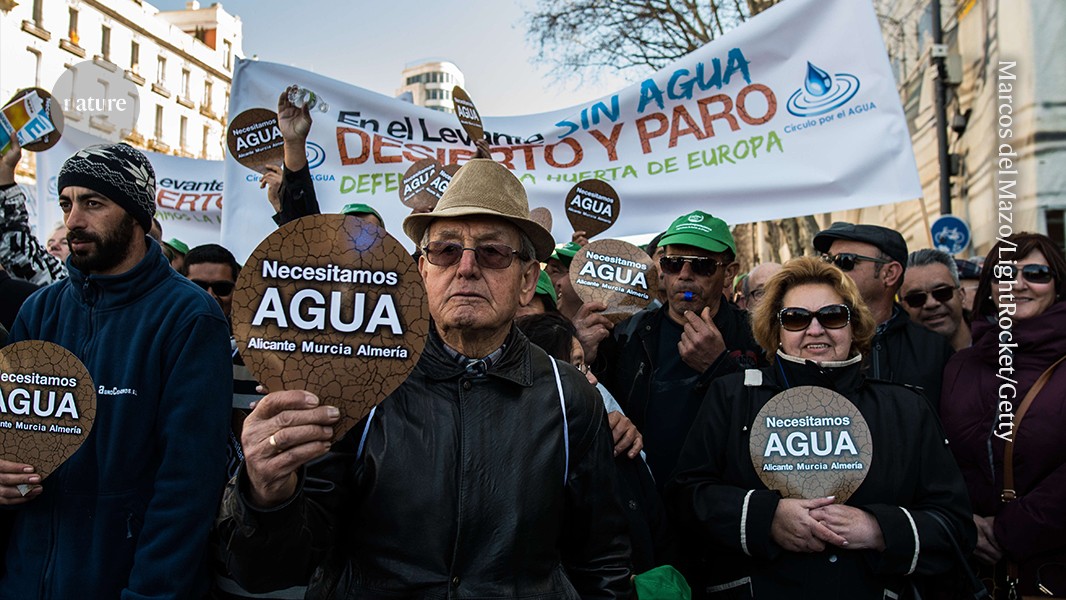
The innovative power of collective ownership combined with participatory governance is highlighted in attempts to overturn water-management privatization in Cochabamba, Bolivia, and the Catalonia region of Spain. Through regular assemblies, citizens make decisions on tariffs, co-ordinate maintenance and collectively manage the plant. Land stewardship and energy communities are important examples of Mazzucato’s key principles of co-creation and participation that make up the compass for a common good economy.
By challenging the idea that economic policy should remain the exclusive domain of detached experts and corporate elites, Mazzucato argues that people can actively shape economic decisions and not just endure their consequences. Her case studies offer a refreshingly practical critique that shows how purpose and direction become more creative, democratic and socially responsible when they emerge from collective learning and shared knowledge rather than being imposed from the top down.

A mural in Bolivia highlights public concern over water privatization. Credit: James Brunker News/Alamy
Mazzucato stresses that common-good policies are about not only defining the right objectives, but also transforming the ways in which people and institutions relate to one another, as well as strengthening the social infrastructure that sustains community life and collective well-being. Compelling examples include Bogotá’s ‘care blocks’ and Mexico City’s UTOPÍAS: neighbourhood hubs that provide childcare, health care, psychological support and cultural services. These initiatives show how participatory public institutions can confront social inequality effectively while creating value through investment in collective capabilities.
The data-commons project in Barcelona, Spain, similarly seeks to reclaim democratic control over collective data so that technology serves community members rather than functioning mainly as a tool of extraction. For Mazzucato, these experiences embody another central feature of her compass: collective learning and the sharing of knowledge as the basis for social transformation.
These are just a few of the fascinating social experiments investigated in the book — living demonstrations that our Western obsession with the idea that “there is no alternative” is a reactionary construct that can easily be dissolved.

