


 This article published in collaboration with JUIDA, the Japan UAS Industrial Development Association.
Robodex and Tokyu Land Corporation are opening a fixed hydrogen drone port on the Seto Inland Sea coast to link Hiroshima’s mainland with Osakikamijima and surrounding islands.
Robodex and Tokyu Land Corporation have partnered to install Japan’s first permanent hydrogen drone port in Hiroshima Prefecture. The Yokohama-based hydrogen drone developer, led by President Daisuke Kaio, will operate the site to supply island communities across the Seto Inland Sea.
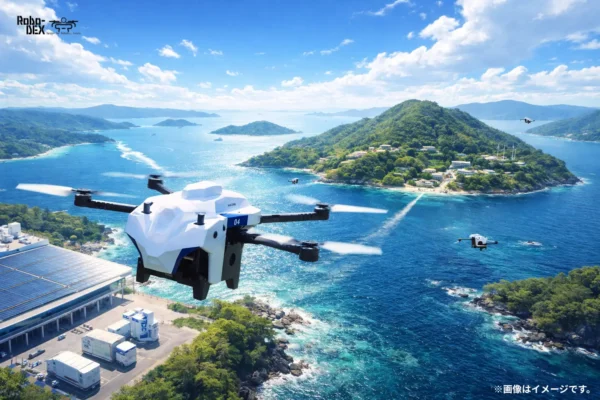
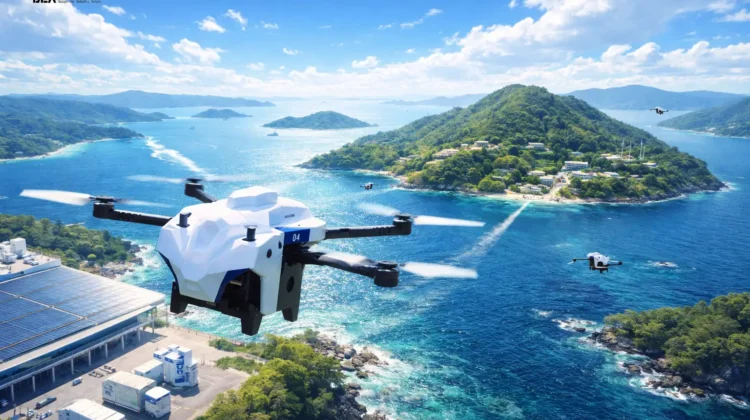
The hydrogen drone port sits inside LOGI’Q Hiroshima, the logistics complex Tokyu Land is developing on the Seto Inland Sea coast. Flights will primarily serve Osakikamijima, with a round-trip range of roughly 35 km (about 22 miles) that covers many of the nearby islands.
Why a Hydrogen Drone Port
Island freight in the region has long depended on ferries, which are exposed to weather cancellations and high transport costs. The companies say a permanent hydrogen drone port keeps the logistics network running in poor conditions, protecting residents from isolation when emergency medicines or daily essentials are needed.
Hydrogen-powered drones cruise longer and farther than battery aircraft. Co-located hydrogen refueling at the port supports quick turnarounds and continuous operations, letting Robodex flex daily flight volumes against demand.
Expected Impact on Island Communities
Robodex and Tokyu Land project three primary benefits: lower delivery costs and improved mobility, better day-to-day convenience for residents through same-day medicine and prescription drops, and a stronger case for younger residents to stay in the islands as new jobs emerge around the port.
The companies frame the project as a step beyond demonstration flights toward a permanently embedded “air route” that replaces multi-leg sea-and-land transport with direct point-to-point deliveries. The hydrogen drone port is also positioned for disaster response in mountain areas and across to Shikoku when emergencies require longer-range flights.
Robodex was founded in 2019 and develops domestically built hydrogen drones, hydrogen supply infrastructure, and small hydrogen mobility systems.
More information is available at Robodex.
Read more:

Ian McNabb is a journalist focusing on drone technology and lifestyle content at Dronelife. He is based between Boston and NH and, when not writing, enjoys hiking and Boston area sports.

